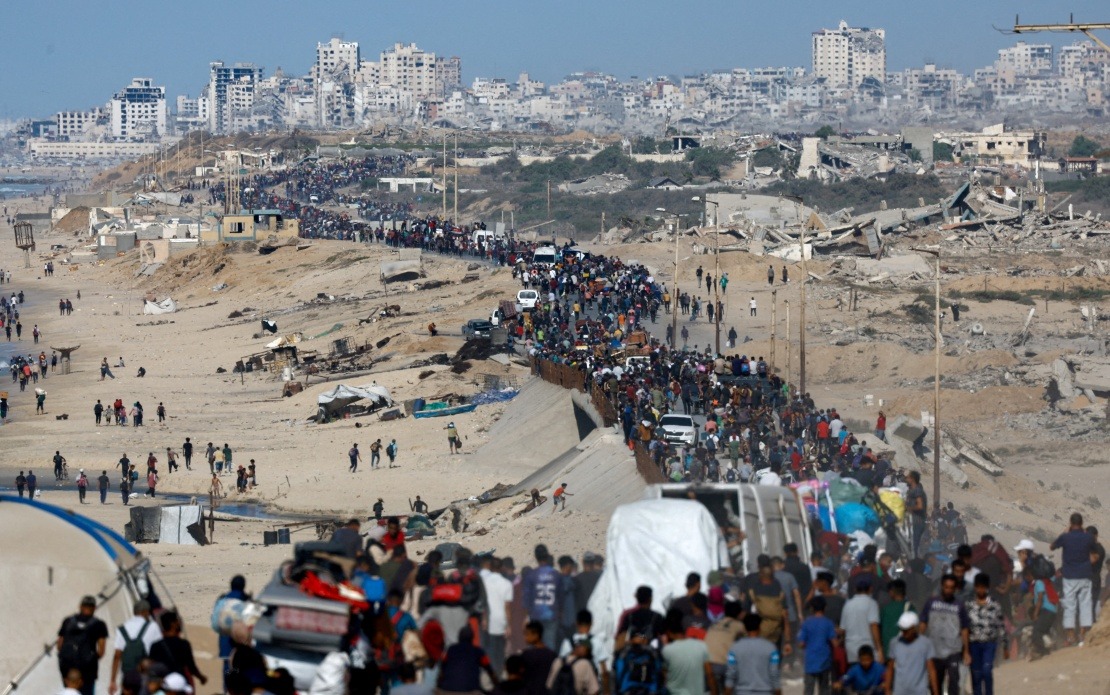
The Palestinian Foreign Ministry has issued a forceful rebuff to mounting pressure against the United Nations Relief and Works Agency for Palestine Refugees in the Near East, underscoring the organization's irreplaceable contribution to Palestinian welfare. In a statement released on Wednesday, officials in Ramallah described UNRWA as an essential conduit for survival in territories experiencing protracted humanitarian strain, reaffirming their commitment to the agency's continued operations across the occupied Palestinian territories and neighbouring countries hosting refugee populations.
UNRWA's operational footprint extends far beyond simple aid distribution. The agency functions as the primary deliverer of education services to Palestinian youth, manages health clinics serving vulnerable populations, and coordinates social protection programmes designed to prevent the collapse of civil society infrastructure. These services span the Gaza Strip, the West Bank including East Jerusalem, and refugee camps across Lebanon, Syria, and Jordan, reaching populations whose needs have intensified dramatically following decades of displacement and recent military escalation.
The Palestinian position reflects deeper anxieties about the implications of dismantling established humanitarian infrastructure. Officials emphasized that UNRWA operates under formal UN mandate and adheres to international legal frameworks, positioning the agency as a legitimate institutional actor rather than a temporary emergency responder. This framing becomes significant when considered against proposals to replace organized multilateral assistance with alternative arrangements that may lack similar oversight or sustainability.
Despite international law establishing Palestinians' inalienable rights as refugees under United Nations General Assembly Resolution 194, proposals to eliminate UNRWA effectively sidestep fundamental questions about political resolution. The Palestinian Foreign Ministry's statement stressed this distinction explicitly, arguing that humanitarian assistance, while vital, cannot substitute for addressing root causes of displacement or recognizing refugees' legal entitlements. This argument challenges a troubling assumption sometimes embedded in aid discourse: that providing services to affected populations somehow diminishes political claims to justice or repatriation.
A particularly pointed dimension of the Palestinian statement concerns terminology and geography. Officials rejected any conceptual fragmentation of Palestinian identity or territorial integrity, reasserting that Gaza constitutes an integral component of the occupied State of Palestine rather than a separate administrative or political entity. This linguistic precision matters because categorizing Gaza distinctly from the West Bank has historically preceded policies treating populations differently or abandoning integrated approaches to Palestinian self-determination.
The timing of the Palestinian response aligns with emerging pressure from the United States. The Board of Peace, an initiative established under Donald Trump's direction in January, declared on Wednesday through its official X platform that "UNRWA has no place in the new Gaza," accompanying this statement with rhetoric about ending "perpetual aid dependency and conflict." The framing suggests a conceptual shift from providing humanitarian relief to populations lacking basic services toward viewing assistance itself as problematic—a distinction with profound consequences for how the international community addresses crises.
Trump's Board of Peace constitutes part of a broader diplomatic initiative designed to shape Gaza's post-conflict trajectory. The board held its inaugural meeting focused on Gaza in February at the US Institute of Peace in Washington, operating under Trump's personal leadership. This initiative connects to phase two of a twenty-point plan purportedly aimed at ending the war in Gaza, supported by a November UN Security Council Resolution. The proposal to eliminate UNRWA thus represents not merely a humanitarian policy adjustment but a component of a larger geopolitical framework for reorganizing Palestinian territories.
The broader context illuminates why Palestinian officials view UNRWA's elimination as categorically unacceptable rather than negotiable. Since October 2023, Palestinian health authorities have documented over 73,000 deaths across Gaza, with additional injury figures exceeding 173,000 individuals, predominantly women and children. Simultaneously, the infrastructure supporting civilian resilience has deteriorated catastrophically, with schools destroyed, hospitals rendered non-functional, and social safety nets obliterated. Removing the primary institutional mechanism delivering basic services under these conditions would constitute abandonment rather than reform.
For readers across Southeast Asia, particularly those in Malaysia with significant Palestinian diaspora communities and longstanding diplomatic commitments to Palestinian causes, the UNRWA controversy reflects broader questions about humanitarian space in conflict zones. The proposition that providing aid somehow perpetuates conflict contradicts evidence from protracted humanitarian emergencies worldwide, where service elimination typically exacerbates rather than resolves underlying political problems. Moreover, the diplomatic pressure against UNRWA establishes a precedent potentially applicable to UN humanitarian operations elsewhere in the region.
The Palestinian Foreign Ministry's appeal to "all states, institutions and international organisations" to respect UNRWA's mandate, privileges, and immunities signals recognition that the agency's survival depends on sustained multilateral support. This appeal particularly addresses nations maintaining diplomatic independence from Washington's strategic framework, including ASEAN members with historical commitments to supporting Palestinian causes through international forums. The statement essentially invites these actors to evaluate whether permitting the dismantling of one UN humanitarian agency aligns with their stated principles regarding international law and institutional architecture.
The philosophical distinction underlying this dispute deserves emphasis for regional audiences. Palestinian officials argue that humanitarian assistance addresses symptoms of displacement while comprehensive political solutions address causes. Conversely, proponents of UNRWA's elimination appear to suggest that eliminating aid dependency might somehow incentivize political resolution—a theory lacking empirical support and resting on assumptions about how populations respond to deprivation. This debate ultimately concerns whether the international community views displaced Palestinians as rights-holders entitled to legal remedies or as populations whose circumstances might be engineered toward acceptable outcomes through administrative pressure.
Moving forward, the trajectory of UNRWA will likely depend on whether countries outside the US-Israel strategic alignment maintain financial contributions and political support. For Malaysia and comparable nations, decisions regarding UNRWA funding and diplomatic positioning will signal their understanding of humanitarian principles, international law, and the scope of acceptable intervention in another nation's displacement crisis. The Palestinian rejection of UNRWA's dismantling thus extends beyond immediate Gaza considerations to encompass broader questions about how the international system treats vulnerable populations and whether established humanitarian institutions remain viable during intensified geopolitical competition.

