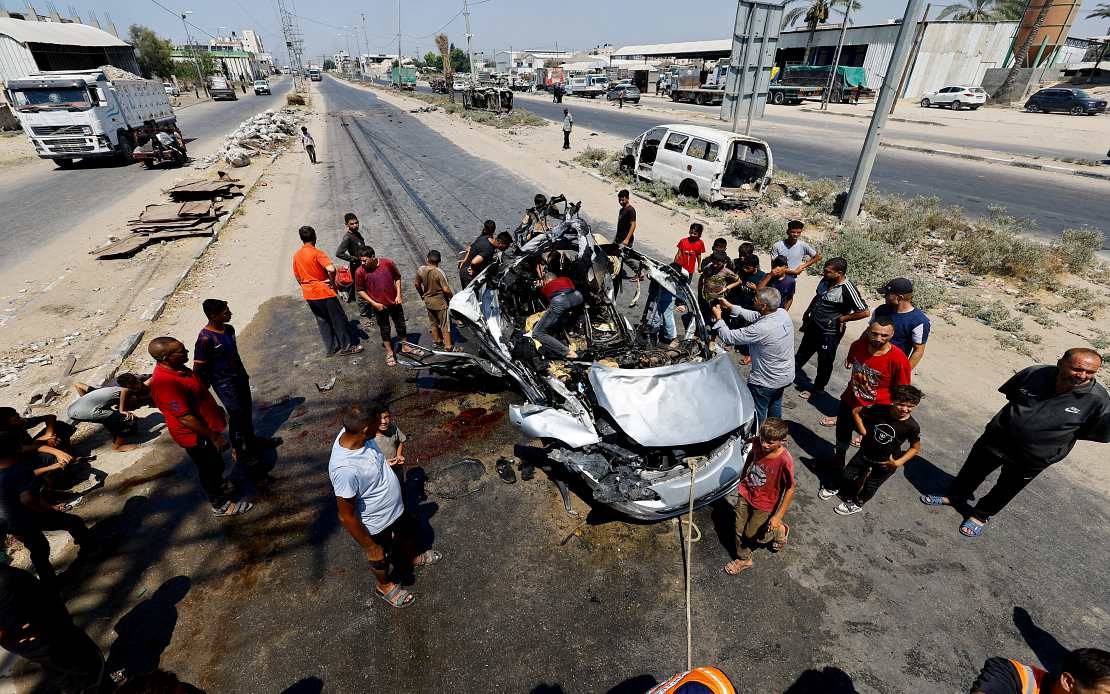
Mounting tensions have erupted between Palestinian leadership and Israeli authorities over the implementation of the second phase of a Gaza ceasefire agreement, with Ramallah accusing the occupation forces of sustained military aggression despite international mediation efforts. Palestinian presidential spokesperson Nabil Abu Rudeineh delivered a stark assessment on Monday, characterizing the accord as a hollow gesture that has failed to translate diplomatic promises into tangible protection for civilians caught in the crossfire.
The spokesperson's statement reflects deep frustration within Palestinian political circles over what officials view as a systematic violation of agreed terms. Rather than bringing relief to suffering populations, Rudeineh argued, the ceasefire framework has become a façade masking continued military operations. The phrase "an agreement on paper and death on the ground" encapsulates Palestinian grievances that diplomatic language obscures the reality experienced by residents in Gaza, the West Bank, and East Jerusalem, where military activity persists despite the formal accord.
According to Palestinian accounts, Israeli operations continue targeting civilian areas across multiple territories. The spokesperson specifically highlighted sustained attacks on refugee camps and villages, characterizing these strikes as part of a deliberate strategy to erode Palestinian presence in contested regions and systematically dismantle the refugee population's claims and status. This framing suggests Palestinian officials view military operations as serving broader political objectives beyond immediate security concerns, potentially aimed at altering demographic and territorial realities on the ground.
The ceasefire agreement's failure to achieve a comprehensive halt to hostilities represents a significant diplomatic setback for international mediation efforts. Multiple international actors, including regional powers and Western governments, have invested considerable diplomatic capital in negotiating the accord. The breakdown in implementation undermines confidence in multilateral dispute resolution mechanisms and raises questions about enforcement mechanisms for future agreements in the region.
Rudeineh's statement reflects Palestinian frustration with what officials perceive as inadequate international accountability for alleged violations. The spokesperson emphasized that Israel's continued military actions occur without meaningful consequences, suggesting a pattern of impunity that incentivizes further breaches. This argument connects individual military operations to broader systemic failures in the international legal framework, positioning the ceasefire breakdown as symptomatic of deeper structural problems in how the international community addresses alleged violations of humanitarian law.
For Southeast Asian observers, this escalation carries particular relevance given the region's significant Palestinian diaspora communities and the broader implications for international law enforcement. The demonstrated difficulty in implementing ceasefire agreements between militarily asymmetric parties raises questions about conflict resolution mechanisms that Malaysia and neighbouring nations might rely upon for addressing regional disputes. If international frameworks prove ineffective in enforcing agreed terms between established parties with extensive international scrutiny, their utility for resolving other regional conflicts becomes questionable.
Palestinian leadership has explicitly called upon the UN Security Council to take decisive action, arguing that the organization bears responsibility for ensuring compliance with the ceasefire terms and protecting Palestinian civilians. This appeal represents an attempt to escalate the matter to the highest levels of international authority, though such efforts face the persistent challenge of geopolitical divisions within the Security Council that frequently prevent consensus on Middle Eastern matters. The Palestinian call for international protection mechanisms suggests recognition that existing frameworks have failed to deter continued military operations.
The spokesperson connected broader regional stability to the fundamental resolution of what Palestinians frame as the occupation itself. Rather than treating the ceasefire as a discrete problem amenable to technical solutions, Palestinian leadership positioned the agreement's collapse within a larger narrative about ending Israeli control of Palestinian territories. This perspective suggests that temporary ceasefires, without addressing underlying political issues, will inevitably fail as underlying tensions resurface. From this viewpoint, any sustainable peace requires addressing fundamental questions about sovereignty, territorial control, and Palestinian statehood.
The invocation of the Arab Peace Initiative and international legitimacy resolutions indicates Palestinian reliance on historical diplomatic frameworks and international legal precedents. By anchoring their position to established international agreements and UN resolutions, Palestinian officials attempt to reframe their grievances not as disputed claims but as violations of widely recognized international norms. This strategy seeks to mobilize international pressure based on principles of international law that transcend current geopolitical considerations.
The specific mention of East Jerusalem as the capital of any future Palestinian state underscores the centrality of Jerusalem's status to Palestinian political objectives. This territorial demand represents a core Palestinian negotiating position that has consistently complicated ceasefire implementations and peace negotiations, as Israeli governments have maintained conflicting claims to the city. The repeated assertion of this demand within the context of ceasefire criticism suggests Palestinian leadership views the agreement as insufficient unless it explicitly acknowledges Palestinian sovereignty claims to contested territories.
The breakdown in ceasefire implementation occurred despite international diplomatic involvement and suggests that diplomatic frameworks alone cannot override military incentives and political objectives when parties hold fundamentally incompatible territorial and security demands. The Palestinian spokesperson's emphasis on sustained impunity implies that without enforcement mechanisms with teeth—including potential economic sanctions or military consequences for violations—similar agreements will face similar implementation challenges. This observation carries implications extending beyond the Israeli-Palestinian context to other protracted regional conflicts where enforcement mechanisms remain weak.
For Malaysian policymakers and regional observers, the escalation underscores the limitations of ceasefire diplomacy without addressing root causes of conflict. As Malaysia seeks to enhance its role in international dispute resolution and humanitarian advocacy, the Palestinian ceasefire breakdown provides instructive lessons about the prerequisites for sustainable conflict resolution. The case demonstrates that agreements requiring one party to cease operations perceived as serving strategic interests face inherent implementation challenges unless accompanied by credible enforcement mechanisms and genuine political commitment to resolving underlying disputes.

