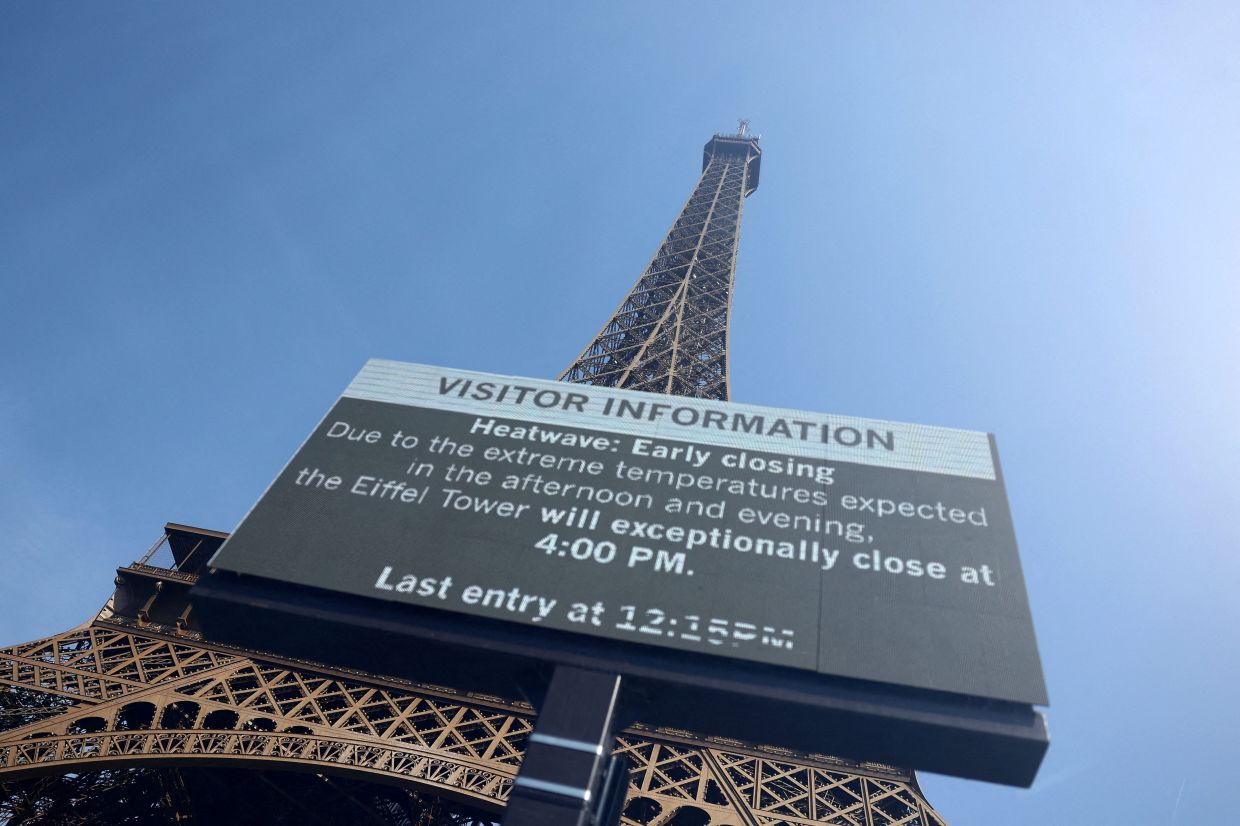
A devastating heatwave gripping France this week has transformed the experience of visiting Paris, forcing the premature shutdown of the city's most celebrated landmarks and leaving holiday-makers grappling with soaring temperatures that have made sightseeing physically exhausting. The combination of extreme heat and operational constraints has upended travel itineraries across the capital, casting doubt over the summer tourism season at a time when European visitor numbers typically peak.
On June 23, France recorded its highest temperature since systematic record-keeping began in 1947, triggering a cascade of precautionary closures and schedule changes at major cultural institutions. The Eiffel Tower, which ordinarily attracts seven million visitors annually and remains open well past midnight during the peak summer season, announced an exceptional early closure at 4pm on that day. Operators indicated that further reductions in opening hours were highly probable, fundamentally altering access to one of the world's most iconic structures during what should have been optimal visiting conditions.
The impact on individual tourists has been acute and deeply disappointing. Maite Blazques, a 35-year-old nurse from Madrid, had spent months saving to bring her six-year-old son to Paris, envisioning a classic holiday experience centred on the city's historic neighbourhoods and architectural landmarks. Instead, she found herself forced to completely restructure her entire itinerary, cancelling plans for a guided exploration of the atmospheric Marais district, eliminating a planned river cruise along the Seine, and abandoning hopes of ascending the Eiffel Tower with her child. The disruption extended to other visitors, with American tourist Tamara Dancer's carefully arranged guided tour cancelled abruptly on Tuesday afternoon, leaving her vacation significantly diminished.
The psychological toll of cancelled experiences compounds the physical discomfort that characterises visiting Paris during such extreme conditions. John Beeler, a 45-year-old American engineer, articulated the broader sentiment among stranded tourists, describing the experience as fundamentally unpleasant. Rather than enjoying leisurely walks through charming streets or exploring underground stations, visitors found themselves struggling with the basic mechanics of navigation, with Beeler noting that he and his wife were "suffocating" not only on pavements but also in the city's metro system and their rental accommodation. The couple's response—relocating to an air-conditioned hotel—exemplifies how extreme heat forces tourists to abandon their planned agendas in favour of climate-controlled refuge.
The traditional method of discovering Paris through unhurried walking—historically the quintessential visitor experience—has become untenable. Drake Winners, a 66-year-old retiree from London, expressed the frustration of this fundamental constraint, noting that exploration on foot, which he identifies as the authentic means of encountering the city's character, has become physically impossible under such oppressive conditions. His adaptation—shifting focus towards museum visits and church tours where climate control provides respite—represents a reactive rather than planned approach to tourism, substituting chosen experiences with whatever offers relief from the heat.
The Louvre, the world's most visited museum with approximately nine million annual visitors, has also implemented modifications despite managing to remain open. Museum management acknowledged that the vast palace, constructed incrementally over centuries by successive French monarchs and presidents, is fundamentally "not sufficiently adapted to climate change." This candid assessment from cultural authorities signals that Europe's greatest institutions now grapple with infrastructure limitations that pose genuine operational challenges. The museum has simultaneously contended with additional complications during the past year, including a spectacular jewellery theft valued at US$100 million, water damage, and ongoing maintenance requirements that compound the strain created by extreme weather.
The national scope of the crisis extends well beyond Paris. More than half of mainland France remains under the meteorological service's highest alert classification, prompting warnings and closures across multiple tourist destinations. The situation demonstrates how climate extremes now disrupt tourism infrastructure at scale, affecting not only capital cities but regional attractions as well. Mont Saint-Michel, the spectacular island monastery in Normandy and the most visited tourist site outside the Paris region, issued explicit advisories urging visitors to postpone their trips during the red alert period, effectively closing itself voluntarily to protect both guests and staff.
For Malaysia and Southeast Asian travellers, this disruption carries particular resonance and practical implications. International tourists, especially those from tropical climates accustomed to managing heat, often plan expensive European vacations with meticulous attention to timing and logistics. When iconic destinations become inaccessible due to extreme weather, the financial and emotional investment proves substantial. Regional visitors booking premium hotels and arranging multi-city European itineraries may find themselves unable to access the very attractions that justified their travel expenditure and time away from work.
The heatwave also illustrates how climate change increasingly threatens the tourism economy upon which many European cities depend for prosperity and employment. As extreme temperatures become more frequent rather than exceptional, tourist destinations face mounting pressure to adapt infrastructure, extend climate-control systems, and fundamentally reconsider operational models developed during more temperate conditions. For Southeast Asian nations planning tourism expansion and infrastructure development, the Paris situation offers cautionary lessons about anticipating climate resilience within the hospitality and attractions sectors.
Looking forward, the incident raises questions about how Europe's cultural institutions and tourism industry will respond to intensifying climate pressures. Budget allocations for cooling systems, visitor capacity management during extreme heat, and operational flexibility may require substantial reconsideration. For travellers from Malaysia contemplating European summer trips, the Paris experience suggests that traditional peak seasons may become increasingly unpredictable, potentially favouring shoulder seasons or winter travel when conditions remain more manageable and attractions operate at full capacity.

