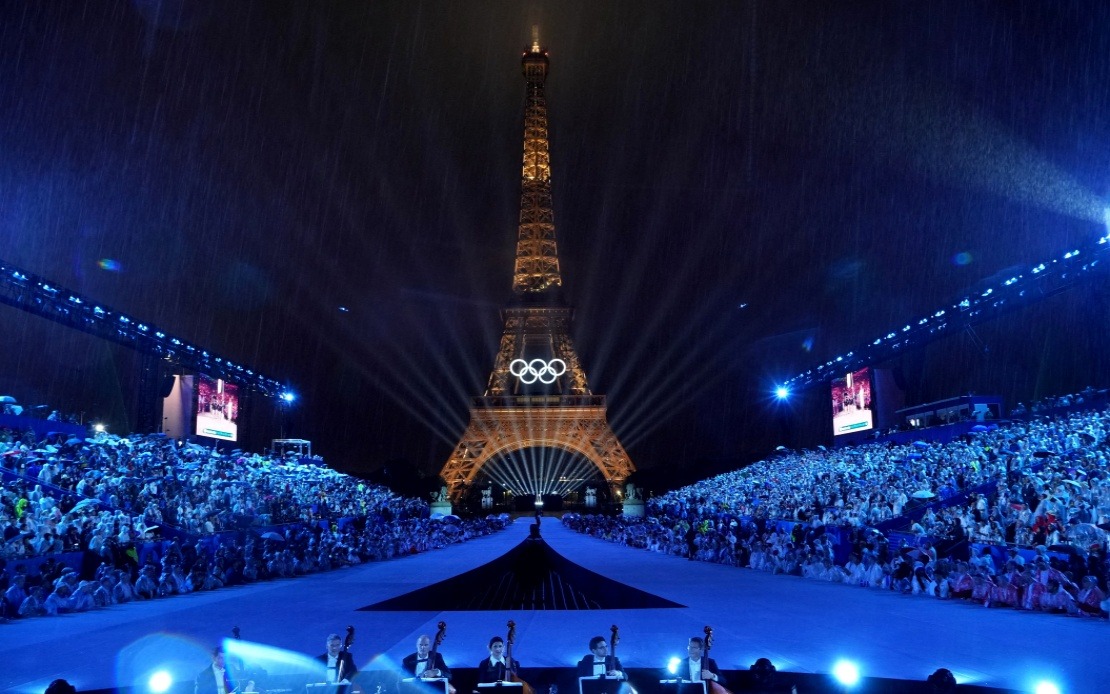
Iconic Parisian landmarks have taken the unprecedented step of closing their doors early this week as France grapples with dangerously high temperatures that are expected to persist through at least Thursday. The Eiffel Tower shut down at 4 pm local time on Tuesday rather than its standard closing hour, with the last visitor entry blocked at 12:15 pm, marking an exceptional operational adjustment driven by safety concerns in the face of extreme weather conditions.
The management company operating the Eiffel Tower, Societe d'Exploitation de la tour Eiffel (Sete), explained that the early closure represented a necessary response to exceptional heat forecasts. Officials stressed that protecting the wellbeing of both employees and tourists took absolute priority over revenue generation, a decision that underscores how seriously French authorities are treating the meteorological emergency. Visitors who had booked entry for time slots starting from 11:30 am onwards for staircase access, or from noon onwards for lift access, will receive automatic refunds without needing to submit claims.
The Louvre Museum, another global tourist institution in the French capital, similarly announced curtailed operating hours from Wednesday through Saturday next week. Rather than remaining open until its customary 6 pm closing time, the world's most visited art museum will shut at 4 pm during this four-day period. This coordinated response from multiple major attractions demonstrates the systemic nature of the heat emergency and the collective judgment that public welfare demands operational flexibility.
Meteo-France, the nation's authoritative weather service, reported that Paris itself reached 36 degrees Celsius by mid-afternoon on Tuesday, with meteorologists predicting even more intense conditions on Wednesday when the capital could experience peak temperatures approaching 38 degrees. These readings represent genuinely dangerous levels of heat that can trigger serious health complications, particularly among vulnerable populations including elderly residents, young children, and those with pre-existing health conditions.
The geographic scope of the crisis extends far beyond the capital. Meteo-France placed 54 departments across mainland France under red-level heatwave alert, the highest classification in the national warning system. Additionally, another 35 departments received orange-level alerts, indicating that roughly two-thirds of French territory faces either critical or serious heat stress. This widespread alert coverage reflects a heatwave of genuine national significance rather than a localized weather disturbance.
For Malaysia and Southeast Asian readers, this French scenario offers instructive parallels and contrasts. While tropical nations like Malaysia experience high ambient temperatures year-round, the difference lies in acclimatization and infrastructure adaptation. Europeans are fundamentally unaccustomed to sustained heat above 35 degrees Celsius, and their buildings, urban design, and public health systems have evolved for temperate conditions. The crisis in Paris illustrates how even wealthy, developed nations remain vulnerable to climate-driven extremes when weather patterns deviate from historical norms.
The early closure of major tourist attractions also carries economic implications. These landmarks generate substantial daily revenue from entry fees and ancillary spending by millions of annual visitors. By constraining operating hours, authorities are effectively accepting short-term financial losses to mitigate health and safety risks, a trade-off that reflects a genuine crisis rather than routine weather management. The automatic refund mechanism ensures that tourists, many of whom may have planned their Paris visits months in advance, do not bear the financial burden of weather-driven disappointment.
France's heatwave response demonstrates institutional preparedness and public health prioritization. Rather than attempting to maintain normal operations despite dangerous conditions, authorities proactively adjusted schedules. This approach contrasts with situations where organizations maintain rigid schedules despite hazardous conditions, prioritizing operations over wellbeing. The decision reflects lessons learned from previous European heat emergencies, particularly the devastating 2003 heatwave that caused thousands of deaths across the continent.
Staff safety represents an often-overlooked dimension of this response. Employees working in the Eiffel Tower or Louvre during extreme heat face cumulative heat exposure across extended shifts, working in crowded conditions with limited air circulation in some areas. By closing early, management reduces occupational health risks and acknowledges that workers warrant the same protective measures as visitors. This perspective aligns with international labor standards emphasizing employer responsibility for safe working conditions regardless of revenue pressures.
The meteorological forecast indicating persistent high temperatures through Thursday suggests that these closure measures may continue or even expand depending on how conditions develop. French authorities will likely monitor forecasts closely, potentially announcing further adjustments as Wednesday's predicted peak temperatures approach. The scale of the national alert system activation indicates that decision-makers view this as a serious public health emergency demanding rapid, coordinated response across sectors.
For international visitors accustomed to tropical climates, the European response to heat may seem cautious. However, systems and populations adapted for different thermal environments respond differently to extremes. The early closures of Paris's flagship attractions represent rational crisis management rather than overreaction, prioritizing human safety above economic considerations in a context where sustained exposure to dangerous heat poses genuine physiological risks to millions of people.