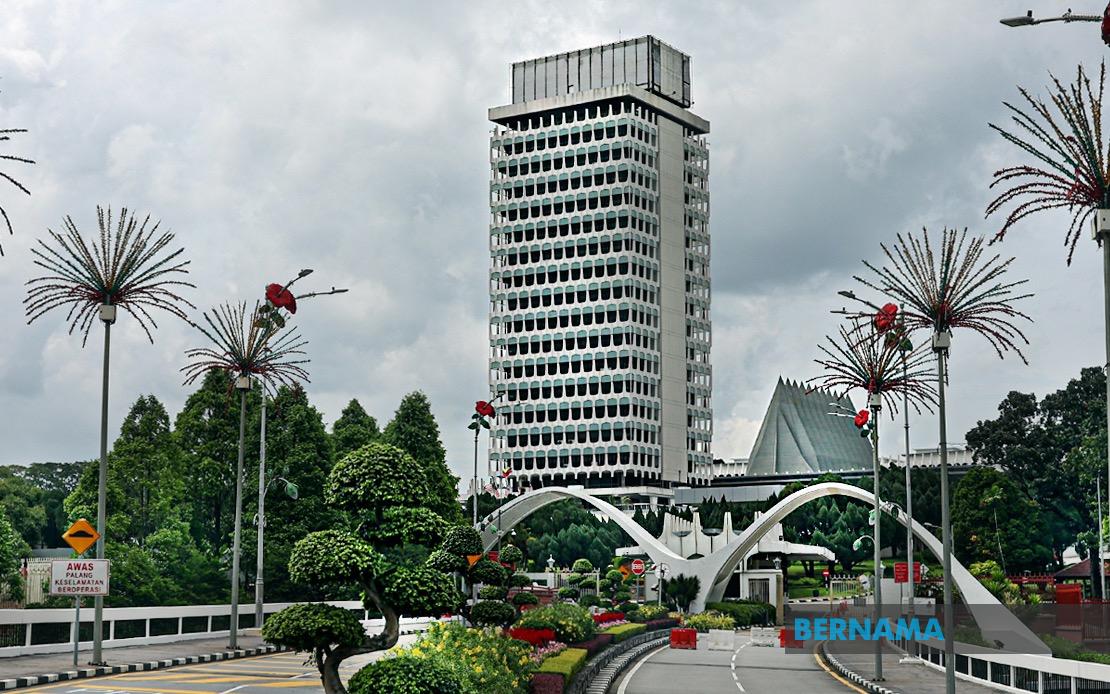
Prime Minister Datuk Seri Anwar Ibrahim used parliamentary sitting time this week to defend the Federal Government's allocation strategy, emphasising that virtually every state receives more funding than the tax revenue it generates. The clarification came during Ministers' Question Time on Tuesday and directly addressed concerns from opposition lawmakers that certain states were being disadvantaged under current distribution models. Anwar tied the allocation methodology to objective criteria centring on development requirements and public welfare outcomes, rather than political considerations, signalling that resource distribution follows a needs-based rather than partisan framework.
The Prime Minister also introduced additional procedural requirements for states seeking extra funding. Any request involving a Notice of Change must undergo formal renegotiation before the Federal Government approves supplementary allocations or loan facilities. This framework aims to ensure systematic evaluation of proposed expenditures and prevents ad-hoc spending decisions that could strain federal finances. The emphasis on structured processes reflects broader governance reforms the administration has undertaken since taking office, particularly around fiscal transparency and accountability mechanisms.
Anwar further stressed that campaign announcements of new projects or policies remain prohibited during election periods, citing Section 24B of the Election Offences Act 1954. This enforcement reminder comes as Malaysia heads toward electoral cycles at various government levels, and underscores the administration's commitment to maintaining boundaries between political campaigning and official government operations. The clarification carries particular significance given public scrutiny of how development announcements sometimes cluster around election periods, a pattern the government seeks to discourage.
Parliament this week advanced several significant pieces of legislation, most notably the Sexual Offences Against Children (Amendment) Bill 2026, which strengthens protections for vulnerable minors. Alongside this, lawmakers passed the Cybercrime Bill 2026, addressing emergent digital threats including offences and penalties related to digital forgery and the distribution of manipulated intimate images through computer networks. The cybercrime legislation represents a critical response to rapidly evolving technological abuse patterns, particularly deepfakes targeting women and children. These twin measures signal parliamentary recognition that Malaysia's legal framework must evolve to address both traditional and digitally-enabled harm.
Employment protections also received parliamentary attention, with amendments to the Employment Insurance System (Amendment) Bill 2025 advancing toward enactment. This reflects ongoing efforts to strengthen social safety nets for Malaysian workers facing economic uncertainty. Collectively, these bills demonstrate Parliament's engagement with contemporary policy challenges spanning child protection, digital security, and labour rights.
Minister in the Prime Minister's Department (Law and Institutional Reform) Datuk Seri Azalina Othman Said announced government work on modernising contract law, including recognition of third-party rights and updated frameworks for commercial agency relationships. A completed study on contract law reform in Malaysia has been submitted to Members of Parliament, incorporating policy recommendations, international comparative analysis, and draft legislation. Notably, the reform project accounts for artificial intelligence applications in commercial dealings, reflecting awareness that traditional contract law frameworks require updating to address AI-driven transactions and autonomous systems in commercial relationships.
Economic management featured prominently throughout the week's proceedings. Economy Minister Akmal Nasrullah Mohd Nasir detailed daily government monitoring of essential goods supply and pricing, coordinated with Petroliam Nasional Berhad and industry stakeholders to maintain energy sector stability. This systematic approach demonstrates government response to consumer concerns about cost-of-living pressures. The emphasis on distribution channel efficiency alongside supply and price monitoring suggests recognition that market functionality depends on logistics infrastructure and competition alongside government intervention.
Education initiatives received spotlight through the MADANI Book Voucher programme 2026, which Deputy Education Minister Wong Kah Woh indicated would benefit over 2.2 million students under the Ministry of Education's purview. The RM221.6 million allocation funds e-vouchers worth RM100 per student, with redemption having commenced and continuing through October 31. This programme combines digital innovation with education support, modernising traditional voucher systems while expanding literacy promotion to students nationwide, representing investment in human capital development across socioeconomic backgrounds.
Communications Minister Datuk Fahmi Fadzil reported advancement of the Online Safety Act 2025's regulatory framework, with development of additional instruments addressing private messaging features and platform obligations regarding harmful content. The Malaysian Communications and Multimedia Commission is exploring agentic artificial intelligence technology to enhance complaint management efficiency and reduce administrative workload. This integration of AI into regulatory enforcement reflects creative approaches to managing digital harms amid exponential content growth. Simultaneously, social media platforms face encouragement to deploy AI systems for faster detection and removal of community guideline violations, distributing responsibility for content moderation between government agencies and private technology companies.
These developments collectively illustrate Parliament's engagement across fiscal policy, criminal law, labour protections, commercial modernisation, consumer protection, education investment, and digital governance during the second week of the 16-day sitting extending from June 22 to July 16. The breadth of legislation and policy discussion reflects the complexity of contemporary governance, where technology, economics, and social protection intersect across multiple policy domains requiring coordinated parliamentary and ministerial action.

