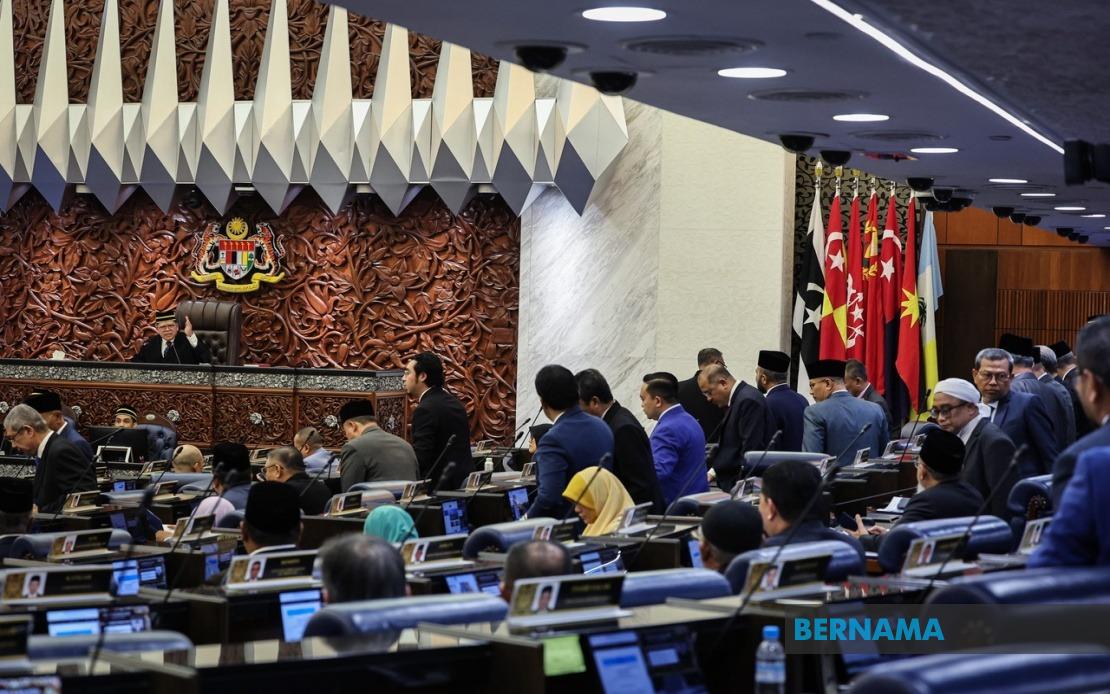
Malaysia's parliament opened its doors to comprehensive discussion of the Royal Commission of Inquiry findings into Lembaga Tabung Haji during a special sitting convened in response to a formal request from Prime Minister Datuk Seri Anwar Ibrahim. The extraordinary session, held under the framework of Standing Order 11(3), represents an institutional commitment to subjecting the controversial pilgrim fund management to parliamentary scrutiny, with Speaker Tan Sri Johari Abdul confirming that lawmakers from both government and opposition benches would be afforded extensive opportunity to examine the report's critical conclusions.
The decision to hold this special sitting underscores the political sensitivity surrounding Tabung Haji's management and the broader public concerns that prompted the establishment of the RCI in the first place. Lembaga Tabung Haji, which manages savings and investments for Malaysian Muslims performing the hajj pilgrimage, has faced sustained criticism over governance lapses, investment decisions, and the treatment of pilgrim deposits during periods of financial stress. By facilitating dedicated parliamentary debate rather than allowing the report to circulate quietly through institutional channels, the government signals recognition that stakeholders—both within and outside parliament—deserve clarity on how the fund has been administered and what reforms are necessary.
Speaker Johari's emphasis on both transparency and the constitutional framework governing parliamentary procedures reflects the delicate balance required when addressing sensitive institutional matters. His invocation of Standing Order 11(3) demonstrates that the government chose to follow established parliamentary mechanisms rather than circumvent them, lending legitimacy to the proceedings. This adherence to procedural norms matters significantly in a parliamentary democracy, as it reassures the public that even when investigating sensitive government bodies, Malaysia's institutions operate within defined legal parameters rather than through ad hoc arrangements that might invite accusations of bias or political manipulation.
The timing of this special sitting comes as Malaysians grapple with broader questions about institutional accountability and the effectiveness of governance oversight mechanisms. The pilgrimage fund manages billions of ringgit belonging to ordinary Malaysians who have entrusted their savings to what they believe is a secure, religiously sanctioned institution. When such trust is compromised, the ripple effects extend beyond finance into questions about whether regulatory frameworks adequately protect public assets and whether those managing such funds face meaningful consequences for failures.
For opposition MPs, the special sitting provides a rare, formal platform to examine government-managed entities without the usual time constraints of standard parliamentary sessions. This matters particularly in Malaysia's political context, where government control of the legislative agenda typically limits opposition capacity to raise concerns about specific ministries or statutory bodies. The RCI report likely contains findings that previous opposition motions and questions failed to extract from the relevant authorities, making this debate session potentially consequential for extracting accountability.
Government MPs, meanwhile, face a different imperative: defending the administration's handling of Tabung Haji while accepting the RCI's findings without appearing defensive. This parliamentary moment tests whether the ruling coalition can acknowledge institutional failures genuinely while maintaining credibility with Muslim voters who form a significant portion of its support base. The careful calibration required suggests that parliamentary responses will likely blend acceptance of reform recommendations with assertions that corrective actions have already commenced or are being actively considered.
The RCI's findings, whatever their specific content, will now be subjected to intense scrutiny and rebuttal in real time, with parliamentary records creating a permanent public archive of the government's response. This transparency mechanism, while imperfect, ensures that explanations and justifications offered by ministers and officials cannot be easily revised or obscured later. For researchers, journalists, and civil society organizations monitoring Malaysian governance, the Hansard record from this sitting will become essential documentation of how an institution acknowledged its shortcomings and what commitments it made toward remediation.
The broader significance of this debate extends to Malaysia's evolving approach to institutional accountability. While the RCI itself represents one mechanism for investigating governance concerns, the decision to facilitate parliamentary debate elevates the matter from a technical inquiry into a political conversation. This reflects recognition that major government institutions cannot be corrected in closed administrative settings alone; public understanding and political engagement become necessary for sustainable reform.
Looking forward, the debate's effectiveness will depend on whether parliamentary discussion produces concrete commitments to systemic change, legislative amendments if necessary, and genuine oversight mechanisms to prevent recurrence of the problems the RCI identified. The credibility of Malaysia's governance institutions rests partly on demonstrating that public inquiries lead to tangible outcomes rather than serving as exercises in institutional management with minimal practical consequence. For Malaysian pilgrims and the broader taxpaying public who ultimately bear responsibility for public sector performance, this parliamentary moment represents a test of whether institutional mechanisms actually produce accountability or merely perform its appearance.

