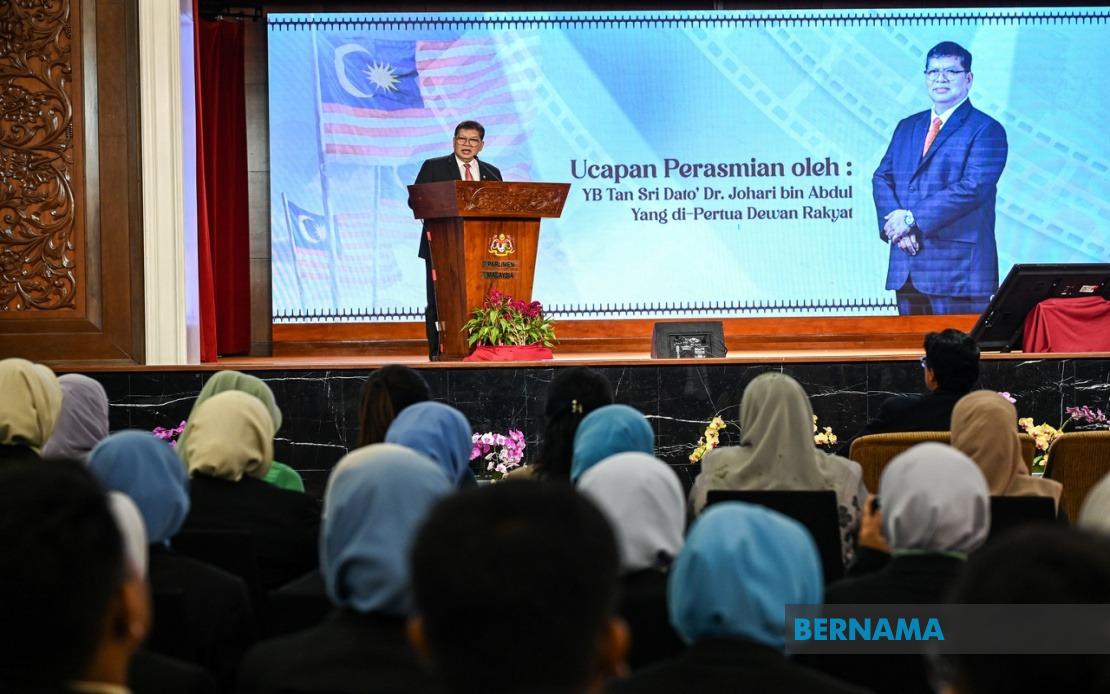
Malaysia's Parliament launched a strategic initiative this week aimed at reshaping how the nation's young people view their role in the country's future. The centrepiece is a short film titled "Arkitek Bangsa"—literally "Architects of the Nation"—which frames leadership development not as an innate quality but as a deliberate process that can be cultivated through exposure, mentorship, and structured training. Senior parliamentary officials unveiled the production at a special screening held at the Parliament Building, signalling the legislature's commitment to youth engagement as a cornerstone of nation-building efforts.
The underlying philosophy behind the film reflects a broader shift in how Malaysia's political establishment approaches generational renewal. Rather than viewing young citizens as passive recipients of governance, the campaign positions them as active builders of national institutions and values. Parliamentary leadership argues that this framing is essential in a competitive global environment where countries must continuously motivate talented individuals to invest their ambitions in serving their communities. The video's central message—that every young person has the potential to become an architect of national development—attempts to counteract narratives of political apathy and disengagement that have characterised youth discourse in recent years across Southeast Asia.
The film initiative sits within a constellation of parliamentary programmes designed to deepen youth connection to democratic processes. The Parliament School Programme exemplifies this approach, having brought 1,057 schools through the Parliament Building to experience firsthand how legislative institutions function. These immersive visits expose students to the mechanics of democracy and allow them to understand how laws are debated, amended, and enacted. Such programmes serve a dual purpose: they demystify government operations for ordinary citizens while simultaneously identifying potential future leaders from diverse socioeconomic and geographic backgrounds.
Parliament is simultaneously expanding its direct youth representation mechanisms. The Youth Parliament initiative, historically comprising 100 members, is being enlarged to 222 participants and reformed to incorporate proportional representation principles in its electoral system. This expansion reflects recognition that youth engagement requires genuine institutional access and visible representation, not merely symbolic gestures. By enlarging the cohort and adjusting electoral mechanics, Parliament aims to ensure that diverse youth perspectives—including those from underrepresented regions and communities—gain meaningful voice in parliamentary deliberations on matters affecting their generation.
Another critical component involves Parliament's deepened involvement with the National Service Training Programme, known locally as PLKN. By establishing a special select committee dedicated to this programme, Parliament positions itself as an active partner in inculcating civic values and national consciousness among young conscripts. The PLKN reaches hundreds of thousands of young Malaysians annually, making it an invaluable channel for reinforcing messages about leadership, patriotism, and national identity that the "Arkitek Bangsa" film promotes.
Parliamentary officials articulate a specific concern that undergirds these initiatives: the fragility of institutional and national cohesion. As one senior parliamentary figure noted in his address, constructing enduring national institutions requires sustained effort across generations, but those institutions can be rapidly undermined if younger Malaysians lack sufficient grounding in national history and appreciation for the sacrifices made by earlier generations. This emphasis on historical consciousness reflects anxieties, common across the region, that rapid social change and demographic shifts might weaken intergenerational bonds critical to maintaining stable governance and social harmony.
The pedagogical strategy embedded in the "Arkitek Bangsa" campaign merits examination. Rather than lecturing youth about duties to nation, the film attempts to inspire through aspirational framing—positioning national leadership not as a burden imposed from above but as an opportunity for self-realisation and meaningful contribution. This approach acknowledges that contemporary youth, particularly in urban and digitally connected environments, respond more effectively to inspirational messaging that connects personal ambition to collective purpose than to nationalist rhetoric rooted in historical grievance or obligation.
For Malaysian policymakers, the initiative represents a measured response to challenges afflicting democracies across Southeast Asia: declining youth participation in institutional politics, rising disengagement from conventional civic channels, and concerns about whether emerging generations will sustain democratic norms and multiethnic social compacts established during earlier periods. By coupling aspirational messaging through film with substantive institutional reforms—like Youth Parliament expansion and PLKN integration—Parliament attempts to address both inspirational and structural dimensions of youth disengagement.
The production itself involved the National Film Development Corporation Malaysia (FINAS), positioning filmmaking and creative industries as tools for national policy implementation. This collaboration reflects growing recognition across Southeast Asia that traditional government communication channels often fail to reach younger audiences effectively. Strategic use of film, digital media, and entertainment-adjacent formats can penetrate cultural spaces where government messaging might otherwise be dismissed as propagandistic or irrelevant.
Implementation at scale represents the crucial next challenge. Officials have indicated their intention to distribute "Arkitek Bangsa" widely across ministries and government agencies engaged in youth programming. Whether the film actually reaches intended audiences in compelling ways, and whether it influences attitudes toward political participation, remains to be seen. Previous nation-building campaigns in Malaysia and comparable democracies have achieved mixed results, sometimes resonating powerfully with target audiences and sometimes failing to overcome skepticism or competing cultural narratives.
The broader context matters significantly. Malaysia faces generational challenges around economic opportunity, educational quality, and social mobility that ultimately shape whether young people feel invested in national institutions and leadership pathways. A film promoting leadership aspiration, however well-crafted, cannot substitute for concrete improvements in education quality, job market accessibility, or perceived fairness in meritocratic advancement. The "Arkitek Bangsa" initiative thus works most effectively as one component within a comprehensive strategy addressing youth concerns across multiple policy domains.
Parliament's youth engagement push also reflects regional trends. Across Southeast Asia, legislatures increasingly recognise that demonstrating responsiveness to younger demographics is essential for maintaining democratic legitimacy and countering alternative power structures—whether authoritarian models or non-state actors—that may appeal to disengaged youth. Malaysia's multi-dimensional approach, combining aspirational messaging with institutional reform and expanded participation mechanisms, represents a thoughtful attempt to address these challenges comprehensively.

