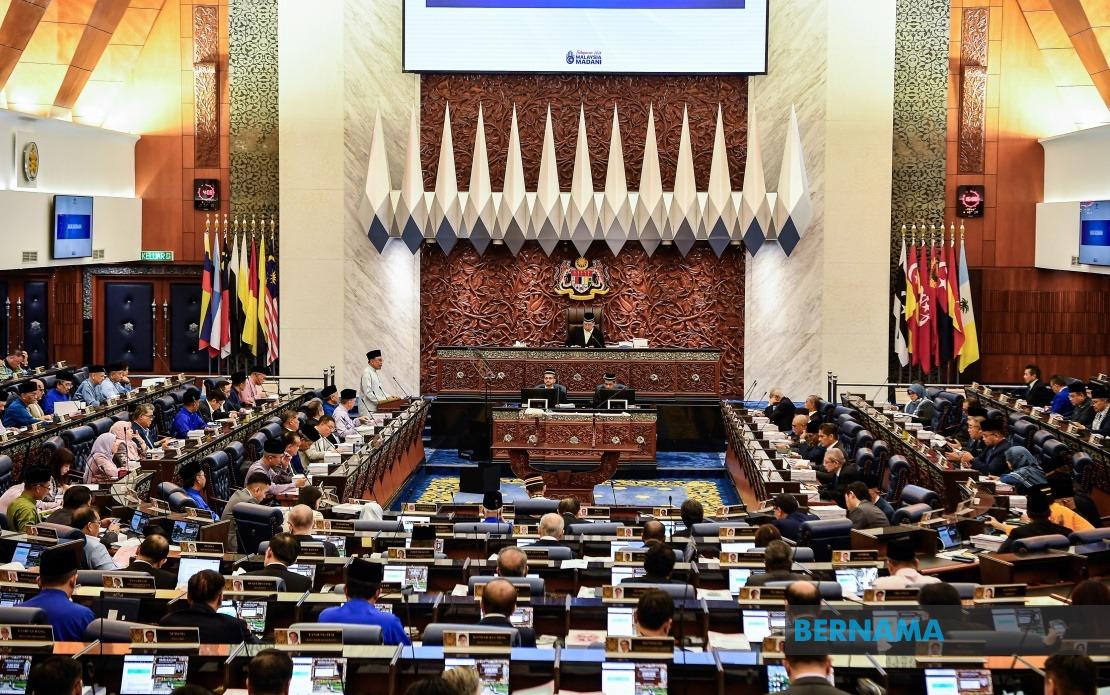
Parliament has formally endorsed the Cybercrimes Bill 2026, marking a significant legislative milestone in Malaysia's digital governance framework. The 61-clause legislation received approval on July 1 following robust parliamentary discussion, with lawmakers from both government and opposition benches contributing to the debate. The bill's passage addresses growing concerns about technology-enabled crimes, particularly those involving synthetic media and the non-consensual circulation of intimate material.
The legislation establishes a comprehensive regulatory framework for addressing cybercrimes facilitated by advanced computational methods. Among its key provisions are specific offences targeting the creation and distribution of deepfakes—synthetic audio and video content generated through artificial intelligence—alongside criminal penalties for those who disseminate intimate images that have been digitally altered without consent. These provisions respond to emerging forms of abuse that exploit technological sophistication to harm individuals, with particular implications for women and vulnerable populations who face disproportionate risks from such material.
Deputy Prime Minister Datuk Seri Dr Ahmad Zahid Hamidi emphasized during parliamentary debate that the bill incorporates substantial safeguards designed to prevent governmental abuse of enforcement powers. He stressed that the legislation does not vest authorities with unchecked discretion, nor does it supersede established legal frameworks including the Official Secrets Act 1972. Instead, the bill operates within a carefully constructed system of institutional checks, requiring authorities to follow prescribed procedures before exercising investigative capabilities.
Central to these protections is the mechanism governing access to computer systems and digital information. Rather than granting investigators blanket authority to examine electronic data, the framework mandates compliance with specific legal conditions. Officials seeking to preserve computer data must first establish reasonable grounds demonstrating that such information is genuinely necessary for an active investigation and that there exists a credible risk of the data being erased, modified, or destroyed absent immediate intervention. This requirement prevents the casual or speculative seizure of electronic records.
The bill's provisions regarding data disclosure represent another layer of procedural protection. Any governmental request for computer data must be communicated through formal written notice to the individual or entity possessing or controlling that information. Furthermore, such requests remain contingent upon the investigation itself meeting lawful standards. This approach introduces transparency and documentation requirements that create an auditable record of government action, potentially enabling affected individuals to challenge improper requests through judicial channels.
The breadth of parliamentary engagement during the debate reflects the sensitive balancing act inherent in cybercrime legislation. Forty-eight members across competing political factions contributed to discussions, suggesting serious consideration of both law enforcement imperatives and individual privacy protections. This inclusive deliberation process provides legitimacy to the final text and indicates that the bill accommodates diverse perspectives on appropriate state regulatory boundaries.
For Malaysia's technology ecosystem, the bill's passage clarifies criminal liability in an area where legal frameworks have previously lagged behind technological capability. The entertainment and media sectors, alongside technology companies operating regionally, have expressed concern about the unchecked proliferation of synthetic media capable of replicating public figures and private individuals with alarming fidelity. This legislation provides clarity and deterrent mechanisms that should incentivize responsible development practices.
The timing of this legislation aligns with broader regional and global trends. Southeast Asian governments have increasingly recognized that traditional cybercrime laws, often drafted in the early internet era, prove inadequate for addressing harms enabled by machine learning and artificial intelligence. Singapore, Thailand, and Indonesia have similarly pursued legislative updates addressing deepfakes and synthetic media. Malaysia's approach, emphasizing procedural safeguards alongside enforcement mechanisms, positions the country within a consensus framework favouring rights-respecting regulation.
Implementation will prove crucial to the bill's effectiveness. The framework's success depends substantially on how government agencies interpret and apply the procedural requirements established by parliament. Training of investigating officers on the lawful access provisions, clear guidelines on what constitutes reasonable grounds for data preservation, and judicial oversight through warrant applications or disclosure procedures will collectively determine whether the legislation achieves its intended balance between protection and privacy.
From a comparative legal perspective, Malaysia's inclusion of explicit restrictions on governmental discretion distinguishes this framework from some regional equivalents that grant authorities broader powers with fewer procedural constraints. The requirement for documented justification and formal notice creates potential accountability mechanisms absent in less structured approaches. These design elements may provide a model worthy of consideration elsewhere in the region where cybercrime legislation is under development.
The bill's passage also reflects evolving social awareness regarding technology-enabled harms. Advocacy groups and civil society organizations have increasingly documented the psychological and reputational consequences for victims of deepfake abuse and non-consensual intimate imagery. By codifying specific offences addressing these harms, parliament has formally recognized them as matters warranting criminal intervention, signalling cultural shifts regarding technology ethics and digital dignity.
Government agencies now face the substantial task of establishing implementation infrastructure. Creating specialized units capable of investigating deepfake creation and synthetic media distribution will require recruiting personnel with technical expertise spanning computer science and digital forensics. Additionally, guidelines clarifying the bill's application to ambiguous scenarios—for instance, satirical synthetic media or documented parodies—will need development to prevent overly broad prosecutorial interpretation.
Looking forward, the bill establishes a foundation upon which Malaysia can build additional regulatory capacity addressing emerging digital harms. As artificial intelligence capabilities advance further, parliament may need to revisit and refine these provisions. The current framework's emphasis on procedural restraint and judicial oversight creates space for adaptation without sacrificing fundamental rights protections. For Malaysia's position within the Southeast Asian digital economy, demonstrating that innovation and human rights protection can coexist through thoughtful regulation offers strategic advantage as the region competes for technology investment and talent.

