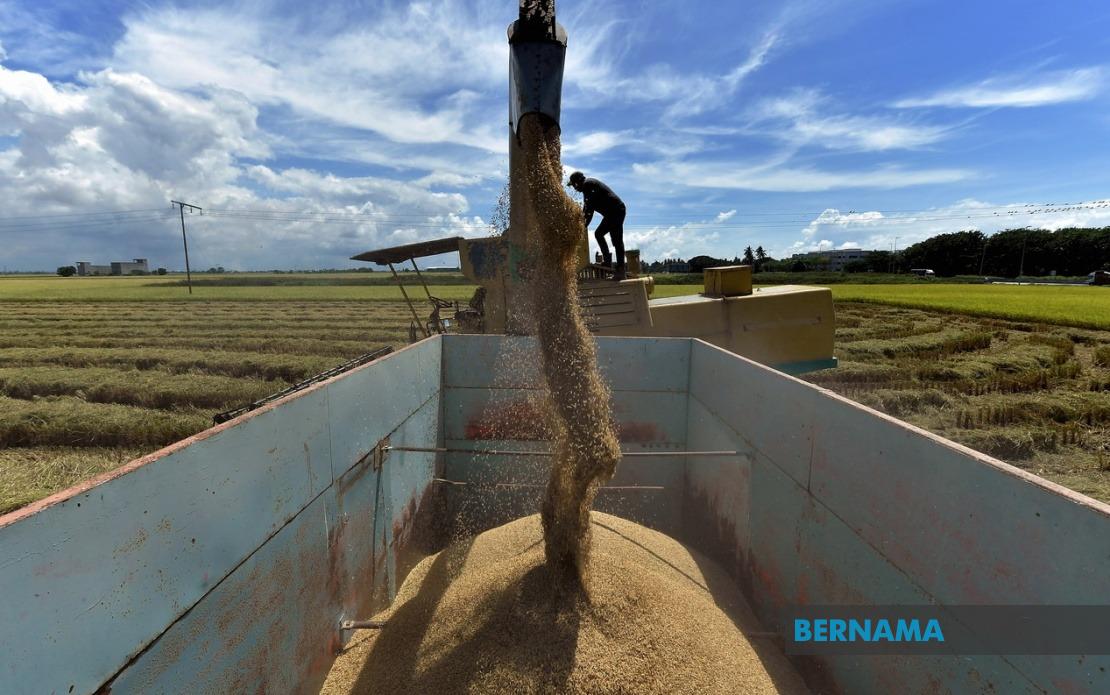
Malaysia's parliament has given its backing to the Control of Padi and Rice (Amendment) Bill 2026, a comprehensive legislative overhaul designed to fortify the nation's rice production framework and bolster oversight mechanisms within an industry crucial to domestic food supply. The measure secured approval through a majority voice vote following substantive debate contributed by lawmakers across government and opposition benches, underscoring the cross-party recognition of the need for regulatory modernisation in a sector that remains strategically important to millions of Malaysian families.
At the legislative centre of this amendment lies a substantially reformed penalty structure that reflects decades of regulatory stagnation. Section 22 of the principal Act now prescribes maximum fines reaching RM250,000 for individual violators and RM1 million for corporate entities—a dramatic escalation from the existing framework that has remained virtually unchanged since the Act's establishment in 1994. This represents the first meaningful recalibration of enforcement provisions in over three decades, a timeline that Deputy Minister of Agriculture and Food Security Datuk Chan Foong Hin characterised as evidence of regulatory drift that had rendered existing penalties disconnected from contemporary commercial realities.
The justification for these heightened sanctions centres on the observable gap between enforcement outcomes and industry violations. Official data compiled by authorities reveals that seizures associated with rice smuggling and the unlawful diversion of domestically produced white rice indicate substantial illicit flows within the sector. Chan underscored that previous punishment levels had failed to create sufficient deterrence, particularly given the magnitude of profits accruing to operators engaged in smuggling and regulatory evasion within what he characterised as a multi-billion-ringgit industry. The amendment thus aims to rebalance the calculus facing potential wrongdoers, ensuring that the cost of violation exceeds potential illicit gains.
Beyond penalties, the legislative package serves broader protective purposes aligned with the economic interests of Malaysia's padi farming community. The measure contains safeguards intended to shield farmers from market manipulation tactics and disruptions to fair pricing. This protective dimension addresses longstanding grievances among smallholder and commercial producers who have periodically faced erosion of income due to speculative trading practices and supply chain distortions. By strengthening enforcement capacity and deterrence, the amendment aims to create a more stable production environment where farmers can operate with greater confidence in market predictability.
During parliamentary proceedings, lawmakers offered substantive technical input that expanded the debate beyond penalty revision. Datuk Idris Ahmad, representing Bagan Serai under the Perikatan Nasional coalition, advocated for the pairing of enhanced penalties with explicit prosecution guidelines that would standardise enforcement approaches across jurisdictions. He further recommended specialist training programmes for prosecutors to ensure that courts receive appropriately calibrated sentencing recommendations. His contributions reflected recognition that legislative penalties achieve their deterrent purpose only when paired with competent, consistent application by judicial officials.
Parliamentarians representing the Pakatan Harapan coalition raised complementary concerns regarding the adequacy and calibration of enforcement itself. Tan Hong Pin from Bakri pressed for a comprehensive review of the proposed penalty rates while proposing the establishment of an independent oversight committee tasked with periodic assessment of Padiberas Nasional Berhad (BERNAS), the quasi-governmental body responsible for rice sector regulation. His intervention points to underlying anxieties regarding cartel formation and anti-competitive practices, suggesting that penalty escalation alone may prove insufficient without concurrent structural reforms to market oversight mechanisms.
Technology emerged as a central theme in legislative discussion, reflecting growing parliamentary conviction that digital innovation offers potent tools for supply chain governance. Azli Yusof of Shah Alam advocated for comprehensive digital traceability mechanisms spanning the entire padi and rice supply chain, envisioning real-time monitoring capacity to identify and prevent leakages and distribution disruptions. This technological orientation aligns with contemporary international practice in food security management and represents a shift toward prevention-oriented regulation rather than purely punitive approaches.
The most granular technological proposal came from Manndzri Nasib of Tenggara, who suggested implementing QR code labelling on individual rice packages. Such implementation would enable consumers and enforcement personnel to track stock movement through distribution networks in real time, facilitating rapid detection of mislabelling, hoarding, and other supply chain anomalies. While implementation of universal QR coding would impose compliance costs on industry participants, proponents view such investments as justified given the strategic importance of rice to national food security and the substantial costs historically incurred through smuggling and market disruption.
The amendment's passage reflects broader contemporary emphasis on food security across Southeast Asia, a region where rice occupies unparalleled cultural and nutritional significance. Malaysia's experience with rice sector challenges—including periodical supply disruptions, price volatility, and illicit trade—mirrors difficulties encountered across neighbouring jurisdictions. The legislative approach combining deterrence through penalties, structural oversight through independent committees, and technological innovation through traceability systems offers a model that may inform regulatory discussions in other regional economies managing similar vulnerabilities in rice production and distribution.
For Malaysian stakeholders, the amendment signals governmental commitment to protecting both producer livelihoods and consumer access to stable rice supplies. Farmers gain enhanced assurance that market distortions will encounter more credible enforcement responses, while consumers benefit from improved transparency mechanisms and reduced smuggling pressures on domestic prices. The three-decade interval between substantial regulatory updates now concludes, positioning the sector for more contemporary governance aligned with present-day commercial scale and technological capability, setting foundations for enhanced food security resilience in coming decades.

