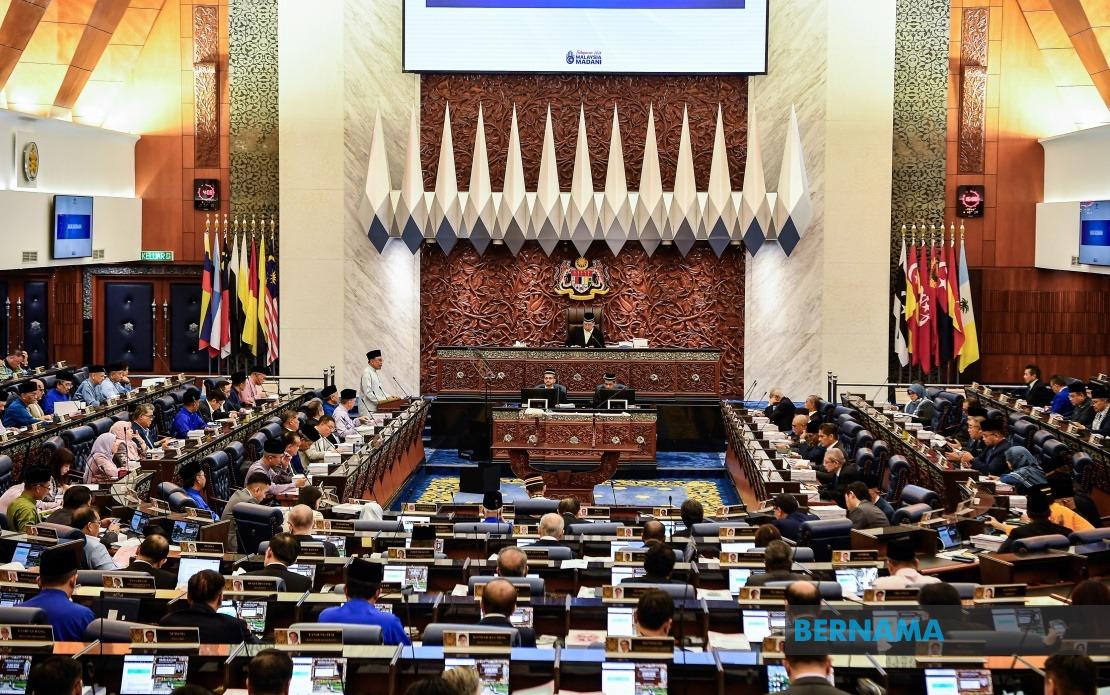
Parliament has given its blessing to sweeping reforms of Malaysia's communications watchdog through passage of the Malaysian Communications and Multimedia Commission (Amendment) Bill 2026, marking a significant step in modernising the regulatory framework that governs the country's rapidly evolving digital landscape. The legislation secured approval via majority voice vote following substantive deliberation involving 14 lawmakers spanning both government and opposition benches, reflecting broad parliamentary consensus on the need to enhance institutional rigour at the MCMC.
At the heart of the amendments lies a fundamental recalibration of the MCMC's financial autonomy. The bill substantially elevates the commission's procurement threshold to RM50 million from its previous ceiling of RM5 million, a threshold that has remained untouched since 1998. Deputy Communications Minister Teo Nie Ching contextualised this increase within the broader regulatory environment established by the Finance Ministry's Procurement Regulations for Federal Statutory Bodies, which permits fully internally-funded federal entities to approve contracts valued up to RM499 million. Nevertheless, the government opted for a measured approach, believing RM50 million struck an appropriate balance between operational flexibility and fiscal responsibility. This elevation acknowledges the material erosion of purchasing power over the past quarter-century, with inflation, technological innovation, and escalating labour and material expenses all conspiring to render the previous limit increasingly unrealistic for modern telecommunications infrastructure and digital platform regulation.
The amendments also seek to insulate the MCMC from political pressures by introducing stricter safeguards around the appointment of the commission's leadership. A critical new provision mandates that the MCMC chairman cannot simultaneously hold membership in any legislative body, a measure explicitly designed to prevent the conflicts of interest that can arise when regulators maintain parliamentary platforms. Teo explained that while ministerial appointment powers for the chairman and commissioners have existed since the commission's establishment in 1998, this additional constraint represents an important evolution in governance norms. The appointment process itself remains grounded in standard statutory body criteria encompassing professional qualifications, demonstrated integrity, relevant sectoral experience, and proven capacity to provide strategic direction to a complex regulatory institution.
Opposition legislators, however, pressed for even more ambitious reforms to the appointment architecture. Dr Halimah Ali of Perikatan Nasional, representing the Kapar constituency, advocated for a substantially more transparent selection mechanism that would substantially diminish ministerial discretion. She proposed adopting a model analogous to that employed for the Human Rights Commission of Malaysia (SUHAKAM), whereby commissioners would be chosen through an explicitly open, merit-based process prioritising expertise, professional track record, and public credibility rather than executive preference. Halimah also urged the government to establish mandatory recording and parliamentary tabling of all ministerial directives to the MCMC, a transparency mechanism designed to create a permanent audit trail of political instruction and constrain arbitrary intervention.
Datuk Mas Ermieyati Samsudin of Perikatan Nasional, representing Masjid Tanah, similarly championed enhanced institutional checks and balances, directing particular attention to oversight of the Universal Service Provision Fund, the commission's audit jurisdiction, and the handling of ministerial instructions. She advocated that utilisation reports on the USP Fund be submitted to Parliament periodically, ensuring ongoing legislative scrutiny of this strategically important mechanism for expanding digital services to underserved populations. These concerns reflect mounting recognition among parliamentarians that regulatory independence requires not merely structural separation from executive control but also mechanisms for continuous parliamentary oversight and public accountability.
The passage of these amendments carries significant implications for Malaysia's regulatory posture in an era of technological disruption and digital transformation. The MCMC serves as the primary institutional guardian of competition, consumer protection, and service quality standards in telecommunications, broadcasting, and converging digital markets—sectors that underpin economic competitiveness and social cohesion across the region. By enhancing the commission's financial authority and reinforcing its operational independence, the amendments position the regulator to respond more swiftly to evolving market dynamics without navigating Byzantine approval processes for routine procurement decisions.
The increased financial threshold particularly matters given the capital-intensive nature of modern telecommunications infrastructure and the complexity of digital platform regulation. Investment in network monitoring, cybersecurity infrastructure, spectrum management systems, and digital content moderation technologies frequently commands budgets well exceeding the previous RM5 million ceiling. The new RM50 million limit enables the MCMC to procure sophisticated technologies and engage specialist services without repeated recourse to ministerial approval, potentially accelerating regulatory responses to emerging challenges including online harmful content, digital fraud, and spectrum congestion.
However, the amendments also warrant scrutiny regarding their potential limitations. While the prohibition on legislative service for the chairman creates valuable distance from parliamentary politics, the underlying appointment mechanism remains substantially ministerial, potentially leaving the regulator vulnerable to more subtle forms of political influence exercised through the selection process itself. The government's measured approach to the appointment mechanism—maintaining ministerial prerogative while adding one additional constraint—suggests confidence that existing safeguards suffice, yet the opposition's advocacy for more rigorous transparency protocols indicates lingering unease about regulatory capture risks in a system where executive selection remains determinative.
Regional observers will likely monitor implementation carefully, particularly given Southeast Asia's broader struggles to maintain genuinely independent regulatory institutions amid countervailing pressures for governmental control. Countries including Thailand, Cambodia, and Myanmar have experienced significant regulatory erosion, with communication authorities increasingly instrumentalised for political objectives. Malaysia's commitment to periodic reforms and parliamentary deliberation on regulatory governance, while imperfect, represents a more robust institutional framework than several neighbour jurisdictions, though the question of whether formal constraints translate to genuine operational autonomy remains perpetually contested.
The passage of this legislation also reflects evolving expectations regarding regulatory professionalism and technical competence. Dr Richard Rapu of GPS, representing Betong, characterised the amendments as foundational to building a regulatory body genuinely capable of managing digital economy complexities, emphasising that institutional strengthening and professional independence constitute prerequisites for effective market governance. This framing aligns with international best practice literature emphasizing that independent regulators with adequate resources, qualified personnel, and administrative autonomy consistently outperform politically-constrained alternatives in fostering innovation, protecting consumers, and maintaining competitive market conditions.
Moving forward, the true test of these reforms will manifest in their implementation. Procedural safeguards against political interference prove effective only insofar as appointed regulators actively assert their independence and political leadership respects formal constraints on their authority. The creation of transparent appointment processes and mandatory parliamentary reporting mechanisms necessarily implicates political actors themselves, requiring sufficient institutional maturity and democratic culture to tolerate regulators whose decisions occasionally frustrate governmental preferences or political allies' commercial interests. Malaysia's experience over the coming years will provide instructive evidence regarding whether formal amendment of the statutory framework translates into substantive enhancement of regulatory independence and institutional effectiveness in managing communications and multimedia markets.

