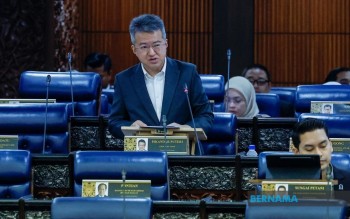
Malaysia's Parliament has endorsed the National Trust Fund (KWAN) Bill 2026, marking a significant regulatory overhaul of the country's sovereign wealth mechanism. The legislation, championed by Deputy Finance Minister Liew Chin Tong, secured parliamentary approval through majority vote following extensive deliberation involving 15 members across the chamber on July 16. This legislative milestone represents a deliberate shift away from decades of discretionary management towards a more structured, accountable framework designed to protect intergenerational wealth accumulation.
The fund's asset base stands at RM22.43 billion as of the end of 2024, a substantial reserve built incrementally since its establishment in 1988. Petronas, the state-owned petroleum company, has emerged as the sole voluntary contributor throughout the fund's 36-year history, injecting RM13.5 billion into this sovereign mechanism. This heavy reliance on a single corporate entity underscores vulnerabilities in the fund's previous architectural design, prompting Parliament to implement more robust governance protocols that would diversify and stabilise revenue streams.
The bill's passage addresses systemic weaknesses exposed during the 2021 withdrawal episode, when RM5 billion was extracted from the fund in circumstances that generated considerable public scrutiny and debate. That withdrawal demonstrated the absence of meaningful constraints on fund utilisation, revealing how the existing legal architecture permitted substantial capital drawdowns without clearly defined justification or oversight mechanisms. The incident became a watershed moment, prompting policymakers to acknowledge that the fund's foundational framework required comprehensive modernisation to prevent future ad-hoc depletions that could undermine long-term savings objectives.
Under the revised legislation, the fund operates according to three reinforced pillars: mandatory statutory contributions, disciplined withdrawal protocols, and enhanced governance standards. The previous regime allowed contributions to remain entirely discretionary, creating unpredictability in revenue generation and limiting the fund's capacity to accumulate wealth consistently across economic cycles. Liew emphasised that the new framework transforms this voluntary paradigm into a binding obligation, ensuring that successive governments cannot circumvent contribution commitments through administrative decisions or budgetary reallocation.
The bill establishes a contribution rate of 0.1 per cent as the statutory minimum, a figure designed to maintain stability whilst remaining economically manageable across fiscal contexts. This rate is deliberately positioned as a foundational floor rather than an optimal ceiling, permitting future enhancement if economic conditions and political consensus allow. Critically, any modification to this rate requires parliamentary amendment rather than executive or bureaucratic adjustment, embedding the contribution obligation within constitutional safeguards that transcend individual government tenures.
The governance architecture embedded within the legislation represents a deliberate constraint on executive discretion. By requiring parliamentary approval for any rate adjustment, the legislation transforms the fund from a subject of governmental prerogative into a matter of national legislative concern. This mechanism ensures that political continuity and intergenerational commitment override short-term fiscal pressures or transitional administrations' preferences to reallocate resources toward immediate spending priorities. The requirement that any government wishing to modify contribution rates must return to the Dewan Rakyat creates political friction against casual fund manipulation, as such proposals would require explicit parliamentary debate and majority endorsement.
The bill's passage carries significant implications for Malaysian economic governance, particularly regarding long-term fiscal sustainability and wealth preservation. By institutionalising savings mechanisms through legislation rather than relying on voluntary corporate largesse or ministerial discretion, Parliament has affirmed a commitment to building reserves that can buffer future generations against economic volatility. This reflects global best practices observed in comparable sovereign wealth funds, where statutory frameworks provide durability that transcends electoral cycles and economic fluctuations.
The strengthening of withdrawal discipline similarly addresses vulnerabilities identified through experience. The previous framework permitted extraction without explicit criteria or limitations, enabling policymakers to view the fund as an available resource for financing projects or managing fiscal emergencies. The revised approach imposes constraints that require deliberate justification for any withdrawal, encouraging government to exhaust conventional budgetary mechanisms before accessing accumulated reserves. This disciplinary mechanism protects intergenerational equity by preventing contemporaneous governments from depleting inherited assets to finance current expenditure.
For Malaysian stakeholders, the legislation signals Parliament's recognition that sustainable economic development requires mechanisms that preserve capital across extended timeframes. The fund's accumulation of RM22.43 billion, modest though it may appear relative to sovereign wealth funds in comparable resource-rich nations, represents decades of disciplined savings that ought not be dissipated through short-term opportunism. By embedding the fund within statutory frameworks that resist casual manipulation, Parliament has acknowledged that wealth preservation transcends individual political preferences and reflects broader national interests.
The bill's enactment also carries regional significance within Southeast Asia's development landscape. As regional economies navigate volatile commodity markets and demographic transitions, institutional mechanisms for long-term savings and wealth management become increasingly essential. Malaysia's legislative commitment to strengthening its sovereign fund framework demonstrates a mature approach to fiscal governance, signalling to international investors and regional peers that the country prioritises systemic resilience and intergenerational responsibility over short-term financial expedience.
Moving forward, the implementation of this legislation will depend substantially on institutional commitment from successive administrations to honour statutory contribution obligations even during periods of fiscal constraint. While parliamentary amendment requirements create political friction against fund depletion, determined governments might still navigate these obstacles through legislative action during periods of electoral dominance. The true test of this framework's durability will emerge across economic cycles, as future policymakers confront tensions between immediate budgetary pressures and long-term savings commitments encoded within law.

