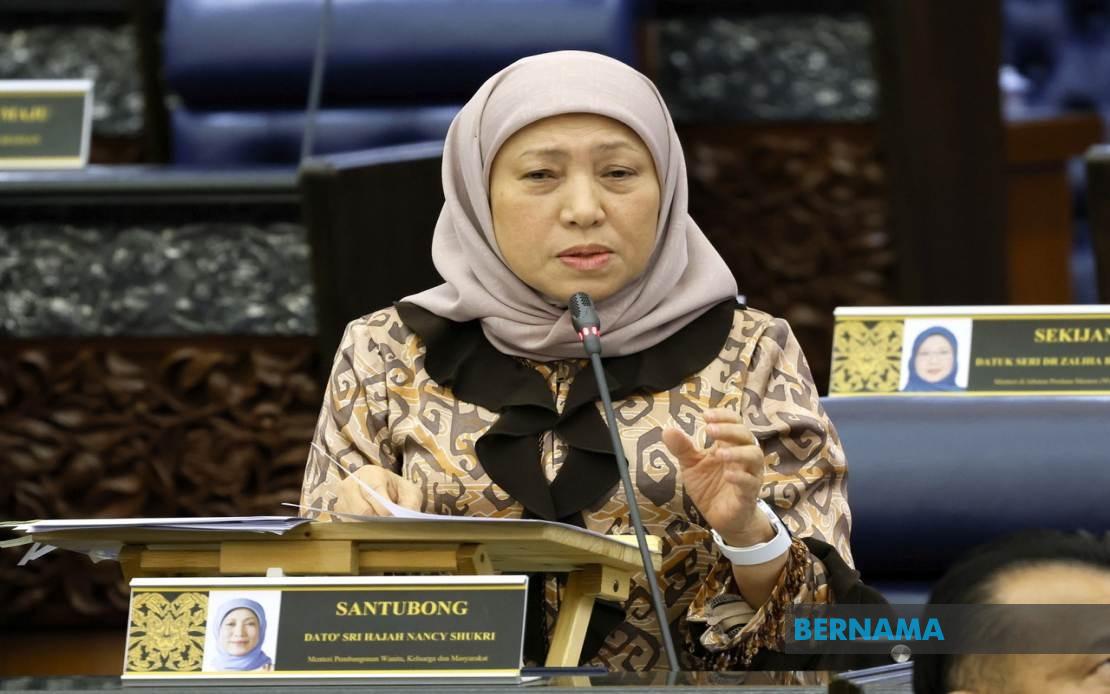
Parliament has taken a landmark step in recognising and regulating social work as a profession by passing the Social Work Profession Bill 2026, establishing a comprehensive legal framework that will shape how social workers operate across Malaysia's public and private sectors. The Dewan Rakyat's approval of the Bill follows extensive debate among 23 legislators from across the political spectrum, signalling broad consensus on the need to elevate professional standards in a field that has long operated without formal statutory oversight. Minister of Women, Family and Community Development Datuk Seri Nancy Shukri, who wound up the parliamentary debate, described the moment as the culmination of a decade-long campaign to grant professional recognition and protection to Malaysia's social work practitioners.
The legislative mechanism centres on the establishment of the Malaysian Social Work Profession Council, which will function as the professional regulatory body responsible for setting standards, managing complaints, and ensuring ethical conduct across the sector. Rather than implementing comprehensive regulation immediately, the government has opted for a phased approach that prioritises getting the Council operational before extending regulatory requirements to the public sector. This measured rollout reflects the complexity of integrating social work regulation into Malaysia's existing bureaucratic structures, where government-employed social workers currently fall under multiple ministerial jurisdictions and operate under varying protocols. Nancy emphasised that the government remains committed to eventually achieving full-sector regulation, but recognises that public sector implementation requires careful coordination between numerous agencies to establish a coherent national framework.
Under the initial phase of implementation, all private sector social workers must register with the Council, a category encompassing practitioners employed by non-governmental organisations, community-based organisations, private companies, and those operating independently. Government social workers, by contrast, face no mandatory registration requirement for their official duties, though they must register if they undertake social work outside their formal employment. This distinction acknowledges the current reality that public sector social workers already operate under established supervision systems, training protocols, standard operating procedures, and ethical codes developed through their respective employing ministries. However, critics during the parliamentary debate raised important questions about whether this exemption adequately protects vulnerable populations served by government social workers, who frequently handle complex cases involving child protection, persons with disabilities, elderly care, and family support services.
The legislative framework positions the Council as the architect of Malaysia's future social work standards, tasking it with developing regulations, guidelines, and competency frameworks that define what professional social work practice means in the Malaysian context. Beyond these standard-setting functions, the Council will establish mechanisms for handling professional complaints, investigating misconduct, and developing guidelines specifically focused on protecting the safety and welfare of social workers themselves—an often-overlooked dimension of professionalisation that recognises the emotional and psychological toll of frontline social work. The Bill also creates space for the Council to explore innovative initiatives such as a national social worker reciprocity plan, which could facilitate greater mobility and coordination of social workers across different states and employment sectors. These powers to evolve regulations and develop new frameworks mean the legislative foundation establishes principles rather than fixed rules, allowing the profession to adapt as practice develops and new challenges emerge.
The scope of the Bill's application has been deliberately circumscribed to address practical realities within Malaysia's welfare ecosystem. The legislation explicitly excludes volunteers and informal caregivers, focusing exclusively on professional practitioners—a distinction that avoids creating unnecessary regulatory burdens on the vast network of community volunteers who provide vital support services. Matters of remuneration, including minimum wage standards, remain governed by existing employment and labour legislation, with the Council's role limited to professional standards rather than economic regulation. Government funding for the Council's operations will come through annual budget allocations, establishing an independent revenue stream rather than relying on practitioner fees that might disadvantage social workers in lower-income brackets or those in rural areas.
During parliamentary debate, Members of Parliament from various political parties highlighted concerns about the phased implementation strategy. Howard Lee from Ipoh Timor, representing Pakatan Harapan, questioned the logic of exempting government social workers from professional certification requirements when they handle equally high-risk cases involving vulnerable populations. His intervention reflected concern that two-tiered professionalism could emerge, where private sector practitioners are held to stricter standards than government employees managing similar responsibilities. Lee argued that citizens deserve consistent professional standards regardless of whether services come from government, NGO, or private providers—a principle-based argument that resonates with broader debates about equity in public service provision. The government's response essentially acknowledged this tension while explaining that practical constraints necessitated the phased approach, with the implication that future amendments might expand public sector requirements once the Council achieves stability.
Other parliamentarians brought specific regional and resource concerns to the debate. Dr. Halimah Ali of Perikatan Nasional proposed that the government should provide financial incentives to NGOs and offer targeted scholarships and placement incentives for rural areas, recognising that professionalisation without adequate resourcing could worsen geographic disparities in social service access. Datuk Siti Aminah Aching from Beaufort highlighted hopes that implementation would expand opportunities for professional career development across all Malaysian states, particularly in Sabah and Sarawak, where social work infrastructure has historically lagged Peninsular Malaysia. These contributions emphasised that professional regulation must be accompanied by genuine investment in human capital development and equitable opportunity distribution across Malaysia's diverse geography.
The Bill's passage represents a significant institutional development for Malaysia's social welfare system, establishing for the first time a dedicated regulatory body with statutory authority to enforce professional standards, investigate complaints, and develop sector-wide guidelines. Historically, social workers operated in a regulatory vacuum where practitioners trained under different frameworks depending on their employer, with little consistency in qualifications, ethical standards, or accountability mechanisms. The Council's creation will impose order on this fragmented landscape, potentially improving service quality and providing social workers themselves with clearer professional pathways and protections. For service users—including vulnerable children, persons with disabilities, elderly individuals, and families facing hardship—regulation should translate into greater assurance that practitioners meet established competency standards and can be held accountable for misconduct.
From a Southeast Asian perspective, Malaysia's legislative move reflects broader regional recognition that social work requires professionalisation to meet increasingly complex social challenges. Countries across the region grapple with rapid urbanisation, changing family structures, rising disability prevalence, and aging populations—all factors that intensify demand for skilled social work practitioners. Malaysia's decision to establish formal regulation ahead of several of its neighbours positions it as a regional leader in professionalising this critical workforce. The Malaysian Social Work Profession Council's development will likely attract attention from other Southeast Asian nations considering similar reforms, potentially establishing a model for regional cooperation on professional standards and practitioner mobility.
Implementation challenges will prove substantial despite legislative approval. The Council must rapidly develop detailed regulations and guidelines covering practitioner qualifications, code of ethics, continuing professional development requirements, and complaints procedures—a task typically requiring months of consultation with practitioners, employers, and civil society organisations. Transitional provisions will likely need to determine how existing practitioners without formal qualifications achieve registration, avoiding sudden unemployment of experienced workers. Communication campaigns will be essential to ensure private sector employers, NGOs, and social workers themselves understand new requirements and timelines. The government's commitment to phased implementation suggests awareness of these complexities, but the success or failure of the scheme will ultimately depend on whether implementation proceeds with sufficient resourcing and political commitment once parliamentary attention shifts elsewhere.
Minister Nancy Shukri's closing comments framed the Bill's passage as completing a long-awaited institutional reform, suggesting this moment represented not an ending but a transition toward comprehensive professional regulation across all sectors. Her emphasis on the government's continued commitment to eventual public sector integration signals that the phased approach should not be interpreted as permanent exemption, but rather as strategic sequencing. For Malaysia's social workers, the Bill creates both opportunities and obligations—opportunity for enhanced professional recognition, clearer career pathways, and stronger protections against exploitation, but also obligation to meet new registration and continuing education requirements. The next phase will determine whether this legislation translates genuinely improved service standards and practitioner welfare, or becomes another well-intentioned law that struggles with implementation.

