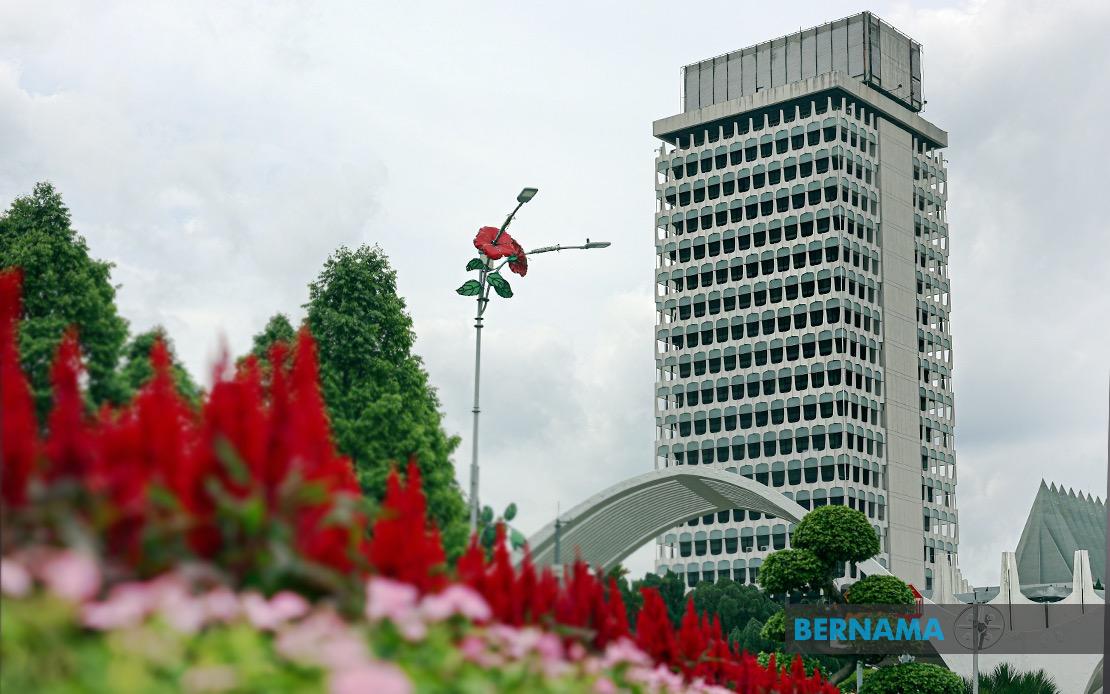
Lawmakers across Malaysia's political divide have intensified pressure on the government to fast-track legislative reforms to the Tabung Haji Act 1995, signalling broad consensus that institutional safeguards are essential to prevent future mismanagement of the Islamic pilgrimage fund. During a special parliamentary sitting on August 11, elected representatives from both government and opposition benches demanded urgent action on the Royal Commission of Inquiry recommendations, with particular emphasis on restructuring how the institution operates and who holds decision-making authority.
The core concern animating the debate reflects a fundamental anxiety about concentrated power within Malaysia's Islamic financial sector. Multiple MPs highlighted how Section 10 of the existing Act 535 permits the Minister overseeing Tabung Haji to issue sweeping directives that effectively subordinate institutional autonomy to political will. Datuk Shahelmey Yahya from Putatan articulated this tension explicitly, contending that such ministerial prerogatives directly contributed to governance failures that weakened the fund's financial standing. His argument carries particular weight given Tabung Haji's sacred mandate: the institution serves as custodian of savings accumulated by ordinary Malaysian Muslims preparing for the hajj pilgrimage, one of Islam's five foundational obligations. When governance lapses endanger these accumulated deposits, the implications extend far beyond balance sheets into questions of religious duty and personal savings security.
The push to abolish or substantially curtail Section 10 represents a philosophical shift toward institutional independence within Malaysia's Islamic financial architecture. Proponents argue that excellence and sound decision-making cannot flourish when political considerations intrude into management choices. This framing resonates particularly in Southeast Asia, where several countries grapple with balancing government oversight of Islamic institutions with operational autonomy. The debate suggests Malaysian policymakers are moving toward accepting that stronger board independence—paradoxically—better serves public and religious interests than ministerial micromanagement.
Board appointment procedures emerged as the second major reform priority across the parliamentary discussion. Multiple MPs, including Syed Saddiq Syed Abdul Rahman from MUDA and Mohamad Shafizan Kepli from GPS, insisted that future directors and leadership must be selected transparently according to professional qualifications and merit rather than political patronage. This requirement would institutionalize meritocratic recruitment processes, removing discretionary decisions from political cycles. The RCI report had flagged this weakness specifically, noting that active politicians serving on boards created inherent conflicts of interest and compromised decision-making integrity. Tan Sri Muhyiddin Yassin endorsed comprehensive implementation of all RCI proposals, including establishing independent investment committees to further insulate crucial financial decisions from external pressure.
The regulatory architecture surrounding Tabung Haji would also strengthen under the proposed amendments. Several MPs called for enhanced oversight by Bank Negara Malaysia or other designated financial authorities, establishing clearer monitoring mechanisms and compliance frameworks. This supervisory enhancement would complement internal governance reforms, creating nested accountability layers that make future misconduct more difficult to conceal or perpetrate. For Malaysian savers and their families, such regulatory reinforcement offers concrete reassurance that accumulated hajj funds face institutional scrutiny and professional management standards equivalent to commercial banking institutions.
Investment portfolio restructuring constituted the third substantive reform area commanding parliamentary attention. The RCI investigation had evidently uncovered investment decisions that diverged from Syariah principles or prudent financial practice, requiring comprehensive reassessment of asset allocation strategies. MPs emphasized that Tabung Haji's investment activities must prioritize safety, compliance with Islamic law, and long-term value preservation rather than speculative expansion. This conservative reorientation aligns with the institution's fundamental purpose: safeguarding deposits for religious pilgrimage, not maximizing returns through aggressive investment tactics.
The parliamentary consensus transcending party lines—with contributions from BN, PN, PH, and GPS representatives—underscores how governance failures at Tabung Haji transcended typical partisan divisions. Datuk Azman Nasrudin, Young Syefura Othman, Datuk Seri Hasni Mohammad, and Datuk Mohd Suhaimi Abdullah all raised similar concerns from different political perspectives, suggesting the issue commands genuine cross-party concern rather than manufactured controversy. This unity, while encouraging for reform prospects, also indicates the severity of institutional dysfunction that prompted the RCI inquiry.
The RCI report itself, made public on July 29 after the government's decision to release its findings, documented systemic weaknesses spanning 2014 to 2020 and formulated 25 recommendations for remediation. As of late July, Tabung Haji had already implemented approximately 75 percent of these proposals, demonstrating institutional responsiveness to the commission's criticisms. However, legislative changes require parliamentary action, making the accelerated amendment pathway crucial for cementing reforms beyond administrative directives that could theoretically be reversed by future leadership.
For Malaysian Muslims contemplating hajj savings and for their families, these parliamentary debates carry deeply personal resonance. Tabung Haji serves distinctive purposes within Malaysia's Islamic financial ecosystem, offering structured savings vehicles with religious significance that commercial banks cannot replicate. When governance lapses threaten these deposits, they undermine not merely financial security but also the religious obligation's practical accessibility for middle and lower-income Muslims. Parliamentary insistence on merit-based governance and ministerial power limitations thus addresses concerns extending beyond technical financial management into questions of social equity and religious inclusion.
The Southeast Asian context amplifies these reforms' regional implications. Malaysia's approach to governing Islamic financial institutions influences regulatory thinking across the region, particularly in Indonesia, Singapore, and Brunei, where comparable institutions serve Muslim populations. Successful institutionalization of merit-based appointment processes and meaningful board independence at Tabung Haji could establish governance templates applicable to similar organizations throughout Southeast Asia, potentially elevating professional standards across Islamic finance in the region.
Looking forward, the timeline for parliamentary amendment becomes critical. MPs emphasized the urgency of expediting the legislative process rather than allowing reforms to languish in committee. The broad consensus suggests government support for action, though bureaucratic timelines and competing parliamentary business could delay implementation. Depositors and stakeholder communities will likely scrutinize the amendment process closely, expecting tangible legislative changes within reasonable timeframes rather than indefinite deliberation.
The parliamentary sitting on August 11 thus represents not merely procedural acknowledgment of the RCI report but rather a significant political moment in Malaysian Islamic institutional governance. It demonstrates that elected representatives across ideological divides recognize governance excellence and institutional independence as prerequisites for serving Malaysia's Muslim citizens effectively. Whether this parliamentary consensus translates into swift legislative action and genuine operational transformation at Tabung Haji will determine whether the reform debate becomes lasting institutional change or merely rhetorical gesture.

