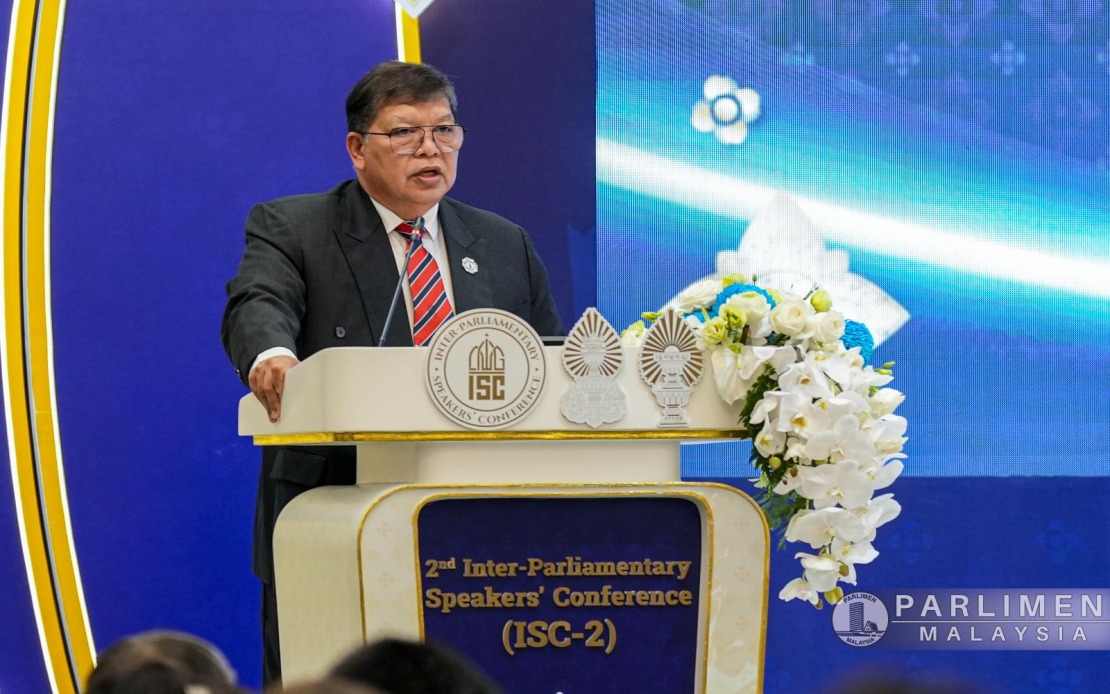
The Speaker of the Dewan Rakyat has sounded an urgent alarm over the world's failure to adequately address climate change, warning that the crisis extends far beyond environmental concerns to threaten economic stability, public health, and food security across the region. Speaking at the Second Inter-Parliamentary Speakers' Conference in Phnom Penh, Tan Sri Dr Johari Abdul highlighted the dangerous disconnect between policymakers' rhetoric and their commitment to substantive action, pointing out that many legislators lack basic understanding of the climate crisis despite its accelerating impacts on their constituents.
Johari's remarks carry particular weight given the scale of recent climate disasters in the region. Nepal has been devastated by catastrophic flooding triggered by a glacial collapse in the Himalayas, with confirmed deaths reaching 469 people and 2,381 still reported missing, including 644 foreign nationals. The tragedy has thrown into sharp relief the vulnerability of South and Southeast Asian communities to extreme weather events, a pattern that shows no signs of slowing. Several Malaysian nationals remain among the missing in Nepal, bringing the issue home to readers across the region.
The geographic breadth of climate exposure across Asia underscores why Johari's concerns deserve serious consideration. From mountainous terrain in Nepal and Laos to the densely populated lowlands of Cambodia and the Philippines, millions of people—particularly those in rural areas dependent on agriculture and fishing—face recurring threats from flash floods, landslides, tropical typhoons, and other climate-driven disasters. The Philippines alone experiences approximately 20 typhoons annually, a figure that reflects the region's exposure to extreme weather patterns intensifying under climate change. These are not abstract future risks but present-day realities destroying livelihoods and infrastructure at an accelerating pace.
Crucially, Johari identified a critical gap in how governments across the region approach the climate challenge. Rather than viewing climate change as primarily an environmental matter, he reframed it as an economic and social policy issue requiring immediate government intervention. His observation that policymakers rarely discuss climate change in legislative settings, and that educational institutions have failed to incorporate climate science into curricula, suggests a fundamental institutional failure to prioritize an existential threat. The absence of climate literacy among lawmakers perpetuates poor policy choices, such as continued reliance on coal-fired power generation rather than investment in renewable energy infrastructure.
The speaker's advocacy for renewable energy sources—solar, wind, and ocean wave power—reflects a pragmatic recognition that Southeast Asia possesses significant natural advantages for clean energy transition. Many countries in the region enjoy abundant sunshine, coastal geography, and wind resources that could support large-scale renewable deployment. However, realizing this potential requires sustained government investment in research and development, technology transfer, and the physical infrastructure needed to harness these resources. Current spending on green technology across the region remains inadequate relative to the scale of the challenge.
Education emerged as a cornerstone of Johari's argument for systemic change. He emphasized that schools must incorporate climate science into their curricula, equipping the next generation with the knowledge and skills needed to develop and implement climate solutions. This educational approach addresses both the immediate need for informed voters and policymakers, and the longer-term requirement for a workforce trained in renewable energy deployment, sustainable agriculture, and climate adaptation technologies. Malaysia, as a middle-income nation with reasonable educational infrastructure, could serve as a regional leader in this regard.
The speaker pointed to China's long-term strategy on green technology as a model worthy of regional attention. China's substantial investments in electric vehicles, eco-friendly manufacturing, and green space expansion demonstrate how government-led industrial policy can redirect economic activity toward sustainability. While China's overall environmental record remains mixed, its commitment to technological leadership in clean energy production offers lessons for Malaysian policymakers considering how to position the country competitively in a rapidly decarbonizing global economy.
Johari's central theme—that addressing climate change requires political will and leadership—strikes at the heart of the implementation challenge. Across Southeast Asia, governments face competing pressures from development imperatives, budget constraints, and entrenched interests in fossil fuel industries. The region's vulnerability to climate impacts is matched only by the political difficulty of implementing the transformative changes necessary to mitigate those impacts. His observation that the gap between wealthy and vulnerable nations is widening adds a justice dimension to the climate debate, recognizing that poorer countries bear disproportionate risks despite contributing less to historical greenhouse gas emissions.
Cambodian Prime Minister Hun Manet's contemporaneous warning about rising Mekong River water levels indicates that regional leaders increasingly recognize climate change as a present-day governance challenge. His acknowledgment that natural disaster prevention requires building resilience and effective response systems reflects a pragmatic adaptation approach. However, Johari's argument suggests that adaptation alone is insufficient; mitigation efforts to reduce future warming must accompany adaptation investments.
For Malaysia specifically, Johari's conference remarks offer an opportunity for national reflection. As a tropical nation with significant coastlines, Malaysia faces genuine climate vulnerabilities from sea-level rise, changing rainfall patterns affecting agriculture, and increasing tropical storm intensity. The country's dependence on regional supply chains—particularly for food and energy—means that climate-driven disruptions in neighboring countries directly threaten Malaysian economic stability. Investing now in renewable energy infrastructure, climate-resilient agriculture, and green technology innovation positions Malaysia to manage these risks while capturing opportunities in the emerging green economy.
The broader implication of Johari's message is that Southeast Asia's climate challenge is simultaneously a governance challenge, an educational challenge, and an investment challenge. No single intervention—whether renewable energy deployment, climate literacy programs, or disaster resilience planning—can address the crisis independently. Instead, governments must coordinate across multiple policy domains, committing resources and political capital to integrated approaches that combine immediate adaptation with long-term mitigation. The recent disasters in Nepal and recurring threats across the region suggest the window for such transformation is rapidly closing.

