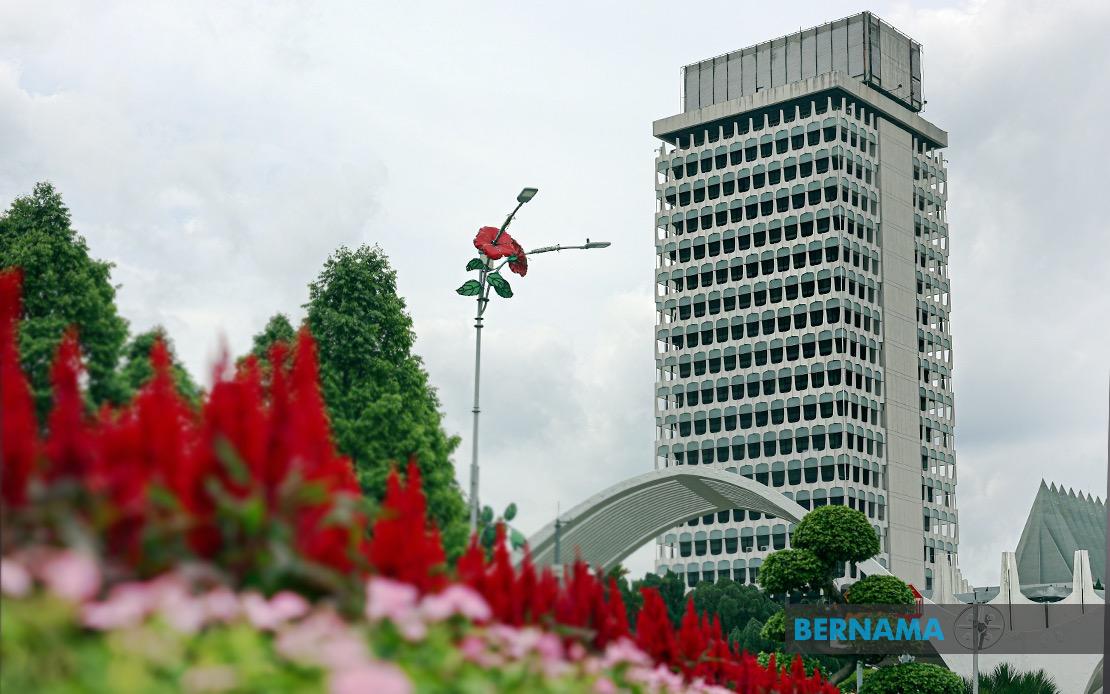
Parliament convened today to scrutinise the government's readiness for the approaching El Niño phenomenon, an increasingly pressing concern for a nation heavily dependent on agricultural production and food imports. The extended dry season expected to accompany El Niño presents significant risks to Malaysia's agricultural output, irrigation systems, and the broader food security landscape that feeds the country's 34 million people. Government MPs and opposition lawmakers alike have raised the alarm about climate preparedness, signalling that the nation must move beyond reactive measures to establish proactive frameworks that protect both farmers and consumers from price volatility and supply disruptions.
Bakti Jamaluddin, representing the Tangga Batu constituency under the Barisan Nasional banner, raised the matter directly during today's Minister's Question Time, pressing the Agriculture and Food Security Minister to detail the administration's contingency planning. His questions extended beyond general preparedness to encompass specific operational vulnerabilities: the adequacy of irrigation water supplies during drought periods, the resilience of rice and staple crop production systems, and mechanisms to sustain livestock sectors that depend on feed production. The breadth of these concerns reflects how El Niño impacts cascade through Malaysia's food supply chains, affecting everything from paddy fields in Kedah and Johor to poultry farms nationwide and ultimately consumer prices at neighbourhood markets. The government's response will likely reveal the extent to which climate adaptation has been integrated into sectoral planning across the agriculture ministry.
Parallel to these discussions about future climate challenges, Parliament also examined a recent operational failure within the Malaysian Armed Forces. Datuk Mohd Isam Mohd Isa, the Tampin member, raised the incident of a hand grenade explosion that occurred during a routine ATM training exercise. Such accidents, while uncommon, raise critical questions about whether current safety protocols are sufficiently rigorous and whether training supervisors are adequately equipped to manage the inherent risks of military operations. The Defence Ministry faces pressure to transparently explain what triggered the incident and what systemic weaknesses allowed it to occur. More importantly, lawmakers demanded clarity on what enhanced standard operating procedures will be implemented to prevent repetition. The incident reflects broader concerns within military establishments across Southeast Asia about balancing intensive training demands with personnel safety, a tension that can only be resolved through investment in better equipment, more frequent safety audits, and genuine accountability when incidents occur.
The Defence Ministry's response will be closely watched by Malaysia's military families and veterans, constituencies that have long advocated for improved workplace safety standards. The government's handling of this matter could influence public confidence in military institutions and, by extension, defence recruitment efforts. Transparency regarding the cause—whether it stemmed from equipment malfunction, human error, or procedural gaps—will be essential for restoring trust and demonstrating that institutional learning is occurring within defence establishments.
Beyond these immediate policy concerns, the parliament session also addressed the governance overhaul of Kuala Lumpur City Hall, with Tan Kok Wai of the Pakatan Harapan coalition pressing the Prime Minister on reforms stemming from the Feasibility Study of the Federal Capital Act 1960. This line of questioning reflects ongoing concerns about administrative efficiency, anti-corruption measures, and service delivery standards in the nation's capital city. The focus on governance and integrity suggests that lawmakers are determined to ensure that institutional reforms extend beyond cosmetic changes to substantive improvements in how residents interact with municipal authorities.
Religious affairs also featured prominently on today's agenda. Sabri Aziz of Perikatan Nasional raised the challenge of countering deviant religious teachings, a persistent concern across Malaysia's diverse religious landscape. His questions probed both the scale of the challenge and the intervention mechanisms in place to support individuals who have drifted from mainstream Islamic teachings. This reflects the government's ongoing effort to balance religious freedom with social cohesion, a delicate equilibrium that requires sustained vigilance and nuanced policy responses.
Public health emerged as another significant theme when Datuk Dr Richard Rapu of the GPS faction questioned the Health Minister on the alarming rise of non-communicable diseases, particularly diabetes and hypertension among young adults below 30 years old. The prevalence of these conditions in younger age groups suggests that lifestyle factors—sedentary behaviour, poor dietary habits, and stress—are influencing health trajectories earlier than historically expected. The lawmaker's specific inquiry about the effectiveness of the War on Sugar campaign and sugar tax enforcement mechanisms demonstrates that Parliament is monitoring whether revenue-generating health interventions are achieving their primary objective of behaviour change. The data requested would reveal whether fiscal measures alone are sufficient or whether broader public health education campaigns are needed to complement taxation strategies.
These questions about metabolic disease prevention carry particular significance for Malaysian healthcare systems already stretched by chronic disease management costs. If diabetes and hypertension cases continue rising among younger cohorts, the lifetime treatment burden on Malaysia's health ministry and individuals will compound, potentially undermining economic productivity as working-age populations manage multiple health conditions. The government's candid assessment of campaign effectiveness will indicate whether policy adjustments are warranted.
Today's parliamentary sitting concluded the Second Meeting of the Fifth Session of the 15th Parliament, a two-week legislative period that spanned from July 16. The Finance Minister also tabled the National Trust Fund Bill 2026 for second reading, adding a further layer of economic policy discussion to the day's proceedings. The convergence of these varied topics—climate preparedness, military safety, municipal governance, religious affairs, and public health—illustrates the breadth of challenges facing contemporary Malaysia. Collectively, these parliamentary inquiries suggest that legislators across the political spectrum recognise the interconnected nature of governance challenges and are demanding that ministers demonstrate integrated, evidence-based approaches to policy implementation rather than operating within isolated sectoral silos.

