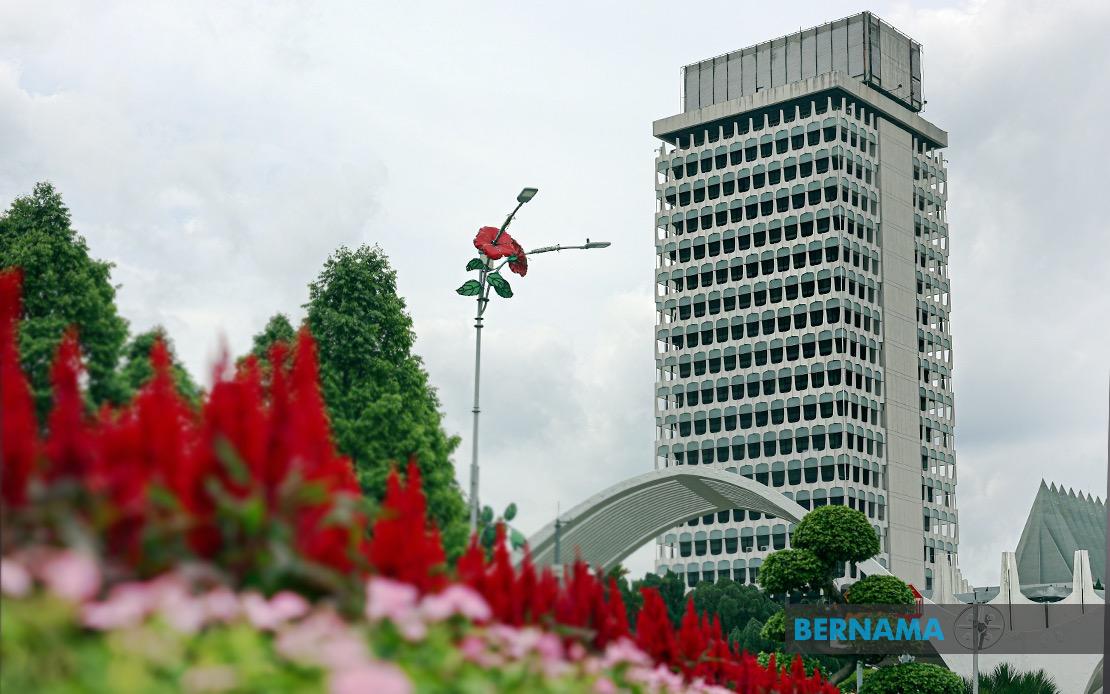
The Dewan Rakyat convenes today with an ambitious agenda spanning global governance, agricultural resilience, and military logistics—reflecting pressing concerns that extend far beyond Malaysia's borders into the wider Southeast Asian and international sphere. The 16-day parliamentary sitting, scheduled to conclude on July 16, will see lawmakers grapple with systemic weaknesses in international institutions while simultaneously confronting immediate vulnerabilities in the nation's food systems and defence capabilities, issues that have grown increasingly urgent in an era of geopolitical instability and climate-driven supply chain disruptions.
At the forefront of today's debates is Malaysia's philosophical and strategic position on reforming the United Nations Security Council, with Datuk Seri Sh Mohmed Puzi Sh Ali raising pointed questions about how the government intends to champion systemic change within an institution long criticised for concentrating excessive power in the hands of a privileged few. The veto authority held by the five permanent members—the United States, China, Russia, France, and the United Kingdom—has repeatedly stalled international responses to humanitarian crises and aggression, rendering the Council increasingly ineffective in a multipolar world where emerging economies wield growing influence yet remain perpetually excluded from substantive decision-making. For Malaysia, a middle-power nation that has historically punched above its weight in multilateral forums, the question of how to amplify its voice and expand its meaningful participation within the UN framework carries profound implications not only for national prestige but for the country's ability to advocate for the interests of developing nations and the Global South.
Malaysia's commitment to elevating its UN position reflects broader strategic thinking about how medium-sized states can navigate an international system increasingly characterised by great power competition. The government's articulated approach to UN reform suggests a recognition that the current architecture, frozen in place since 1945, no longer reflects global realities and that challenging this arrangement serves Malaysia's long-term interests alongside those of dozens of other nations seeking greater representation and influence.
Equally pressing is the question of food security, with member Shaharizukirnain Abd Kadir pressing the Agriculture and Food Security Minister for details on the government's contingency planning for a projected supply crisis. This inquiry gains particular resonance given the escalating costs of agricultural inputs, amplified by the broader geopolitical turbulence in West Asia that has disrupted global commodities markets and shipping routes. Malaysia, despite its tropical climate and agricultural heritage, remains vulnerable to supply shocks for essential food staples, relying significantly on imports to meet domestic demand. The government's strategy for boosting self-sufficiency through targeted incentives to food-producing states will be scrutinised for its effectiveness and realism, especially given the structural challenges facing smallholder farmers and the capital-intensive nature of modern agricultural production.
The inquiry also obliges the minister to justify the incentive structures channelled to agricultural regions, signalling that lawmakers are increasingly attuned to questions of return on investment and fiscal prudence. With global food prices volatile and climate variability threatening yields worldwide, Malaysia's reliance on external sources cannot be indefinitely sustained, making domestic capacity building a strategic imperative rather than merely a policy preference.
Defence procurement and military supply chain resilience emerge as a third critical concern through Datuk Awang Hashim's question to the Defence Minister regarding the Malaysian Armed Forces' dependencies on foreign suppliers. The extent to which these external relationships constrain the armed forces' planning, operational flexibility, and strategic autonomy directly impacts Malaysia's ability to secure its borders and respond to regional threats. Supply disruptions, delivery delays, and contract cancellations have plagued defence acquisitions globally, and Malaysia has not been immune to these challenges. The government must articulate concrete measures to diversify suppliers, establish domestic production capacity for critical defence items, and construct resilience into procurement frameworks—a multifaceted undertaking that demands both technical expertise and substantial capital investment.
A fourth dimension of today's parliamentary focus concerns green hydrogen development, with Rodiyah Sapiee directing questions toward the Science, Technology and Innovation Minister about coordinating national energy policy to support this emerging sector. Her specific interest in Sarawak's potential as a Southeast Asian green hydrogen hub reflects recognition that energy transition and industrial diversification must be spatially differentiated, leveraging regional comparative advantages. Sarawak's abundant hydroelectric and renewable energy resources position it uniquely to become a production centre for hydrogen, provided the government can orchestrate coherent policy frameworks and facilitate capital flows toward infrastructure development. This inquiry underscores a broader Malaysian preoccupation with positioning the nation and its constituent states at the forefront of the clean energy transition, a pathway to both environmental responsibility and economic opportunity.
Parliament's legislative agenda complements these interrogative sessions, with seven government Bills scheduled for first reading. Among these, the Communications and Multimedia (Amendment) Bill 2026 and the Malaysian Communications and Multimedia Commission (Amendment) Bill 2026 signal evolving regulatory approaches to digital governance and media management, sectors of substantial economic and political importance. The Social Work Profession Bill 2026 addresses professionalisation and standards within the social services domain, reflecting acknowledgment that social welfare delivery requires formally trained practitioners operating within established ethical frameworks.
The resumption of debate on the Control of Paddy and Rice (Amendment) Bill 2026 further emphasises the parliamentary focus on agricultural sustainability and food security policy, with lawmakers preparing to scrutinise proposed amendments before the relevant minister concludes deliberations. This sequencing—from general interrogation of government policy to detailed legislative scrutiny—represents the traditional parliamentary method of holding the executive accountable while simultaneously legislating to address identified gaps and deficiencies.
Malaysia's parliamentary engagement with these overlapping challenges—global governance reform, food system resilience, defence procurement modernisation, energy transition, and sectoral professionalisation—demonstrates a legislature increasingly alert to the complex interdependencies characterising contemporary governance. The issues raised today resonate throughout Southeast Asia, where middle-power nations navigate similar pressures to participate meaningfully in international institutions, secure supply chains amid geopolitical turbulence, and chart pathways toward sustainable development. The outcomes of these parliamentary debates will signal not only Malaysia's policy directions but also the government's seriousness in addressing vulnerabilities that no amount of economic growth can compensate for if left unaddressed.

