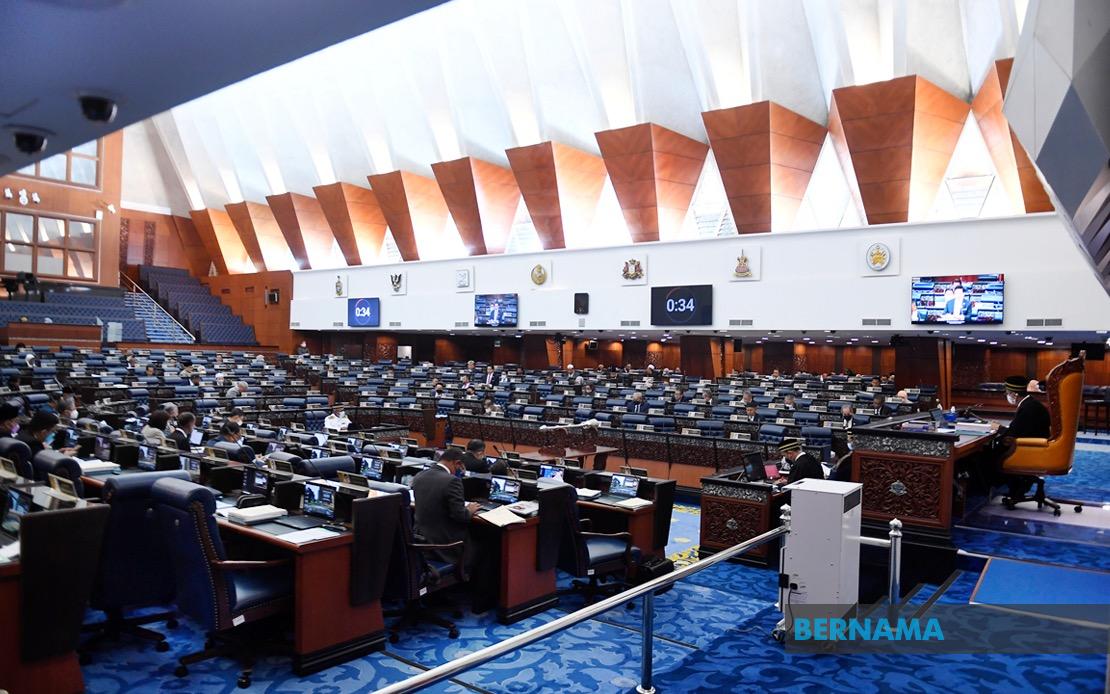
The Dewan Rakyat sits today with lawmakers set to challenge the government on two contentious issues: whether Federal allocations reach states fairly and proportionately, and whether rules restricting campaign-period project announcements are being properly enforced. These questions reflect growing tensions between federal and state governments, particularly as Johor, Melaka and Negeri Sembilan prepare for their own elections.
Doris Sophia Brodi, the GPS member for Sri Aman, will press the Prime Minister on longstanding grievances from state governments claiming their Federal allocations bear little relation to revenue they generate. Her questions target the MADANI Government's commitment to reforming how money flows from Putrajaya to state capitals, a structural issue that has troubled centre-state relations for years. States with productive economies argue they receive disproportionately small shares of their own revenue, while poorer states depend on redistributive mechanisms that sometimes feel inadequate. The inquiry signals Parliament's willingness to examine whether current allocation formulas genuinely reflect equity principles.
Equally pressing is the electoral integrity question. Shahidan Kassim from PN-Arau will seek clarification on whether the prohibition on announcing fresh government allocations or projects after election nominations close remains binding law. He will also demand specifics on how enforcement will work during the forthcoming state elections in Johor, Melaka and Negeri Sembilan. This rule exists to prevent ruling parties from deploying last-minute development promises to swing voters, a concern that cuts across political divides. Public confidence in clean elections depends partly on such guardrails, yet enforcement details often remain opaque, leaving room for ambiguity about what constitutes a violation.
Beyond these headline issues, Parliament's agenda reflects the government's push into digital governance and technological management. Ismail Sabri Yaakob will question the Communications Minister on plans to combat deepfakes and AI-generated misinformation, particularly as artificial intelligence tools become more sophisticated and accessible. The proliferation of convincing false videos poses a genuine threat to public discourse and electoral integrity. Malaysia's experience with viral misinformation across WhatsApp, Facebook and TikTok suggests that verification and labelling systems cannot arrive too soon, though technical solutions remain contentious and incomplete globally.
The energy sector emerges as another critical concern. Chong Zhemin wants assurance that Malaysia's electricity grid can handle surging demand from data centres and artificial intelligence infrastructure. As the region positions itself as a technology hub, power supply reliability becomes a competitive advantage and economic security issue. Data-intensive industries require stable, abundant electricity, and any shortfall risks deterring investment or forcing companies elsewhere. The question implicitly asks whether infrastructure planning has kept pace with economic ambitions.
Social safety nets also feature prominently. Awang Hashim will interrogate the mySalam scheme's real-world effectiveness for B40 households—those in the bottom 40 percent by income. Government welfare programmes often sound generous in design but encounter implementation gaps that leave intended beneficiaries underserved. Similarly, Syahredzan Johan will examine actual redemption rates for the MADANI Book Vouchers, revealing whether this cultural initiative has gained genuine public uptake or languished through awareness or accessibility problems.
Women's workforce participation receives attention through Mumtaz Md Nawi's questions about TalentCorp's Career Comeback Programme. Encouraging mothers and caregivers to re-enter employment addresses both individual economic security and broader labour shortages, yet success depends on childcare availability, flexible arrangements and employer willingness—factors beyond the programme's direct control. The inquiry suggests Parliament recognises this as unfinished business requiring sustained attention.
The Program Jualan Rahmah MADANI—a government-subsidised retail initiative aimed at reducing cost-of-living pressure—will face questions from Iskandar Dzulkarnain about implementation breadth and frequency. Current inflation erodes purchasing power across Malaysian households, particularly for basic goods. Whether this programme reaches all constituencies equitably and whether expanding it would meaningfully relieve economic stress remain empirical questions Parliament must press.
Following these targeted questions, Parliament will resume debate on the Sexual Offences Against Children (Amendment) Bill 2026, reflecting ongoing legislative refinement of child protection frameworks. The Dewan Rakyat will also consider Dewan Negara amendments to the Employment Insurance System (Amendment) Bill 2025 and progress the Cyber Crime Bill 2026, signalling government priorities around worker protections and digital security.
Today's sitting exemplifies how contemporary parliamentary business spans federal-state finance, electoral conduct, technological governance, social safety nets and sectoral infrastructure—issues deeply affecting Malaysian citizens across regions, income levels and industries. The questions posed suggest a Parliament increasingly willing to demand specifics about implementation and enforcement, moving beyond rhetorical commitments to measurable outcomes. Whether government responses will satisfy questioners or merely defer scrutiny remains to be seen when proceedings unfold.

