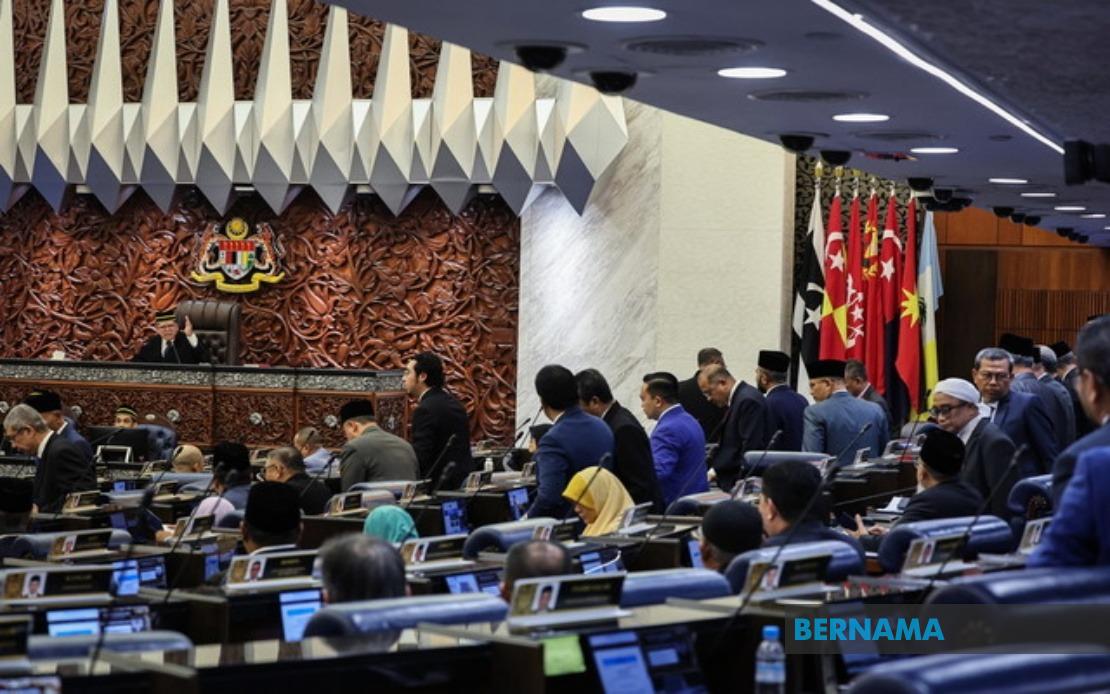
When Perikatan Nasional's Opposition benches emptied during today's special Dewan Rakyat sitting on the Lembaga Tabung Haji (TH) Royal Commission of Inquiry report, it created a visual spectacle of protest—but may have sacrificed parliamentary substance for symbolic gesture. Opposition Leader Datuk Seri Hamzah Zainudin led colleagues including PN Chief Whip Datuk Seri Takiyuddin Hassan and PN chairman Datuk Seri Dr Samsuri Mokhtar out of the chamber, abandoning a rare opportunity to directly challenge government on an issue affecting millions of Malaysian depositors. The walkout, triggered by the absence of Prime Minister Datuk Seri Anwar Ibrahim and Deputy Prime Minister Datuk Seri Fadillah Yusof—both undergoing health treatment—raises fundamental questions about how Parliament should function as a mechanism of accountability in sensitive financial matters.
Taking stock of the tactical decision, Universiti Sains Malaysia scholar Prof Datuk Dr Sivamurugan Pandian suggests the walkout represented calculated political theatre rather than principled advocacy for affected depositors. The academic argues that abandoning the chamber fundamentally misreads what leverage the Opposition actually possesses in parliamentary systems. When debating a matter of such magnitude and complexity as the TH situation—which concerns the savings and retirement hopes of countless working Malaysians—the historical record, the formal arguments, and the documented positions of lawmakers carry weight beyond the current sitting. Walking out sacrifices this permanent institutional record in exchange for momentary news coverage that may fade within days.
The strategic inconsistency within Opposition ranks itself undermines the unified message the walkout was supposed to convey. Some Perikatan Nasional Members of Parliament chose to remain in their seats, continuing the debate and asking substantive questions about the RCI findings that were only made public on July 29. This internal divergence suggests the Opposition's assessment of the walkout's effectiveness was hardly unanimous or deeply considered. If the decision truly reflected a principled stance on depositor interests, one might expect greater cohesion. Instead, the visible split indicates that different MPs held competing views about whether abandoning the debate served their constituents' interests or merely satisfied leadership's desire for a dramatic protest.
Parliamentary scholars and practitioners of democratic governance have long recognised that the written record—the official Hansard, the transcribed questions, the documented arguments and counterarguments—forms the foundation of legislative accountability. When opposition figures walk out, they forfeit the opportunity to place their evidence, their criticisms, and their proposals permanently on the parliamentary record. Depositors watching from home, seeking clarity about what happened to their savings and what steps will be taken to protect their interests, cannot derive benefit from an empty Opposition bench. They can, however, learn from detailed parliamentary questioning, documented expert assessments read into the record, and specific policy proposals outlined in speeches that become part of the nation's legislative archives.
Takiyuddin's initial proposal to adjourn the special sitting altogether further complicates the Opposition's narrative about defending depositor interests. If the Opposition truly believed that the Prime Minister's absence made the debate untenable or unfair, the logical conclusion would have been to push for postponement until leadership could participate fully. Instead, the walkout permitted the government to proceed with the debate, simply without Opposition voices challenging the government's interpretation of the RCI findings. This tactical choice effectively ceded the entire parliamentary space to the governing coalition to frame the TH narrative without systematic scrutiny. For depositors seeking accountability, this represents a significant parliamentary defeat dressed up as a protest victory.
The symbolic dimension of the Prime Minister's absence, however, carries genuine weight in Malaysian political culture and parliamentary conventions. When government leadership absents itself from debates on matters of national importance—particularly those involving public trust and financial institutions—it sends a message about priorities and respect for Parliament's role as a forum for accountability. Opposition members recognising this symbolic significance were responding to legitimate concerns about the standards of parliamentary engagement. Yet, as Sivamurugan notes, such symbolism becomes most potent when paired with substantive argument. A walkout standing alone, without the supporting structure of detailed parliamentary criticism and constructive proposals, risks appearing performative rather than principled.
The TH situation itself demands sustained parliamentary engagement of the highest calibre. The institution's financial difficulties have affected the retirement security and savings of millions of Malaysian Muslims who contributed to what they believed was a protected investment vehicle with religious legitimacy. The RCI report, released publicly only recently, presumably contains findings and recommendations of significant consequence for how this situation is managed going forward. Parliamentary scrutiny—particularly through detailed questioning, cross-examination of government witnesses and officials, and the proposal of alternative policy approaches—represents the public's best institutional mechanism for ensuring that remedial actions genuinely address root causes rather than merely managing optics.
Opposition politicians choosing to remain in the chamber and continue participating in the debate faced a different calculus. By staying and asking penetrating questions, documenting the government's responses, and placing their alternative proposals on record, these MPs upheld Parliament's function as the arena where competing visions for the nation's future—including competing approaches to protecting TH depositors—are systematically articulated and evaluated. Their continued presence ensured that at minimum, the parliamentary record would reflect diverse perspectives on the RCI findings and competing policy recommendations. This approach sacrifices the immediate publicity of a dramatic walkout in exchange for a more durable form of political power: the ability to shape the documented historical narrative and the formal arguments available for future reference.
The broader implication extends beyond the TH debate to fundamental questions about how Opposition politics functions in Malaysia's Westminster-influenced parliamentary system. When Opposition leadership opts for symbolic protest over substantive engagement, they implicitly accept the premise that publicity and protest are more valuable than institutional leverage. Yet Malaysian voters who support Opposition parties typically do so precisely because they want those parties to exercise power within Parliament—to ask tough questions, to propose better alternatives, and to create a permanent record of their positions. A walkout may generate headlines describing Opposition defiance, but it leaves depositors with no new information, no government commitments extracted through parliamentary pressure, and no alternative policy framework documented for future reference.
The timing and context of this particular debate add another layer of complexity. Prime Minister Anwar Ibrahim's absence due to health treatment is not a matter within his immediate control, distinguishing this situation from circumstances where leadership deliberately avoided Parliament. Recognising the distinction between unavoidable absence and deliberate obstruction represents the kind of nuanced political judgment that mature parliamentary systems require. The Opposition's choice to walk out regardless of the circumstances surrounding the absences suggests a preference for consistent protest messaging over contextual analysis. Depositors, however, benefit far more from an Opposition that discriminates between different types of parliamentary failures and responds strategically to each.
Moving forward, the institutional memory of today's debate will shape how TH remediation proceeds through Parliament and the public sphere. If the Opposition's primary contribution to the debate was the dramatic gesture of walking out, subsequent accountability efforts become significantly more difficult. Government ministers can point to the Opposition's absence as evidence that the public's representatives did not sufficiently care about the issue to remain and engage substantively. The Opposition cannot easily reclaim credibility on TH issues by staging additional walkouts; the public will grow accustomed to the tactic and its political impact will diminish. What the Opposition can do, going forward, is ensure that any future parliamentary engagement with TH matters generates detailed scrutiny, documented alternatives, and concrete recommendations that serve as benchmarks against which government performance can be measured.
Ultimately, as Sivamurugan argues, Parliament's value as an institution depends on maintaining a continuous, documented record of arguments about matters of public concern. Walkouts generate publicity because they are exceptional, disruptive, and visually compelling. But debate generates something potentially more valuable: a permanent institutional record that lawmakers, judges, and citizens can reference when evaluating government action and holding officials accountable. For Tabung Haji depositors whose savings and retirement security hang in the balance, that record matters far more than a day's worth of news headlines about Opposition defiance. The choice between symbolic protest and substantive engagement represents a choice about whether parliamentary politics serves primarily to entertain and energise partisan supporters, or whether it serves the deeper democratic function of systematic public accountability for those who hold power.

