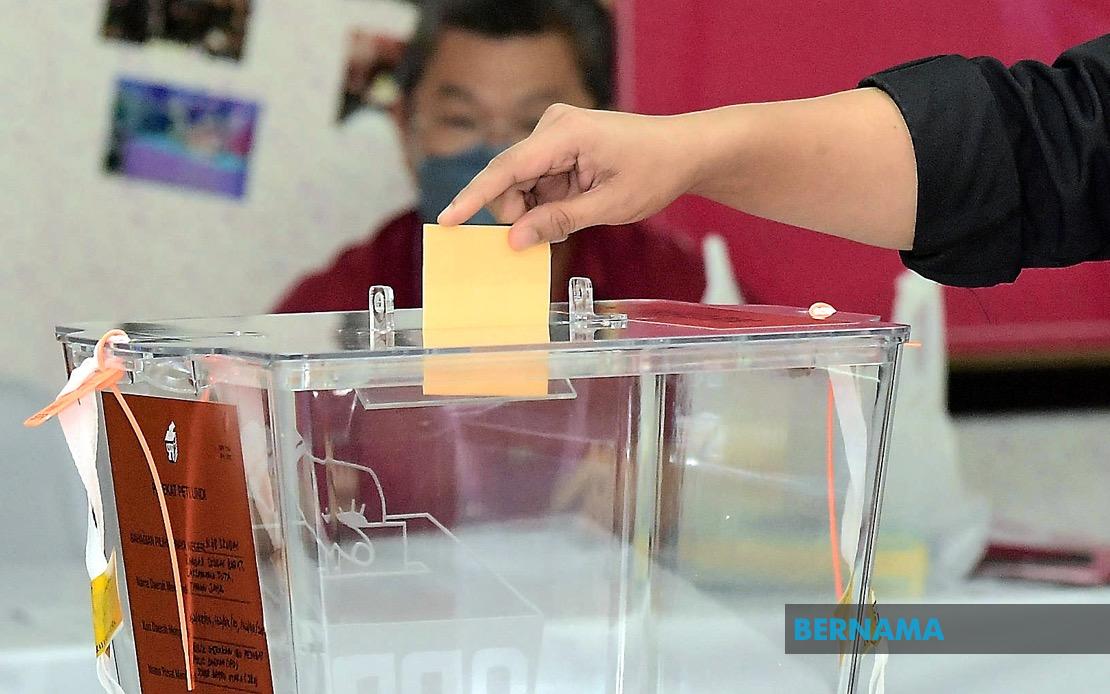
The Johor state election has delivered a decisive mandate to Barisan Nasional, with the coalition securing 29 of 56 state seats—a comfortable majority that allows it to form government without external support. The result appears to have prompted measured responses from the opposition and coalition partners, signalling a period of reflection across Malaysia's fractured political landscape ahead of the looming 16th General Election.
Johor PAS, through its commissioner Datuk Dr Mahfodz Mohamed, has formally acknowledged the electorate's decision and congratulated the winning coalition led by incoming Menteri Besar Datuk Onn Hafiz Ghazi. The party's gracious acceptance carries particular significance given the broader tensions within Malaysia's Islamist political movements. Rather than contesting the outcome or offering excuses, PAS has framed its response around continuity, emphasizing that the Perikatan Nasional component will press forward with its agenda of advancing religious and communal interests while preparing for the nationwide polls expected within the year.
This stance reflects a strategic calculation within PAS leadership. The party, which has struggled to differentiate itself from UMNO on core policy matters in states where both operate, appears to have concluded that accepting defeat gracefully preserves its political credibility for the higher-stakes federal contest. For Johor, where Barisan Nasional's dominance has long been entrenched, PAS's retreat into a supporting partner role alongside Perikatan Nasional allows it to maintain organizational presence without overextending its resources in a losing battle.
Bersatu's response signals a different tenor of introspection. Through secretary-general Datuk Seri Mohamed Azmin Ali, the party announced plans for detailed analysis of its electoral performance. This suggests Bersatu recognizes vulnerabilities in its political messaging or organizational machinery in Johor specifically, and by extension, potentially across peninsular Malaysia. Bersatu's position within coalition politics remains complex—it straddles fence-sitting between Perikatan Nasional and occasional overtures toward Pakatan Harapan, and a state-level setback could amplify internal debates about its strategic direction.
The most striking narrative, however, involves Parti Bersama Malaysia, the newly-launched party led by Datuk Seri Rafizi Ramli. All 15 of Bersama's candidates forfeited their election deposits, meaning they failed to secure the minimum vote threshold—a historically humbling outcome for a party barely eight weeks old at the time of polling. Rather than defensiveness, Rafizi has adopted a learning-focused posture, characterizing the campaign experience as foundational for a fledgling organization. His framing emphasizes that early-stage parties typically face electoral struggles, and that the insights gained from Johor will inform voter engagement strategies moving forward.
This approach is strategically sound for several reasons. Bersama's creation was announced with considerable fanfare and positioned as an alternative centrist force in Malaysian politics, filling the space left by earlier reformist movements. A complete electoral wipeout in Johor could have triggered existential questions about the party's viability. By reinterpreting the loss as a learning curve rather than a verdict on the party's fundamental concept, Rafizi has bought time and political space to regroup before the General Election. The party's youth and lack of established machinery provide cover for disappointing results; the argument that better organization and voter penetration require time has intuitive appeal.
The broader context illuminates why these responses matter beyond Johor itself. Malaysia's political system is experiencing unprecedented fragmentation, with multiple competing coalitions, splinter groups, and independent movements fragmenting the voter base. Johor, traditionally a Barisan Nasional stronghold, has become a testing ground for opposition strategies and new entrants. The 2023 result—with Pakatan Harapan managing only two seats while Perikatan Nasional, Bersama, MUDA, and indigenous and socialist parties all failed to convert campaigns into legislative representation—demonstrates the challenges facing non-BN formations in this state.
For Malaysian politics more broadly, the Johor outcome carries implications for coalition mathematics ahead of the 16th General Election. If Perikatan Nasional components like PAS cannot translate electoral presence into seat gains even in mixed urban-rural constituencies, their value as coalition partners diminishes. Similarly, if Bersama cannot establish footprint at state level, it will struggle to claim credibility as a national political force. Conversely, Barisan Nasional's continued dominance in Malaysia's most industrialized eastern state suggests the coalition retains organizational advantages and voter loyalty that younger challengers have yet to overcome.
The responses from all these parties also reflect a maturing acceptance that electoral defeats, however painful, provide opportunities for strategic recalibration rather than mere occasions for recrimination. PAS's steadfast commitment to Perikatan Nasional despite Johor's setback suggests the coalition has achieved sufficient organizational cohesion to weather state-level disappointments. Bersatu's promise of detailed analysis indicates the party intends to learn tactical lessons rather than retreat. And Bersama's determined optimism, while perhaps forced, signals that new entrants to Malaysian politics are prepared for a long institutional-building process rather than expecting immediate breakthrough success.
As Malaysia moves toward its next federal contest, these measured responses from losing and subordinate parties suggest political leaders across the spectrum recognize that the electorate's appetite for change exists but remains constrained by organization, resources, and established voting patterns. Barisan Nasional's Johor victory affirms its continued grip on Malaysia's political center of gravity, even as newer forces and Perikatan Nasional components jockey for position in an increasingly complex electoral landscape.

