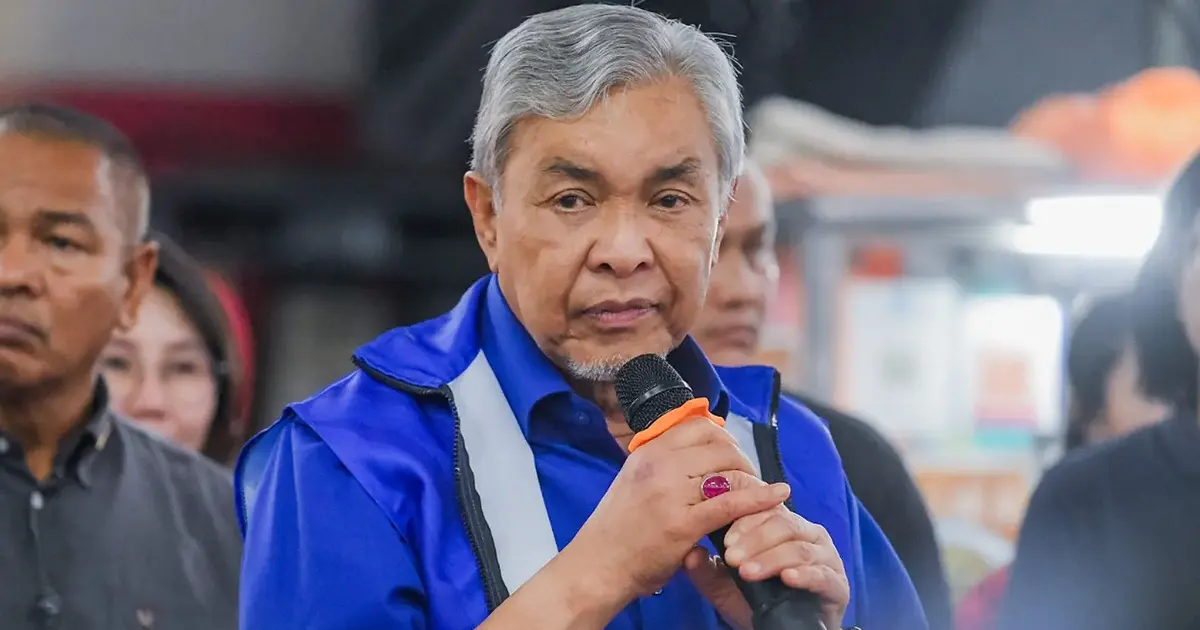
Umno's leadership has moved swiftly to dampen speculation that PAS backing for Barisan Nasional candidates in the forthcoming Johor state election represents a precursor to formal political realignment. BN chairman Zahid Hamidi drew a deliberate distinction between tactical electoral cooperation and deeper ideological partnership, underscoring the complexity of coalition politics in Malaysia's fractured political landscape.
The distinction matters significantly in Malaysian electoral dynamics, where seat-sharing arrangements and mutual support between competing blocs have become routine features of state-level contests. Johor, as the nation's second-largest state and a longtime BN stronghold, commands substantial political weight. The upcoming election presents a critical opportunity for both Umno and PAS to test their respective political strength and court working relationships, yet Zahid's remarks suggest the national leadership views such tactical alignments with considerable caution.
Historically, Umno and PAS have occupied opposite poles of Malaysia's political spectrum. Umno, a secular nationalist party rooted in the broader Barisan framework, prioritises multi-communal governance and has long maintained partnerships with the Malaysian Chinese Association and Malaysian Indian Congress. PAS, by contrast, pursues an explicitly Islamist agenda and has been aligned with opposition coalitions for extended periods. Their occasional cooperation at state level has typically reflected pragmatic necessity rather than shared vision.
Zahid's statement reflects deeper structural tensions within the governing coalition. While BN remains committed to its traditional multi-party model emphasising intercommunal balance, any formal rapprochement with PAS would fundamentally alter this configuration. The Islamist party's insistence on policies many non-Muslim Malaysians view as threatening to religious freedom and secular governance creates persistent friction. For Umno, maintaining the BN's multicommunal character remains strategically vital, especially given demographic realities and the party's longstanding reliance on non-Malay voter support in urban and semi-urban constituencies.
The Johor election thus operates as a laboratory for testing strategic possibilities without committing to irreversible arrangements. PAS may calculate that supporting BN candidates in this state contest builds goodwill and demonstrates mutual interest without requiring either party to sacrifice ideological distinctiveness. For BN, accepting PAS support while declining formal alliance signals pragmatism regarding electoral mathematics whilst preserving its traditional identity and appeal to non-Muslim communities.
This measured approach also reflects the volatile nature of Malaysian coalition-building. Previous attempts at cross-factional cooperation have frequently unravelled, sometimes acrimoniously. The 2022 experiment with Perikatan Nasional government, which included PAS alongside Umno, collapsed rapidly amid disputes over governance priorities and resource distribution. Fresh memories of that fractious arrangement likely inform Zahid's cautious tone, suggesting institutional learning from recent political turbulence.
Regionally, Malaysia's coalition dynamics carry implications beyond the peninsula. Singapore and Brunei closely monitor shifts in Malaysian political alignment, whilst Indonesian observers track how Umno manages its relationships with competing Islamist and secular movements. The Johor outcome will offer diagnostic insight into whether Malaysian politics is trending toward clearer bipolar competition or continuing fragmentation across numerous shifting coalition clusters.
For ordinary Malaysians, the substance of these discussions extends beyond parliamentary arithmetic. The fundamental question concerns which governance vision will prevail: Umno's traditional model of secular democracy underpinned by intercommunal power-sharing, or an alternative framework more explicitly centred on Islamic institutional frameworks and Malay-Muslim political primacy. These competing visions shape policy approaches to education, religion, law, and economic distribution, making coalition composition far more consequential than mere seat allocation.
The Johor election timing also intersects with broader national political recovery. Following years of instability, institutional dysfunction, and eroded public confidence in political leadership, electoral contests increasingly function as mechanisms for political realignment and renewal. Johor voters will essentially render judgment on competing leadership styles and governance approaches, outcomes that will reverberate through national calculations regarding the next federal election and ministerial composition.
Zahid's demarcation between immediate electoral cooperation and long-term alliance architecture reveals sophisticated political calculation. It permits flexibility regarding state-level arrangements whilst establishing red lines regarding constitutional and ideological fundamentals. This posture allows BN to benefit tactically from PAS support without surrendering the strategic advantage derived from maintaining its traditional multicommunal coalition character and appeal across diverse Malaysian communities.
Looking forward, the precise voting patterns and seat distribution in Johor will likely shape subsequent calculations regarding coalition possibilities. Should BN achieve decisive victory, pressure to formalise deeper PAS ties will diminish, whereas a narrower outcome might generate renewed incentives for exploring structured cooperation. For now, Zahid's positioning suggests Umno intends to maintain strategic ambiguity, accepting help where offered whilst preserving its options regarding future partnership configurations and political identity.

