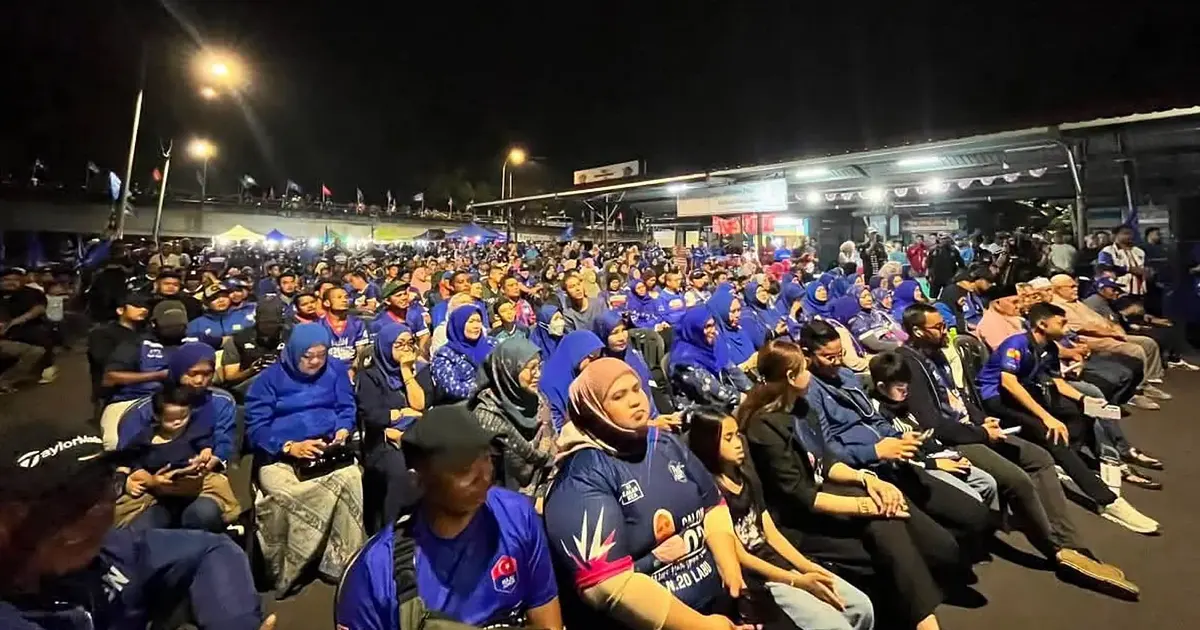
PAS vice-president Ahmad Fadhli Shaari has stepped into a politically sensitive debate over his party's emphasis on Malay unity, seeking to distance the Islamic party from accusations that such rhetoric deliberately stokes animosity towards Malaysia's Chinese and Indian communities. The clarification comes as Malaysia navigates an increasingly polarised political landscape where competing visions of national identity and coalition-building have become central to electoral messaging.
Ahmad Fadhli's intervention represents an attempt to reframe PAS's identity appeal within a broader context of inclusive governance. He has specifically appealed to non-Malay voters—particularly the Chinese and Indian electorate—to assess the party's actual positions based on public statements by its senior leadership rather than characterisations offered by rival political organisations. This distinction matters considerably in Malaysian politics, where parties routinely accuse competitors of harbouring hidden agendas incompatible with stated policy positions.
The timing of this clarification reflects mounting pressure PAS faces from multiple directions. Opposition parties have repeatedly claimed that the party's emphasis on Malay and Islamic interests implicitly marginalises other communities, creating barriers to cross-ethnic political coalitions. Simultaneously, PAS seeks to maintain its core supporter base among Malay-Muslim voters while broadening its appeal beyond traditional constituencies—a delicate balancing act that requires messaging discipline across diverse audiences.
For Malaysian voters evaluating PAS, the distinction Ahmad Fadhli draws carries real consequences. Political parties in Malaysia frequently operate with multiple messaging streams, deploying different rhetoric to core supporters versus swing voters. The request that non-Malay communities judge PAS based on leadership statements invites scrutiny of what those statements actually say and whether they differ meaningfully from broader party positioning. This transparency question extends beyond PAS to broader concerns about political authenticity in Malaysian politics.
The controversy surrounding Malay unity messaging reflects deeper structural tensions within Malaysian politics. The social contract enshrined in the Federal Constitution provides constitutional recognition of Malay-Muslim special rights alongside citizenship guarantees for all Malaysians. Political parties, particularly those with strong Malay-Muslim support, regularly invoke this framework. However, how such appeals are framed—whether as affirmation of constitutional guarantees or as calls for Malay political dominance—shapes perceptions among other communities about their place within the political system.
PAS's positioning within Malaysia's political coalitions has evolved substantially over recent election cycles. The party has moved between partnerships with UMNO, participation in Perikatan Nasional, and independent positioning, each shift accompanied by adjustments to messaging around Malay-Muslim interests and religious governance. Ahmad Fadhli's current clarification sits within this broader context of coalition dynamics and must be understood alongside the party's role within current political arrangements.
The challenge PAS faces in communicating across ethnic lines extends beyond rhetoric to questions of institutional practice and policy implementation. Chinese and Indian voters assess parties not only through official statements but through observable patterns in resource allocation, ministerial appointments, and policy priorities in areas where PAS holds executive power. These concrete indicators often carry more weight than verbal reassurances when communities evaluate whether parties will genuinely protect their interests once in government.
Ahmad Fadhli's appeal to non-Malay voters to distinguish between PAS statements and claims made by opposing parties implicitly acknowledges that political competition in Malaysia often involves accusations of hidden agendas and misrepresented positions. This environment of mutual suspicion makes direct communication between parties and communities increasingly important. However, such communication succeeds only when accompanied by institutional mechanisms ensuring accountability for stated positions and demonstrated commitment to described principles.
The broader implications of PAS's attempt to clarify its messaging extend to Malaysia's long-term political trajectory. If major parties can only appeal to their core ethnic constituencies without meaningful cross-ethnic engagement, electoral politics becomes increasingly zero-sum and coalition-building becomes harder. Conversely, if major parties can articulate visions of their communities' interests that non-community members also find compelling or at least acceptable, political space emerges for broader-based coalitions and more inclusive governance discussions.
For the Chinese and Indian voters Ahmad Fadhli specifically addressed, evaluating such claims requires engagement with the full range of PAS's public record—including statements by mid-ranking officials, local party actions, and policy positions on issues affecting minority communities. The invitation to judge based on leadership statements is reasonable, but voters assessing sincerity would naturally examine consistency across the party's entire institutional structure rather than relying on clarifications offered during political controversy. This reality will likely determine whether Ahmad Fadhli's message achieves its intended effect of broadening perceptions of PAS among non-Malay communities.
Ultimately, PAS's effort to clarify that Malay unity rhetoric need not equate to hostility towards other Malaysians addresses a legitimate concern in plural society. Whether such clarification proves persuasive depends less on the statement itself than on whether the party's wider pattern of behaviour, institutional actions, and coalition partnerships consistently reflect the inclusive vision Ahmad Fadhli has articulated.

