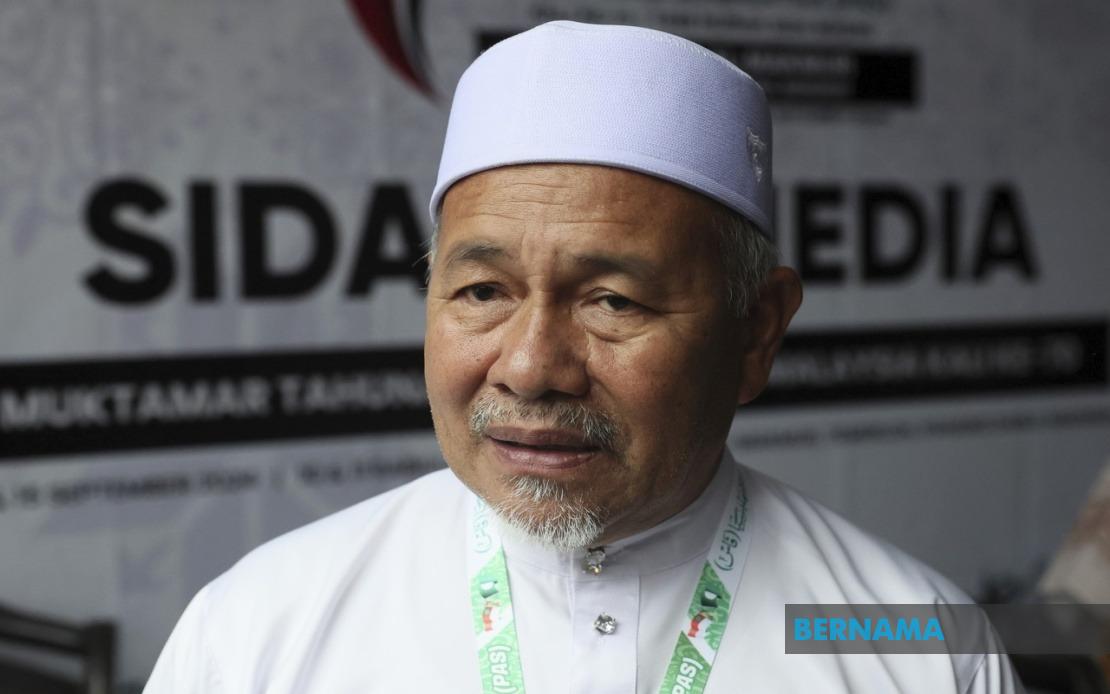
The political pressure for Malaysia to reclaim jurisdiction over the 1Malaysia Development Berhad scandal intensified on Wednesday when PAS leadership insisted that fugitive businessman Low Taek Jho must face domestic prosecution regardless of whether he receives clemency from abroad. Speaking at the Pasir Mas PAS division annual general meeting in Kota Bharu, Deputy President Datuk Seri Tuan Ibrahim Tuan Man underscored that Malaysia possesses its own sovereign legal framework and should not subordinate its prosecutorial interests to the decisions of other nations, including the United States.
The statement emerges amid international speculation that Jho Low may be among approximately 250 individuals under consideration for presidential pardon by US President Donald Trump, announced as part of ceremonies marking America's Independence Day. This development has prompted concern among Malaysian officials that the controversial financier, who has evaded capture for years, might escape accountability through foreign intervention. Tuan Ibrahim's remarks represent an explicit assertion that such external developments should not deter Malaysia from pursuing its own case against Jho Low, whose alleged misappropriation of 1MDB funds caused substantial damage to the nation's fiscal health and international reputation.
The 1MDB scandal stands as one of Malaysia's most significant corporate and political crises of the past decade. The state investment fund, established in 2009, became the vehicle through which billions of ringgit allegedly flowed into private accounts. Jho Low, though never holding an official position at 1MDB, reportedly wielded considerable influence over the fund's operations and financial decisions. International investigations revealed that money from 1MDB was distributed through complex networks spanning multiple jurisdictions, with portions allegedly used to purchase luxury assets including properties in New York and London, private jets, and fine art collections.
Tuan Ibrahim emphasised that Malaysia, as the jurisdiction where 1MDB was domiciled and where the funds originated, possesses the strongest claim to prosecute Jho Low. The nation has experienced direct and measurable harm from the alleged fraud, with the diverted funds representing resources that should have contributed to domestic development projects and economic growth. His argument reflects a broader concern within Malaysian political circles that relying on international cooperation or awaiting outcomes from foreign legal proceedings may never deliver justice domestically.
The PAS deputy president also called upon authorities to accelerate efforts to secure Jho Low's extradition and bring him before Malaysian courts. This plea suggests frustration with the pace of apprehension efforts despite multiple nations launching investigations and enforcement actions against the fugitive. His comments underscore the expectation that government agencies should prioritise capturing Jho Low rather than awaiting developments that may ultimately shield him from accountability.
Prime Minister Datuk Seri Anwar Ibrahim reinforced Malaysia's commitment to the prosecution effort the previous day, stating that the country would continue pursuing legal action against Jho Low notwithstanding reports of potential presidential clemency from the United States. This position represents continuity in Malaysia's approach under the current administration, which has maintained that the 1MDB scandal demands resolution through the domestic judicial system. Anwar's statement signals that Malaysia will not be deterred by international developments and intends to maintain pressure on extradition channels and bilateral cooperation agreements.
The timing of these statements reflects ongoing tensions between Malaysia's prosecutorial ambitions and the practical challenges of apprehending and trying someone operating across multiple jurisdictions. Jho Low's alleged network of accomplices, legal representatives, and protective connections across various countries has enabled him to evade capture. Despite high-profile arrests of co-conspirators and the recovery of substantial assets overseas, the primary architect of the scheme has remained at large, reportedly moving between different locations to avoid capture.
The pardon speculation highlights a genuine vulnerability in Malaysia's enforcement strategy. If a foreign government grants clemency to Jho Low based on diplomatic considerations or internal political calculations unrelated to the 1MDB scandal, Malaysia would lose a significant enforcement tool. International extradition agreements typically honour pardons issued by the pardoning nation, creating a pathway for fugitives to escape accountability in other jurisdictions. This scenario would undermine years of investigation and the reputational investment Malaysia has made in pursuing the case internationally.
For Malaysian citizens and the broader Southeast Asian region, the outcome of the Jho Low case carries implications extending beyond financial recovery. The scandal damaged Malaysia's standing among international investors and financial institutions, who questioned the adequacy of governance frameworks and oversight mechanisms. Securing Jho Low's conviction domestically would signal that Malaysian courts can hold powerful figures accountable and that the nation takes financial crimes with utmost seriousness, potentially restoring international confidence in local institutions.
The PAS position also reflects evolving political dynamics within Malaysia's coalition government, where different parties vie to demonstrate toughness on governance and accountability issues. By publicly calling for Jho Low's prosecution, PAS positions itself as a defender of national interests and fiscal prudence, messaging that resonates with constituencies concerned about corruption and financial mismanagement. This political dimension adds another layer to what remains fundamentally a matter of judicial process.
Looking ahead, Malaysia's authorities face the dual challenge of maintaining diplomatic channels with countries where Jho Low may be located while preserving the independence and credibility of the domestic prosecution effort. The case illustrates how financial crimes in the modern era transcend borders, requiring coordinated international responses while respecting the sovereign rights of affected nations to administer their own justice. Whether Malaysia can successfully navigate these complexities to bring Jho Low to trial remains uncertain, but political statements from leadership indicate unwavering commitment to the objective.

