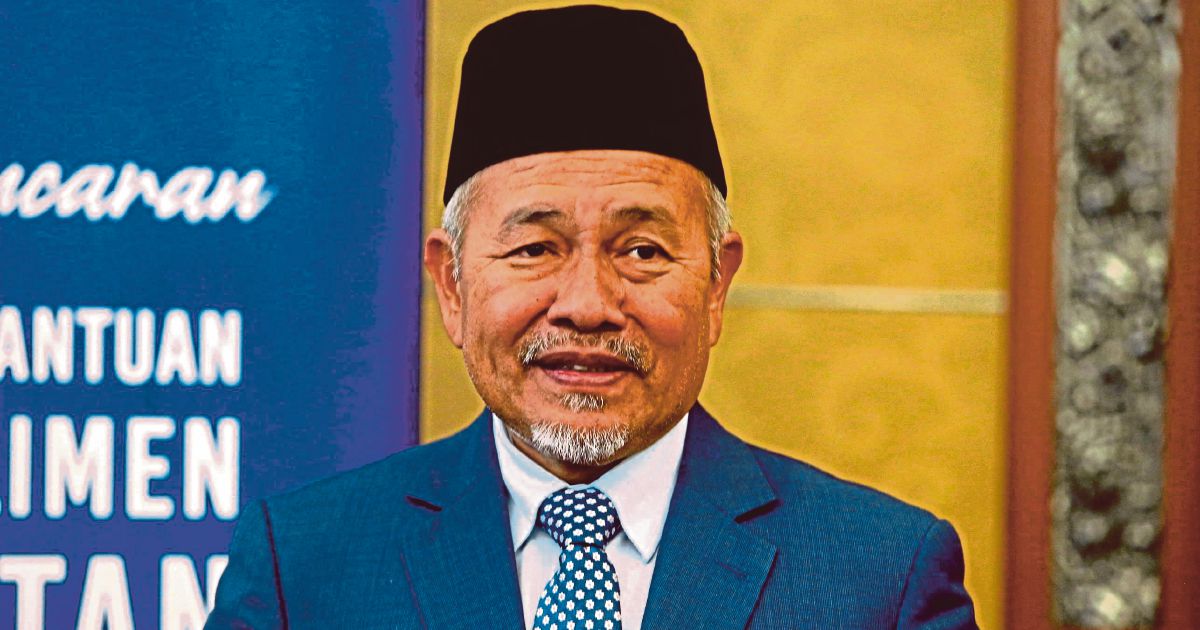
In a significant development within Malaysia's political landscape, PAS deputy president Datuk Seri Tuan Ibrahim Tuan Man has publicly lauded Umno's decision to withdraw its support from the Negri Sembilan state government, characterising the move as a bold exercise of political courage that fundamentally alters the dynamics ahead of the next state election. Speaking in Seremban, Tuan Ibrahim framed the withdrawal not as a setback but as a watershed moment that will allow voters to engage in a more meaningful democratic exercise.
The withdrawal of Umno's backing represents a dramatic shift in the political equation within the Negri Sembilan statehouse, where coalition arithmetic has long determined governance and ministerial positions. By stepping back from the ruling arrangement, Umno has essentially reset the power equation, forcing a recalibration of alliances and opening pathways that were previously constrained by the existing coalition structure. This move carries implications that extend well beyond the state level, signalling potential fractures within broader federal arrangements and suggesting that the stability of state governments cannot be taken as permanent fixtures in Malaysia's volatile political environment.
Tuan Ibrahim's public endorsement of Umno's decision is particularly noteworthy given the historical tensions between PAS and Umno. The two parties have oscillated between cooperation and confrontation across multiple election cycles, with their relationship shaped by competing agendas at both state and federal levels. His willingness to praise what might traditionally be seen as a destabilising manoeuvre indicates that PAS views this development as strategically advantageous, potentially opening space for the Islamic party to advance its own political objectives in the state. This calculus suggests that PAS leadership anticipates opportunities arising from the political vacuum created by Umno's withdrawal.
The framing of the withdrawal as enabling voter choice rather than causing governmental paralysis reveals how Malaysian political actors strategically construct narratives around instability. By positioning Umno's withdrawal as empowering the electorate rather than undermining institutional continuity, Tuan Ibrahim reinterprets what could be portrayed as recklessness as democratic renewal. This rhetorical approach reflects broader patterns in Malaysian politics where parties legitimise sudden shifts in coalition positions by appealing to popular sovereignty and the will of voters, even when such manoeuvres are primarily driven by internal party calculations and leadership ambitions.
Negri Sembilan's political configuration has historically served as a testing ground for different coalition experiments within Malaysia. The state's relatively smaller size and less polarised electorate compared to larger states have occasionally made it a space where parties attempt different partnership arrangements before deploying them at the federal level or in larger states. Umno's withdrawal therefore warrants attention not merely as a local development but as a potential indicator of broader coalition recalibration that could influence how Malaysian politics evolves nationally. The state's political movements often foreshadow national trends, making this episode significant for political analysts observing Malaysia's trajectory.
For PAS, the timing of Tuan Ibrahim's comments suggests the party may be positioning itself to capitalise on the uncertainty. The party has been seeking to expand its influence beyond its traditional strongholds, and a destabilised Negri Sembilan government creates tactical opportunities for PAS to increase its bargaining power or advance legislative agendas. By publicly congratulating Umno for its withdrawal, PAS leadership simultaneously signals its own readiness to engage in the reconfigured political space and potentially coordinate with other actors to reshape the state's governance structure according to party interests.
The stated intent to open the floor to voters carries weight only if an election is imminent or inevitable. Typically, when a government loses the confidence of coalition partners, the ruling administration faces two pathways: either it reshuffles alliances to restore its majority, or it triggers a dissolution that leads to elections. Tuan Ibrahim's emphasis on voter choice implies that PAS anticipates such an electoral exercise, which would reset all positions and allow for fresh contests. This expectation of elections underscores the precarious nature of current state government arrangements and reflects how fragile coalition-based governance can become when party interests diverge.
The broader context of Malaysian politics suggests that state governments have become increasingly vulnerable to coalition shifts as parties reassess electoral viability and factional balance within their own structures. Umno's decision in Negri Sembilan reflects the party's own internal dynamics and possibly its assessment of whether maintaining the current arrangement serves its electoral interests in the anticipated state election. If Umno calculates that withdrawing from an unpopular state government improves the party's prospects in a fresh election, the move represents rational political strategy even if it destabilises existing arrangements.
For Malaysian voters in Negri Sembilan, this political churn presents both opportunities and complications. A fresh election would provide an occasion to render judgment on incumbent performance and to reconsider their political preferences. However, the rapid coalition shifts that precede such elections often mean that voters face bewildering realignments and campaign narratives that prioritise elite power calculations over substantive policy discussions. The democratic principle of voter choice, while genuine, operates within parameters established by political elites who orchestrate the timing and circumstances of such choices.
Tuan Ibrahim's public commendation of Umno's withdrawal, while presented in terms of democratic principles, ultimately reflects the interests of PAS in the reconfigured political landscape. As the state heads toward electoral uncertainty, the positions articulated by senior party figures like Tuan Ibrahim will be tested against eventual electoral outcomes. Whether voters indeed appreciate this reshuffling as an opportunity for genuine democratic choice or view it as further evidence of political instability will determine the electoral consequences for all involved parties. The development underscores the perpetual tension in Malaysian democracy between elite-driven coalition politics and the nominal supremacy of the ballot box.

