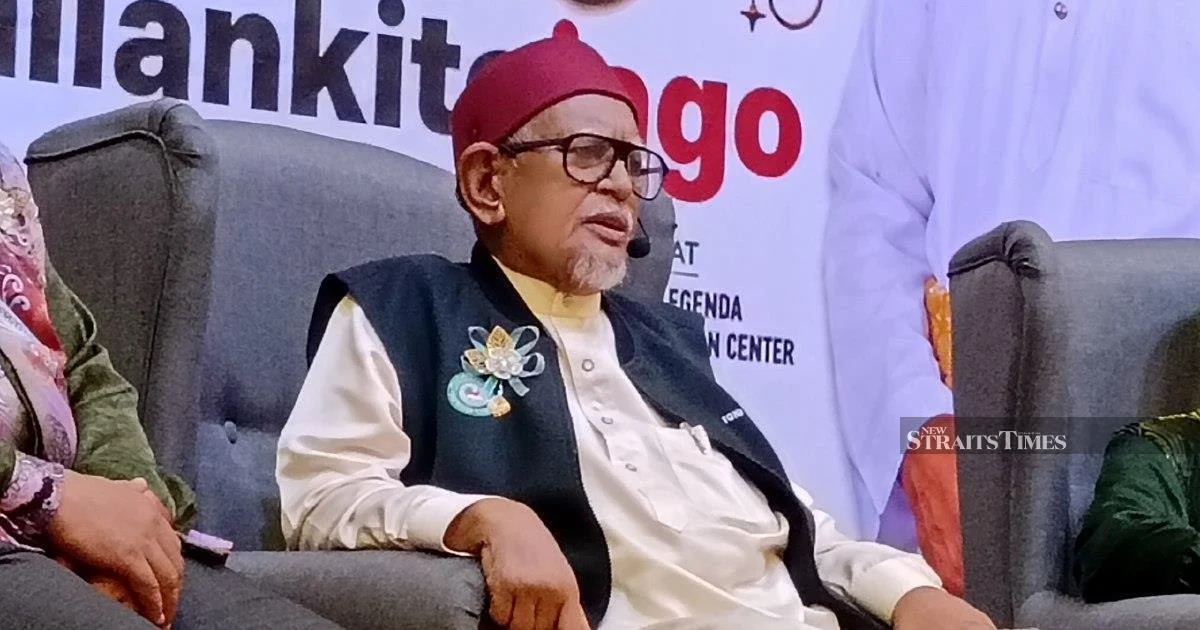
PAS president Abdul Hadi Awang has indicated that the Islamic party would consider accepting an Umno politician as its candidate for menteri besar of Negri Sembilan, provided formal negotiations between the two parties culminate in a comprehensive electoral pact for the August 1 state election. The statement signals a pragmatic approach to coalition-building in the swing state, where neither Umno nor PAS commands sufficient parliamentary strength independently to form a government.
Negri Sembilan has emerged as a crucial battleground in Malaysian electoral politics, holding the balance between competing visions of governance at the state level. The state assembly comprises 36 seats, making it possible for minority governments to govern with support from one or two independent representatives or smaller parties. The August 1 election, set to be among the most closely watched state contests this year, carries implications beyond the state itself, potentially influencing the composition of future federal coalitions and power-sharing arrangements across the peninsula.
Umno's position in Negri Sembilan reflects broader trends within the party following recent leadership transitions and internal consolidation. The party has sought to rebuild credibility among voters through renewed focus on grassroots governance and service delivery. An Umno-led menteri besar administration, supported by PAS, would represent a significant development in the state's political landscape, potentially reshaping the competitive dynamics that have characterised Negri Sembilan politics for the past decade.
PAS's conditional acceptance of an Umno menteri besar candidate demonstrates the party's willingness to prioritise electoral success over rigid ideological positions. This flexibility contrasts with the party's more hardline stance in certain other states, where PAS has insisted on leading roles in any coalition arrangement. The distinction underscores how PAS calibrates its political strategy according to local circumstances, available coalition partners, and prospects for electoral advantage in different regions.
Seat distribution remains the crucial sticking point in Umno-PAS negotiations. Both parties must navigate complex calculations involving vote-share projections, traditional strongholds, demographic shifts, and the positioning of smaller coalition partners. The talks reportedly involve detailed discussion of which constituencies each party contests, with particular attention to swing seats where either party might reasonably expect to win with adequate support and campaign resources. Such negotiations typically extend beyond simple arithmetic, involving considerations of candidate quality, local grievances, and community representation.
The timing of such coalition announcements carries strategic weight in Malaysian electoral politics. Formalising alliances too early may invite tactical defections and allow opponents time to consolidate counter-narratives, while announcing too late creates uncertainty among candidates and supporters. The ongoing nature of negotiations suggests both Umno and PAS are testing voter sentiment and assessing the competitive environment before committing to specific seat distributions and campaign strategies.
For Negri Sembilan voters, an Umno-PAS arrangement would present a distinct governance choice compared to alternatives, potentially the incumbent coalition or other opposition combinations. Such an arrangement would likely emphasise Islamic governance elements favoured by PAS while maintaining the business-as-usual economic approach associated with Umno. This combination could appeal to voters seeking continuity with incremental Islamic influence, though it might alienate those preferring either secular governance or more comprehensive Islamic implementation.
The prospect of Umno-PAS cooperation in Negri Sembilan occurs within the context of their complex relationship nationally. The two parties have alternated between cooperation and fierce competition depending on federal political circumstances. Recent years have seen periods of collaboration and estrangement, shaped by calculations about federal coalitions, competition for Malay-Muslim support, and divergent positions on various policy matters. State-level arrangements are often negotiated independently of federal dynamics, yet they feed into broader perceptions of each party's electoral viability and strategic direction.
Rival coalitions are observing these negotiations closely. Opposition parties recognise that an effective Umno-PAS alliance could consolidate Malay-Muslim support and substantially increase their chances of retaining or winning Negri Sembilan. Conversely, a breakdown in talks might fragment the Malay-Muslim vote, potentially benefiting opposition candidates in certain constituencies. The competitive environment in Negri Sembilan thus extends beyond the immediate question of seat-sharing to encompass broader questions about which coalition can most effectively harness diverse voter interests and deliver responsive governance.
Hadi's comments suggest that talks have reached a stage where basic principles of cooperation are accepted, with negotiators addressing specific details. The willingness to discuss menteri besar candidates indicates that structural issues around leadership positions have been substantially resolved, at least in preliminary terms. However, politics remains fluid, and negotiations often encounter unexpected obstacles as discussions advance from principle to implementation, particularly when local party chapters voice concerns about specific arrangements or when candidate considerations introduce complications.
Negri Sembilan's electoral significance extends to its role as a testing ground for coalition models that might subsequently be applied elsewhere. Successful cooperation here could provide a template for future Umno-PAS arrangements in other states, while failure might discourage such ventures. This broader implication adds pressure to current negotiations, as both parties recognise that how they manage their relationship in Negri Sembilan will influence their credibility with potential partners and voters in other states facing similar electoral decisions.
The August 1 election will ultimately determine whether these negotiations translated into effective political cooperation or whether they represented exploratory discussions that failed to mature into formal alliance. The outcome will carry significance for state-level governance in Negri Sembilan and for the trajectory of coalition politics across Malaysia's electoral landscape. Voters in the state thus hold considerable influence over patterns that may persist well beyond August.

