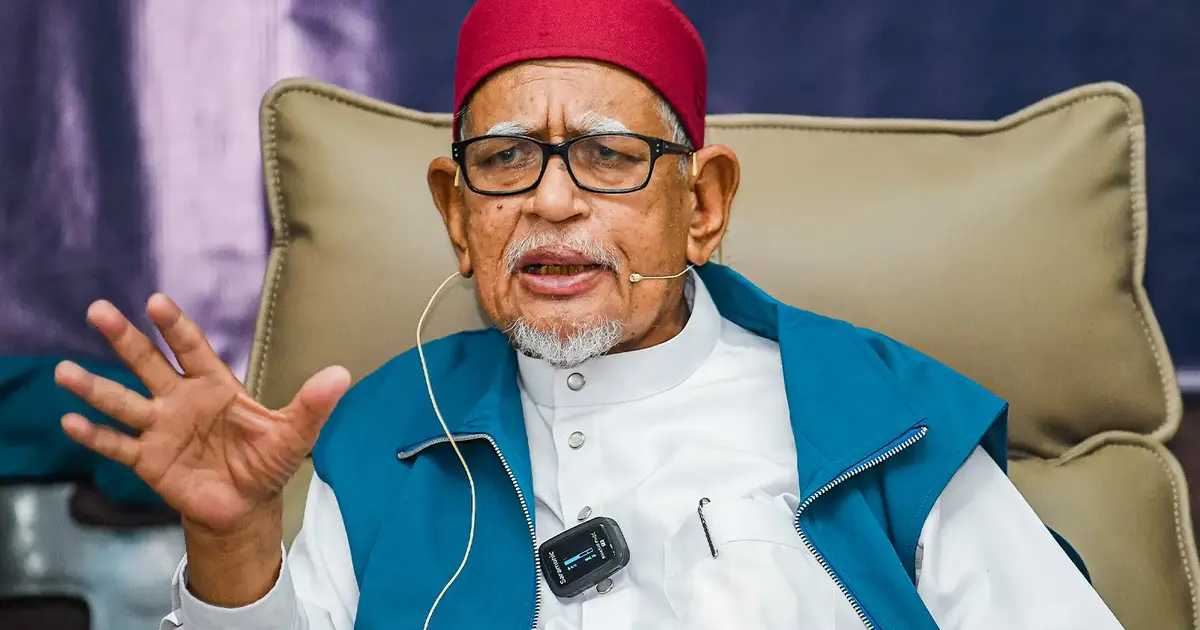
PAS president Abdul Hadi Awang has doubled down on controversial comments he made regarding the Democratic Action Party, signalling that he will mount a full defence when the matter reaches court. The Islamic party leader stopped short of apologising for his previous statements, instead presenting them as factual observations worthy of judicial scrutiny. His defiant stance comes as authorities investigate the comments under provisions that potentially expose him to legal consequences, yet Hadi appears undeterred by the prospect of formal charges.
Hadi clarified his current legal position in relation to the investigation, noting that police have only requested him to provide a recorded statement rather than formally charging him with any offence. This distinction carries significant weight in Malaysia's legal framework, where being summoned for questioning represents an earlier stage in proceedings than facing formal charges. The distinction suggests the police investigation is ongoing and that any decision to prosecute remains pending. The PAS leader's emphasis on this procedural detail may reflect confidence in his legal team's assessment of his vulnerability to prosecution.
The remarks that triggered the police investigation touched on sensitive matters within Malaysian politics, specifically concerning DAP's role and positioning within the broader political landscape. Hadi's willingness to reiterate his position despite official scrutiny underscores the intensifying polarisation between PAS and the opposition coalition, particularly concerning the Democratic Action Party. Such public statements carry electoral implications for both parties, with PAS using criticism of DAP to consolidate support among its base while DAP views such rhetoric as inflammatory and divisive.
PAS's aggressive posture toward DAP reflects deeper ideological and political tensions that have shaped Malaysian coalition politics over recent years. The two parties represent fundamentally different visions for Malaysia's future governance, with PAS advocating for Islamic-centric policies while DAP champions secular, multiethnic governance. This ideological gap has widened substantially, transforming what were once manageable political differences into existential conflicts that dominate parliamentary and street-level discourse. For voters concerned about religious and constitutional matters, these distinctions constitute meaningful choices about the nation's trajectory.
Hadi's confidence in defending his position in court suggests PAS believes it possesses a credible legal argument regarding the substance of his comments. Malaysian courts have historically protected political speech within certain bounds, particularly when statements concern political organisations rather than specific individuals. The PAS president may be betting that judges will view his remarks as legitimate political commentary protected under constitutional freedoms, though such determinations ultimately depend on how courts interpret the specific wording of his statements and applicable statutory provisions.
The investigation's trajectory bears significance for broader press freedom and political expression in Malaysia. If authorities ultimately prosecute Hadi, it could signal that the boundaries of acceptable political criticism are narrowing, with potential consequences for how all political leaders conduct campaigns and parliamentary discourse. Conversely, if police conclude no charges are warranted, it would suggest Malaysian law enforcement views his statements as falling within permissible political debate. Either outcome will reverberate through Malaysian politics as other party leaders assess what they can say about rival coalitions.
For the Democratic Action Party, Hadi's refusal to retract his comments while facing police investigation represents a challenging political moment. DAP typically capitalises on accusations that government-linked agencies weaponise legal processes against opposition figures, yet the PAS president's defiant posture complicates that narrative. Hadi frames himself as standing by principle rather than capitulating to state pressure, which may resonate with segments of the electorate who value political courage regardless of party affiliation. DAP's response to this situation will test whether it can counter aggressive political rhetoric while maintaining its commitment to rule of law.
The timing of these developments intersects with Malaysia's broader political realignment. The collapse of previous coalition arrangements and the formation of new political blocs have created unprecedented instability in party relationships and parliamentary mathematics. In this environment, figures like Hadi wield considerable influence over whether politics remains relatively cordial or descends into more fractious confrontation. His willingness to stand by controversial statements signals a choice to maintain aggressive positioning rather than seek reconciliation, suggesting Malaysian politics will remain turbulent through the near term.
Southeast Asian observers note that Malaysia's situation mirrors tensions in other regional democracies where political polarisation tests judicial independence and press freedom. How Malaysian courts ultimately handle cases involving political speech influences perceptions of institutional impartiality and respect for democratic norms across the region. International organisations monitoring press freedom and political rights increasingly scrutinise Malaysia's approach to such matters, with particular attention to whether legal systems operate neutrally or become instrumentalised for political purposes.
Moving forward, the most probable scenarios involve either authorities dropping the investigation following Hadi's statement, or prosecutors charging him and initiating court proceedings that could stretch across months or years. Hadi's preparation to defend his position in court suggests he expects the latter outcome and has assessed the risks as manageable from both legal and political perspectives. Whatever transpires, his decision to maintain his stance rather than seek face-saving compromises marks a notable moment in Malaysian political culture where such disputes increasingly move toward confrontation rather than resolution.

