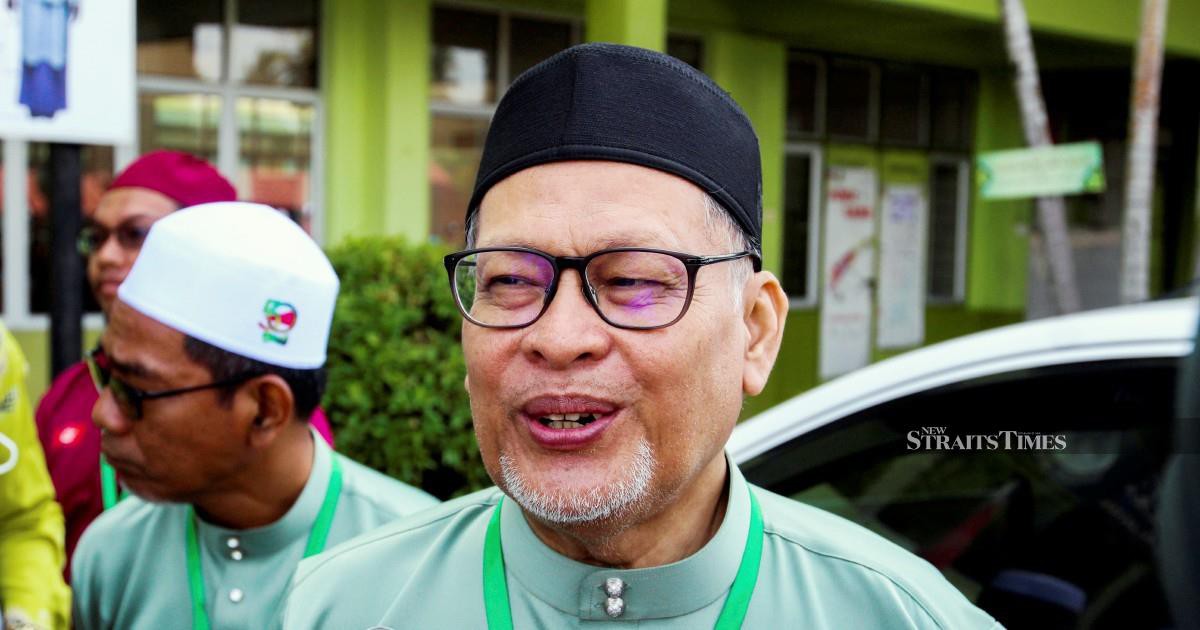
The Islamic party Pas believes it is well-positioned to secure a dominant presence in Negri Sembilan's state legislature following a strategic arrangement between the two major ruling coalitions. The confidence expressed by party leaders stems from the electoral understanding brokered between Perikatan Nasional and Barisan Nasional, two coalitions that have increasingly coordinated their political strategy at state and federal levels in recent years.
This development reflects a significant shift in Malaysian electoral politics, where once-rival coalitions have found common ground on candidate selection and seat allocation in specific states. For Pas, which operates primarily in northern and central Malaysia, the Negri Sembilan contest represents an opportunity to expand its footprint in the Klang Valley periphery and demonstrate the vitality of its grassroots mobilisation efforts. The five seats Pas is contesting are viewed by the party as winnable constituencies where it has invested substantial organisational effort.
The PN-BN understanding essentially represents a mutual non-aggression pact in this particular state election, allowing both coalitions to optimise their resources and avoid splitting votes that might benefit opposition candidates. Under such arrangements, Barisan Nasional typically concentrates its effort on constituencies where it has historical strength, while Perikatan Nasional partners—including Pas—are given space to contest in areas where they believe they have competitive advantages. This pragmatic division of labour has proven effective in previous state contests.
For Pas specifically, the Negri Sembilan election holds symbolic importance beyond the modest number of state seats at stake. The party, which anchors Perikatan Nasional's ideological foundation, has sought to demonstrate electoral competitiveness in bumiputera-majority, Malay-Muslim demographic strongholds throughout the peninsula. Success in Negri Sembilan would validate the party's claim that its political appeal extends beyond its traditional heartlands in Terengganu, Kelantan, and Kedah.
The broader context of this electoral pact relates to the post-2022 political realignment in Malaysia. After the 15th general election delivered a fractured parliament, the nation's major political forces undertook strategic recalibration. Perikatan Nasional, comprising Pas, Bersatu, and other parties, gradually moved from opposition positioning toward de facto cooperation with the federal government led by Barisan Nasional. This transition has included state-level alliances, candidate agreements, and tacit understandings on vote distribution.
Negri Sembilan, as a relatively compact state with mixed urban and rural constituencies, presents particular opportunities for precision electoral targeting. The state's demographic composition—with Malay Muslim voters comprising a substantial portion of the electorate—theoretically favours Pas's electoral messaging around Islamic governance and community welfare. The party's grassroots network, cultivated through decades of dormitory religious education activism and community organising, provides organisational infrastructure that translates into voter mobilisation capacity.
However, Pas's optimism must be tempered against historical performance data and the competitive environment in Negri Sembilan. The state has been dominated by Barisan Nasional governments with Umno providing the chief minister since independence, and changing electoral patterns requires substantial swings in voter preference. Opposition Pakatan Rakyat has also maintained relevance in several Negri Sembilan constituencies, particularly in urban areas where secular policy concerns and demographic change have shifted voter preferences away from the Umno-Pas traditional axis.
The PN-BN arrangement in Negri Sembilan also illuminates the fluidity and pragmatism increasingly characterising Malaysian coalition politics. Rather than ideological purity or organisational autonomy, contemporary electoral strategy emphasises vote maximisation and seat gain, even if it requires coordination with former competitors. This represents a normalisation of cross-coalition cooperation that would have seemed unthinkable in the pre-2020 political environment.
For Malaysian voters in Negri Sembilan and observers across the Southeast Asian region following the country's political evolution, this election will serve as a barometer of shifting coalition strength. The results will indicate whether Perikatan Nasional's integration into Malaysia's political establishment is strengthening or whether Barisan Nasional retains decisive advantages in traditional strongholds. Additionally, the performance of Pas specifically will provide data points for understanding the Islamic party's capacity to translate grassroots support into electoral victories outside its core territories, a capability that will determine its relevance in future federal contests where parliamentary seat distribution remains highly competitive and consequential.

