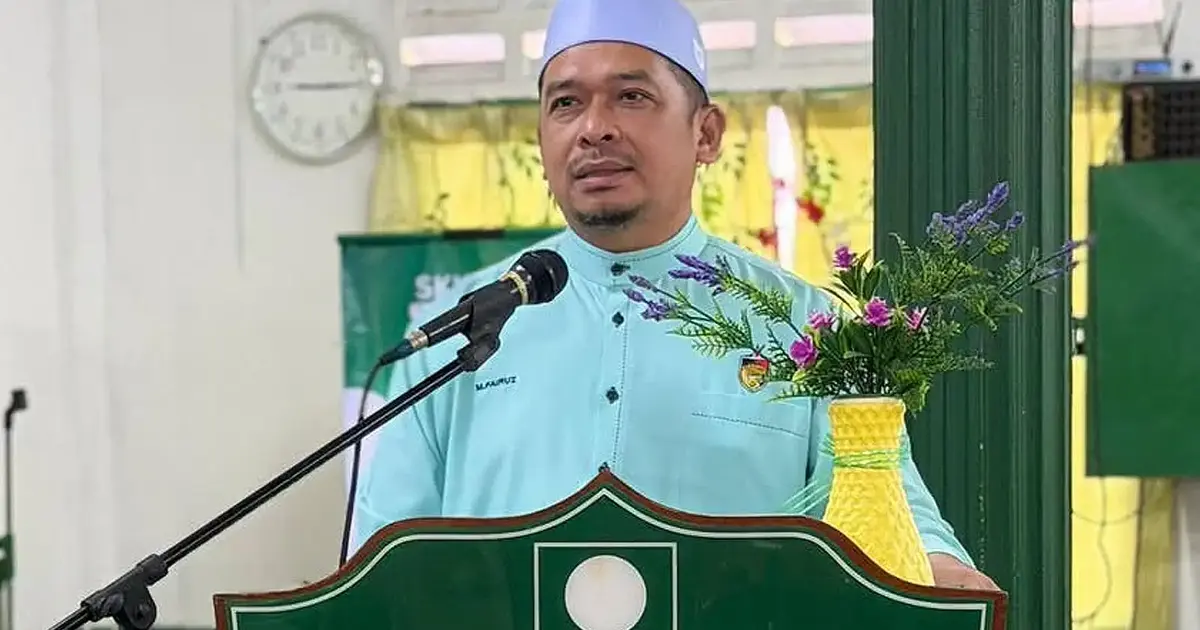
The Islamic political landscape in Negeri Sembilan is poised for a significant realignment as PAS, energised by its Perikatan Nasional alliance, sets its strategic sights on constituencies long dominated by the Democratic Action Party. State PAS chief Fairuz Isa has disclosed that the party intends to contest seats historically won by DAP in areas where Malay voters constitute approximately 40% of the electorate, signalling an assertive push into territory traditionally considered opposition strongholds.
This tactical repositioning represents a notable shift in Malaysian opposition politics, where DAP has historically performed strongly in mixed constituencies with substantial Chinese and Indian populations alongside Malay voters. The willingness of PAS to directly challenge DAP in these hybrid electoral zones suggests confidence in its ability to mobilise Malay and Muslim voters through its coalition platform, even where demographic composition is more diverse than in heartland PAS territories. Fairuz Isa's announcement indicates that PAS views these DAP-held seats as winnable terrain, particularly given the political momentum that Perikatan Nasional has gathered in recent months.
Negeri Sembilan holds particular significance in Malaysian electoral strategy. The state sits at the crossroads of competing political ideologies, with a voter composition that includes substantial Malay, Chinese, and Indian communities spread across its varied districts. DAP's presence in the state has been built on appeals to urban and semi-urban voters seeking secular governance and representation of minority interests. However, the Malay electorate in DAP-held constituencies represents a potential vulnerability for the party, as these voters may be responsive to messaging centred on Islamic governance, Bumiputera advocacy, and nationalist themes that form the core of PAS's political platform.
The threshold of 40% Malay voters appears deliberately calculated by PAS strategists as the minimum demographic configuration at which they believe their campaign messaging can prove decisive. This suggests sophisticated electoral analysis within the party, where operatives have identified specific constituencies where concentration of Malay voters, combined with potential dissatisfaction with DAP's secular positioning or governance record, creates realistic pathways to victory. The strategy also reflects PAS's confidence that it can draw Malay voters away from other contenders, whether in government or opposition, by emphasising its religious credentials and Islamic-nationalist agenda.
For DAP, this represents a direct electoral challenge in areas where the party has invested considerably in building organisational capacity and voter relationships. The party has historically relied on strong performance among Chinese voters in urban areas whilst maintaining a presence among Malay and Indian communities through appeals to inclusive governance and economic opportunity. However, if PAS successfully activates Malay voters in these constituencies through mobilisation around religious and communal identity, DAP's electoral equations in Negeri Sembilan could shift considerably. The party would need to strengthen its messaging to Malay voters or risk losing seats it has held through coalition support.
This development also carries implications for Perikatan Nasional's broader electoral strategy across Malaysia. By deploying PAS into mixed constituencies rather than confining the Islamic party to predominantly Malay areas, the coalition suggests confidence in expanding its geographical reach and demographic appeal. It reflects the alliance's attempt to present itself not merely as a Malay-Muslim bloc but as a governing force capable of commanding support across diverse communities. However, such strategy carries risks, as it places PAS representatives directly in competition with parties that may have superior track records or voter relationships in mixed communities.
The timing of this announcement, preceding formal nomination of candidates, allows PAS to set expectations and test voter sentiment through campaign machinery. It also signals to DAP and other opposition parties the direction of Perikatan Nasional's strategic thinking in the state. The onus now falls on all parties to mobilise their support bases effectively and to articulate compelling cases for why voters should align with their respective visions for governance.
For Southeast Asian observers monitoring Malaysian politics, this contest in Negeri Sembilan represents a microcosm of broader regional dynamics where Islamist parties increasingly compete for control of diverse, mixed urban and semi-urban constituencies. The question of whether PAS can successfully convert Malay voter demographics into actual electoral victories in DAP-held seats will provide significant data about the political feasibility of religious-nationalist appeals in Malaysia's plural society. The state election will ultimately reveal whether the 40% Malay voter threshold that PAS leadership has identified proves accurate as a tipping point for electoral competition in mixed constituencies.