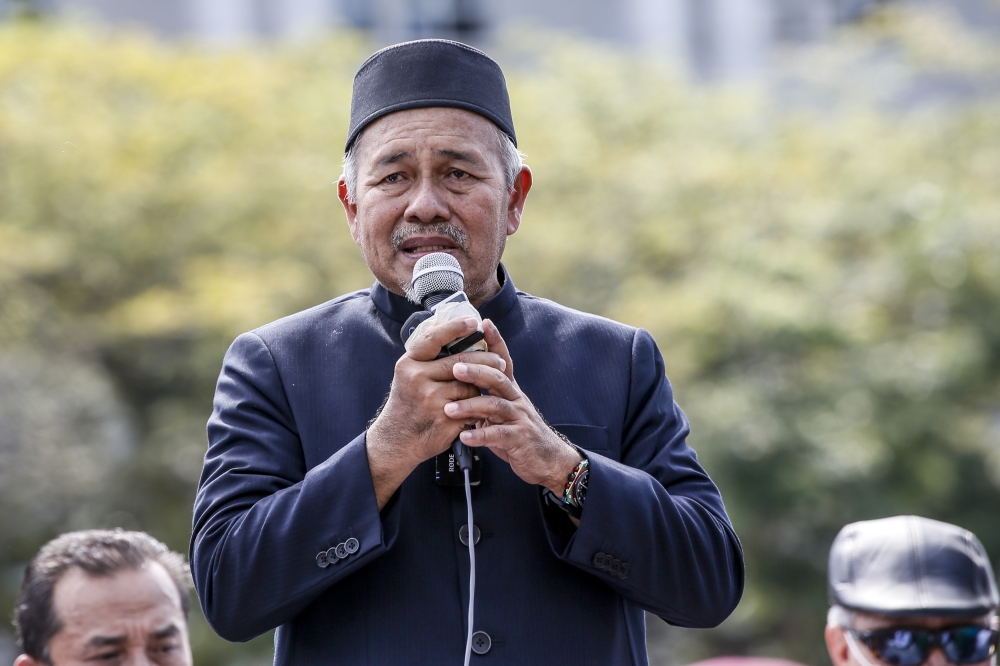
PAS has signalled its willingness to enter discussions aimed at broadening the collaborative framework between Barisan Nasional and Perikatan Nasional, marking a potentially significant development in Malaysia's fragmented political landscape. The Islamic party's openness to dialogue suggests room for manoeuvre in how the two coalitions might deepen ties, moving beyond their existing arrangements to encompass both state-level governance in Melaka and the dynamics of federal politics.
This overture comes at a moment when Malaysia's political architecture remains fluid, with BN and PN maintaining parallel power structures that have occasionally cooperated but often competed for influence. The possibility of formalising and extending such cooperation would represent a consolidation of centre-right and Islamist political forces, potentially reshaping the balance of power that has defined Malaysian politics since the 2022 general election. PAS's engagement reflects calculations within the party about strategic positioning in an uncertain electoral environment.
Melaka represents particularly fertile ground for such discussions. The state has been a battleground where BN and PN have clashed, with power configurations shifting based on electoral outcomes and defections. A formal mechanism for coordinating these parties' interests in Melaka could stabilize governance there and signal to voters a coherent political direction. For the sultanate's residents, extended cooperation might mean clearer policy continuity and reduced political volatility, though it would also concentrate power among fewer actors and potentially limit voter choice.
At the federal level, discussions about deepening BN-PN ties carry weightier implications. Malaysia's government currently derives stability from an informal understanding between these blocs, allowing legislation to pass through parliament without constant negotiation. Formalising cooperation could entrench this arrangement and create institutional mechanisms for resolving disputes, though it might equally lock smaller parties into subordinate roles and reduce their ability to extract concessions on policy matters they prioritise.
PAS's strategic calculus reflects its ambitions within such an expanded framework. The party has sought to position itself as kingmaker in Malaysian politics, leveraging its parliamentary representation and grassroots organisation. By signalling openness to talks, PAS avoids appearing obstructionist while maintaining the option of extracting maximum concessions during actual negotiations. The party's Islamic identity and conservative base provide it with a distinct constituency that neither BN's traditional Chinese-dependent components nor PN's more diverse makeup can fully replicate.
For Barisan Nasional, PAS's willingness to discuss cooperation presents both opportunity and complexity. BN, anchored by UMNO, has struggled to regain its pre-2018 dominance and sees collaborative arrangements as a path to rebuilding political weight. However, deepening ties with PAS and PN might alienate urban, secular-leaning voters who view these parties with ambivalence. The coalition must balance the immediate gains of broader cooperation against potential longer-term costs to its electoral coalition.
Perikatan Nasional similarly faces a balancing act. The bloc, which includes PKR and AMANAH alongside PN's core Bersatu and HAMIM, has maintained a more progressive image than PAS. Formalising arrangements with PAS and BN could complicate PN's positioning with urban middle-class voters who formed part of its 2022 coalition. Yet PN also recognises that sustained federal relevance requires working within Malaysia's coalition-based system, making accommodations with other power blocs unavoidable.
The implications for Malaysian federalism warrant attention. Extending cooperation mechanisms to Melaka and federal levels could either strengthen or weaken state autonomy, depending on how such arrangements are structured. If they create genuine coordination while preserving state governments' decision-making authority, they might improve policy coherence. Conversely, if they subordinate state interests to federal negotiations, Melaka's government would become a minor player in broader national political deals struck in Kuala Lumpur.
Opposition parties, particularly DAP and PKR's respective bases, will view these developments with concern. Any consolidation of BN-PN cooperation risks marginalising reformist voices and reducing parliament's ideological diversity. The electoral implications are substantial: if BN and PN coordinate candidate selection and campaign resources, they could win a larger parliamentary majority, though fragmentation within each bloc and strategic errors could equally work against them.
For ordinary Malaysians, the practical consequences depend on implementation details that remain unclear. Extended cooperation could mean greater legislative stability and faster policy implementation, or it could mean entrenched incumbency that resists reforms demanded by voters. The accountability mechanisms within such arrangements—how decisions are made and whether smaller coalition members can meaningfully influence policy—will determine whether citizens benefit from coordination or merely witness elite consolidation.
The coming negotiations will reveal much about how Malaysian political leaders prioritise power consolidation versus accountability and responsiveness. PAS's readiness to discuss suggests movement is afoot, though whether it culminates in formal arrangements or remains exploratory conversation depends on whether all three components—BN, PN, and PAS—can navigate their overlapping but distinct interests and constituencies.

