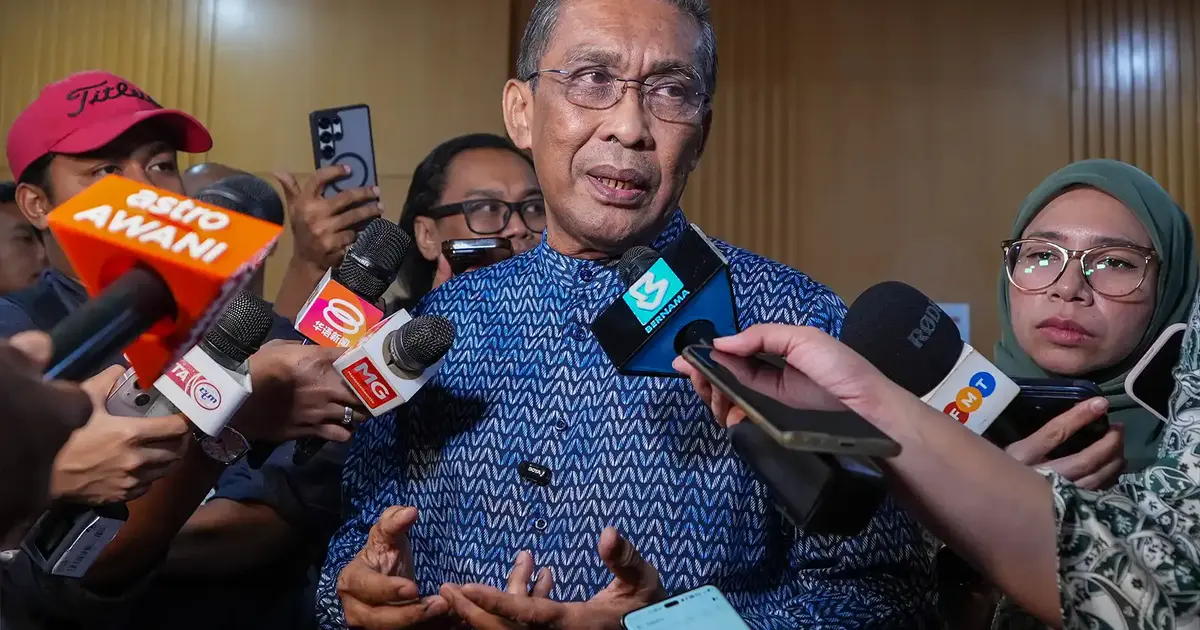
PAS is preparing to bring matters of party cooperation and political alliance firmly into focus at its forthcoming muktamar, with party secretary-general Takiyuddin Hassan confirming that a motion addressing ties with Umno will feature prominently in delegate discussions. The decision to formally table the cooperation motion signals renewed organisational attention to the relationship between Malaysia's two largest Malay-Muslim political parties, a partnership that has fundamentally shaped the nation's political landscape through multiple election cycles and coalition configurations.
The tabling of this motion reflects broader strategic considerations within PAS as the party seeks to consolidate its position within the Malay-Muslim political sphere. By bringing the Umno cooperation question to party delegates, PAS leadership is formalising internal dialogue on one of the most consequential political relationships in Malaysian public life. This approach contrasts with informal bilateral negotiations and instead opens the partnership framework to grassroots party scrutiny, a move that carries implications for both party cohesion and external alliance negotiations.
Beyond the narrow bilateral cooperation agreement, PAS leadership has identified Muslim unity as a central theme deserving delegate attention at the muktamar. This framing positions the party's cooperative efforts within a broader ideological and organisational context, linking specific political arrangements to what party leaders consider fundamental religious and community cohesion principles. The emphasis on Muslim unity suggests PAS seeks to present its political strategies not merely as tactical positioning but as expressions of deeper communal commitments that resonate with the party's grassroots supporters.
The muktamar platform provides PAS delegates with opportunity to deliberate on strategic direction in ways that internal party machinery alone cannot facilitate. These large-scale party assemblies traditionally generate substantive debate on fundamental questions of party identity, policy direction, and alliance strategy. By scheduling both the cooperation motion and broader Muslim unity discussions, party leaders are creating space for comprehensive examination of how PAS understands its role within Malaysia's political ecosystem and which partnerships serve that role most effectively.
For Malaysian political observers, the PAS muktamar discussion carries significance beyond internal party management. The relationship between PAS and Umno has periodically shifted between close coordination and competition, influencing everything from parliamentary support arrangements to electoral coalition mechanics. Moves that formalize or reshape this cooperation can affect government stability, legislative priorities, and the distribution of ministerial portfolios across Malay-Muslim dominated administrations at federal and state levels. Takiyuddin's confirmation that these matters will receive formal muktamar attention suggests leadership confidence in current cooperative arrangements, or alternatively a need to shore up grassroots support for existing alliances.
The muktamar mechanism also serves important internal legitimacy functions within PAS. Rather than cooperation agreements appearing as top-down impositions by party hierarchy, formal tabling and delegate discussion creates impression of democratic deliberation and grassroots involvement in strategic decisions. This matters significantly for party cohesion, as PAS members who participate in muktamar discussions feel ownership over resulting decisions, strengthening compliance with and advocacy for agreed directions.
Muslim unity discourse, as articulated through the muktamar, connects PAS political strategy to religious and community narratives that motivate party activism. By integrating cooperation with Umno into broader Muslim unity frameworks, PAS leaders link specific political arrangements to abstract but powerful communal aspirations. This rhetorical move helps justify cooperation to grassroots supporters who may harbour reservations about particular aspects of the alliance or who may question whether partnership serves Muslim community interests optimally.
The timing of the muktamar motion remains significant for understanding current political calculations within PAS. Whether this reflects strengthening confidence in Umno cooperation, response to grassroots pressure for clarification, or preparation for potential partnership recalibration depends on broader political context at time of the assembly. Malaysian observers should monitor both the motion language and the tenor of delegate debate for signals about whether PAS leadership seeks renewed commitment, substantive partnership revision, or simply formal ratification of existing arrangements.
Regionally, PAS-Umno dynamics carry implications extending beyond Malaysia's borders. As Southeast Asia's dominant Muslim-majority democracy navigates questions of religious governance, secular-Islamic political balance, and majority-minority community management, the frameworks that PAS and Umno develop for cooperation influence broader regional conversations about Islam's role in democratic systems. The muktamar discussions will inform how Malaysia's two largest Muslim parties understand their civilisational mission and partnership obligations.
Looking ahead, the outcomes of PAS muktamar deliberations on cooperation and Muslim unity will shape both parties' strategic options during subsequent electoral cycles and legislative sessions. Clear delegate mandate on cooperation strengthens party leadership's negotiating position with Umno counterparts, while divisive muktamar discussions might complicate partnership arrangements. Either way, the formal tabling of these motions elevates them from routine bilateral matters to questions requiring comprehensive party-wide deliberation and collective decision-making authority.

