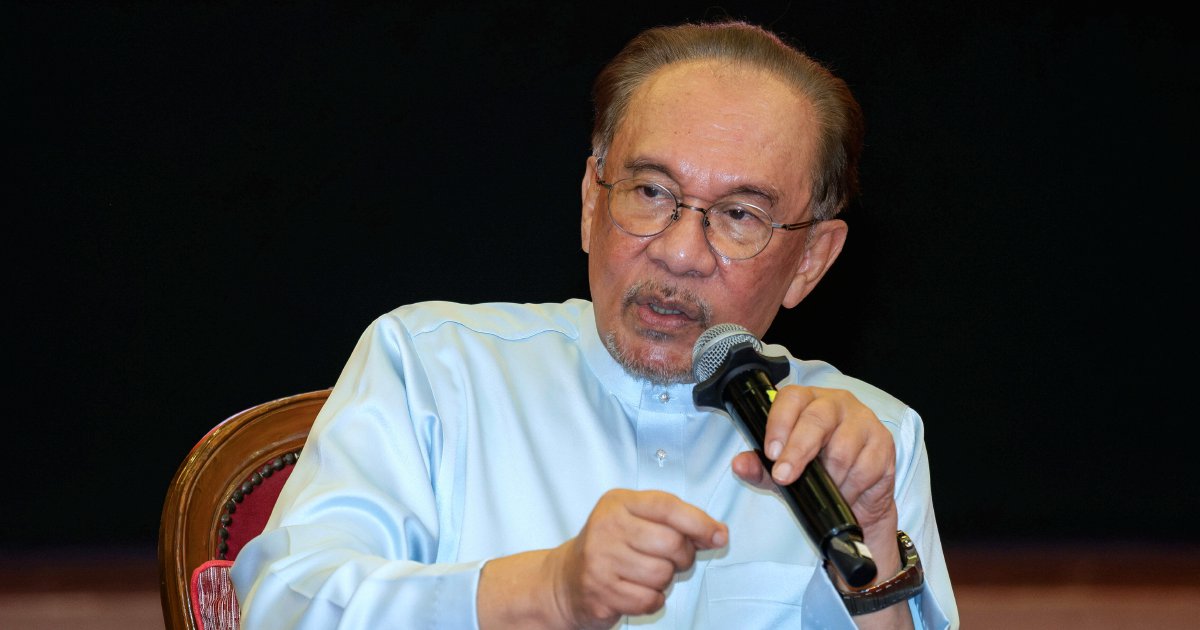
A senior leader from Pas has challenged Prime Minister Datuk Seri Anwar Ibrahim's recent remarks on the Taiwan-China situation, arguing that Malaysia's top official should instead champion peaceful diplomatic engagement and exercise caution rather than appear to endorse military intervention in the disputed strait.
The criticism from the Islamic party reflects ongoing debate within Malaysia's political establishment about how the country should position itself on one of Asia's most sensitive geopolitical flashpoints. The Taiwan-China dispute continues to shape regional stability and trade relationships, making it a matter of acute concern for Southeast Asian nations that depend heavily on uninterrupted maritime commerce and security guarantees.
Malaysia's approach to cross-strait tensions carries particular weight given the country's location in one of the world's busiest shipping lanes and its long-standing policy of maintaining equidistant diplomatic relations with both China and Western allies. Any perceived tilt toward military solutions could complicate Malaysia's careful diplomatic balancing act in a region increasingly defined by great power competition.
The Pas position underscores a philosophical divide within Malaysia's political spectrum regarding how to engage with great power tensions. While some policymakers favour more assertive stances aligned with Western security concerns, others—particularly within Islamist and traditional nationalist circles—emphasise non-intervention principles and conflict de-escalation grounded in Islamic teachings and historical neutrality doctrines.
Peaceful dialogue and negotiated settlement have long been cornerstones of Asean's regional diplomacy, institutionalised through mechanisms like the Asean Regional Forum and the East Asia Summit. Malaysia, as an Asean member, traditionally advocates for these multilateral approaches rather than supporting military posturing or appearing to take sides in great power disputes.
The Taiwan question remains uniquely complex within Southeast Asian political discourse. While the region has substantial economic ties with Taiwan and shares Western security concerns about maintaining freedom of navigation, regional governments also recognise the profound strategic and economic significance of maintaining stable relations with China. This creates genuine policy tension that plays out across political parties and public opinion.
Anwar Ibrahim's international profile has grown considerably during his tenure as Prime Minister, and his comments on sensitive geopolitical issues receive significant attention both domestically and across the Asia-Pacific region. Any statement perceived as departing from Malaysia's traditional non-alignment principles can trigger internal political reactions, particularly from opposition parties seeking to position themselves as guardians of national sovereignty and principled neutrality.
The Pas intervention also reflects broader concerns within parts of Malaysia's Muslim-majority political leadership about Western military expansion in Asia-Pacific waters and the militarisation of the Taiwan Strait. These concerns tie into historical narratives about colonialism and external interference in Asian affairs, still potent in Southeast Asian political discourse decades after decolonisation.
For Malaysia specifically, maintaining constructive relationships with both China and Taiwan-aligned Western powers remains economically vital. Taiwan is a significant source of foreign investment and an important trading partner, while China represents both major market opportunities and strategic challenges. This multi-faceted engagement requires dexterous diplomacy that avoids unnecessarily provoking any party.
The Pas statement also underscores how Taiwan-China tensions, while primarily a bilateral concern, have implications for domestic Malaysian politics and intersect with ongoing debates about religious governance, national foreign policy direction, and the country's appropriate role in regional security architecture. Opposition parties frequently use international relations issues as proxies for domestic political contests.
Official Malaysian government policy has consistently emphasised adherence to the One China principle while maintaining pragmatic economic and diplomatic ties with Taiwan. Any rhetorical shift suggesting support for military approaches or more confrontational stances risks complicating these carefully calibrated arrangements and potentially inviting Chinese displeasure or Western pressure—precisely the kind of geopolitical bind that smaller regional powers seek to avoid.
Moving forward, the Taiwan-China issue will likely remain a persistent testing ground for Malaysia's commitment to its stated principles of non-intervention, peaceful settlement of disputes, and regional stability. How Prime Minister Anwar Ibrahim and his government navigate these competing pressures, including internal political critique from opposition figures, will reveal much about Malaysia's strategic direction and the durability of its diplomatic consensus on fundamental foreign policy questions.

