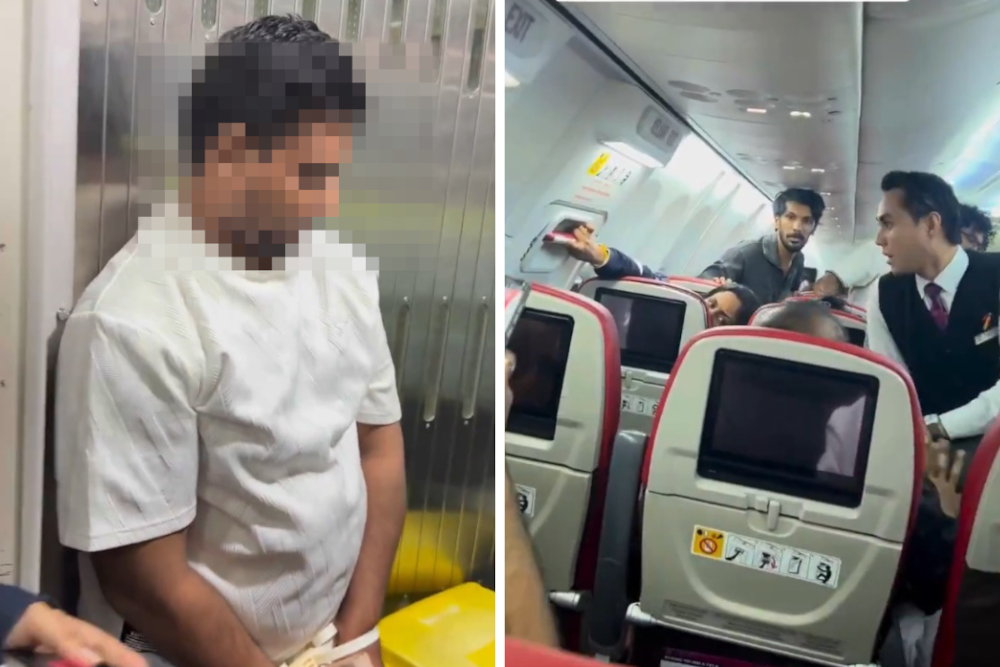
A man found himself in police custody following an alarming incident aboard a Batik Air flight that was travelling between Malaysia and India, after he allegedly attempted to breach an emergency exit door whilst the aircraft was at cruising altitude. The incident, which unfolded at a height of 9,144 metres, has prompted a formal investigation into the passenger's motives and mental state at the time of the occurrence.
The suspect was apprehended upon the aircraft's arrival at its destination, with law enforcement officers boarding the plane to take him into custody. Details surrounding the exact circumstances of the attempted breach remain under investigation, as authorities seek to determine whether the incident was a deliberate act, a result of intoxication, or stemming from a medical or psychological episode. The swift response from the flight crew and cabin personnel prevented any escalation of the situation that could have endangered the safety of the approximately 200 passengers and crew members aboard.
Batik Air, Malaysia's low-cost carrier subsidiary of Malaysia Airlines, has cooperated fully with authorities in their investigation. The airline has not yet released an official statement regarding operational procedures that were implemented during the incident or any safety protocols that were activated. Industry observers note that such occurrences, whilst rare, remain a serious concern for aviation safety regulators and operators across Southeast Asia, a region that has experienced rapid growth in air travel over the past decade.
Aviation authorities in Malaysia have previously emphasised the critical importance of passenger behaviour during flight operations, particularly at high altitudes where aircraft systems face their most severe stress. The structural integrity of modern commercial aircraft is built to withstand considerable pressures, and emergency exit doors are engineered with multiple safety mechanisms specifically designed to prevent accidental or deliberate opening during flight. At 9,144 metres, the external pressure difference between the cabin and the atmosphere is extreme, making any breach not only impossible but potentially catastrophic to aircraft operations.
The incident draws attention to the ongoing challenge faced by airlines in managing passenger conduct at 35,000 feet, where the confined environment and limited resources present unique security challenges. Flight crews are trained extensively in de-escalation techniques and emergency response protocols, and their intervention in this case appears to have been effective in containing the situation without injury to any individuals aboard. The mental and physical wellbeing of passengers at altitude, particularly on long-haul flights, remains an area of concern for aviation medical professionals.
Security screening procedures at Malaysian airports, overseen by airport authorities and intelligence agencies, have faced renewed scrutiny in recent years following various incidents involving disruptive or dangerous passenger behaviour on regional flights. The Malaysia Airlines Group, which operates Batik Air as a subsidiary alongside its full-service carrier, has invested in additional training for cabin crew and has implemented enhanced pre-boarding assessment protocols to identify potentially problematic passengers before departure. However, such measures remain challenging given the volume of passengers processed daily across Malaysian aviation hubs.
The investigation into this incident will likely examine whether the passenger had any prior warning signs detected during check-in or boarding procedures, and whether his behaviour during the flight escalated gradually or manifested suddenly. Law enforcement agencies will also consider whether alcohol or other substances played a role, as intoxication remains a significant factor in many cases of disruptive passenger behaviour on aircraft. Airlines operating in Southeast Asia have increasingly coordinated with local authorities to establish standardised responses to such incidents.
This occurrence is not an isolated event within the broader context of aviation incidents in the region. Airlines operating flights across Southeast Asia have reported sporadic incidents of passenger misconduct, ranging from minor disturbances to serious safety threats. The International Air Transport Association regularly publishes data on such occurrences, noting that whilst they represent an extremely small fraction of total flights, they pose genuine risks and impose significant burdens on flight operations and crew welfare.
The legal implications for the arrested passenger remain uncertain, though Malaysian civil aviation regulations and criminal statutes provide authorities with substantial tools for prosecution. Depending on the findings of the investigation and the mens rea (criminal intent) established by prosecutors, charges could range from minor regulatory violations to serious criminal offences carrying substantial penalties. International aviation conventions, to which Malaysia is a signatory, also provide frameworks for addressing such incidents and may inform the prosecution strategy adopted by Malaysian authorities.
Moving forward, this incident will likely prompt reviews of security and safety protocols by Batik Air and potentially across the broader Malaysian aviation sector. Airlines may consider implementing additional crew training scenarios specifically addressing emergency exit interference attempts, and security agencies may evaluate whether enhanced passenger risk assessment tools could be deployed at the point of check-in. The incident underscores the delicate balance that aviation authorities must maintain between facilitating mass air travel and ensuring safety and security at 35,000 feet.

