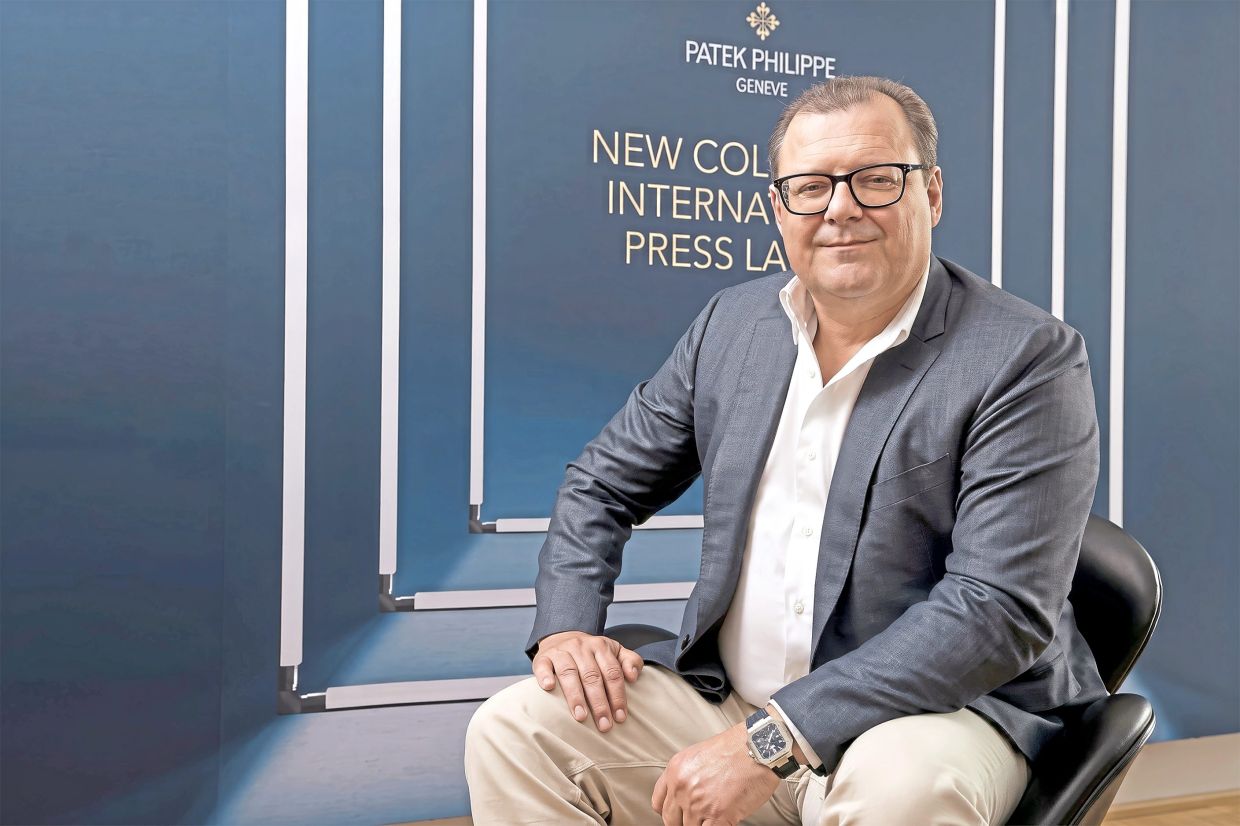
Thierry Stern, president of Patek Philippe, speaks with the conviction of someone far less preoccupied with corporate polish than with the minutiae of mechanical timekeeping. At 55, he represents the fourth generation stewarding one of watchmaking's most storied names, yet his manner betrays none of the detached formality one might expect from a luxury conglomerate executive. Instead, he communicates as a committed enthusiast—someone whose reverence for the craft runs deeper than boardroom responsibilities.
During an interview at Watches and Wonders 2026 in Geneva, Stern articulated a philosophy that extends beyond mere business strategy: genuine passion for watches is not simply advantageous for leadership within his organisation, but rather an absolute prerequisite. He contends that the contemporary luxury watch consumer possesses sufficient knowledge to discern authenticity from affectation, and that clients instinctively sense when executives lack genuine engagement with their product. This observation carries particular weight in an industry where heritage, storytelling, and emotional connection command premium pricing and justify waiting lists spanning years.
The foundation of Stern's management ethos emerged during his formative years in the business, when he accompanied his father Philippe Stern on extensive travels throughout key markets. Those journeys functioned as an informal apprenticeship in understanding consumer expectations and retailer dynamics at ground level. His father's counsel was straightforward: listening to stakeholders and experiencing diverse market conditions firsthand constitutes the most valuable education a future leader can receive. This emphasis on direct engagement rather than theoretical knowledge shapes how Stern approaches strategic decisions today.
The 2026 anniversary of the Nautilus provides an illuminating case study in Stern's approach to calculated innovation. When Gerald Genta's design debuted in 1976, its integrated bracelet and porthole-inspired case provoked genuine scandal among purists who viewed the timepiece as antithetical to Patek Philippe's conservative identity. Stern finds amusement in recounting this backlash, observing that the detractors have largely passed into history while the Nautilus has ascended to near-mythical status, commanding auction prices that often seem divorced from conventional valuation logic and generating waiting lists that stretch years into the future.
To commemorate this golden anniversary, Patek Philippe introduced three limited-edition Nautilus references crafted in white gold and platinum, alongside a whimsical desk clock drawing inspiration from the watch itself. This measured approach to commemoration reflects Stern's philosophy that restraint and humility matter more than technical extravagance. When asked why he eschewed a tourbillon or other complicated movement for such a milestone, Stern's response was deliberately understated: the Nautilus, in his view, derives its essential character from simplicity—it is fundamentally an hour-and-minute watch, and its DNA precludes ornamental elaboration.
The new models showcase ultra-thin 6.9-millimetre cases paired with the historic micro-rotor Calibre 240, representing years of refinement to achieve optimal ergonomics in both case and bracelet design. This dedication to incremental perfection rather than revolutionary transformation typifies Stern's leadership approach. He recognises that taste and market conditions shift unpredictably, requiring continuous recalibration without abandonment of core principles. The extended development timeline for these refined proportions underscores his conviction that luxury watchmaking tolerates no shortcuts.
Stern occupies a peculiar position within the broader ecosystem of Swiss haute horlogerie. Patek Philippe counts among the five largest luxury watch manufacturers globally, competing alongside institutions such as Rolex, Cartier, Audemars Piguet, and Omega. Yet this market dominance cannot be sustained through complacency or repetition of past successes. Stern emphasises that stagnation equates to decline—that innovation, even when carefully constrained, remains essential to maintaining Patek Philippe's standing across generations of consumers with evolving preferences and technological expectations.
This philosophy manifests in strategic diversification undertaken with deliberate caution. The Aquanaut, introduced during the late 1990s as a sportier, more youthful alternative to the Nautilus, exemplifies Stern's willingness to expand the brand's portfolio while preserving its fundamental identity. Rather than diluting Patek Philippe's heritage through undisciplined expansion, each new collection serves a specific market segment while maintaining the artisanal standards and aesthetic coherence that define the house.
For Malaysian and Southeast Asian consumers navigating the rarefied world of luxury watches, Stern's emphasis on passion and authenticity carries particular resonance. The region's growing affluent class increasingly recognises that premium pricing reflects not merely scarcity or brand recognition, but genuine craftsmanship rooted in decades or centuries of accumulated expertise. Stern's insistence that leaders in this space must themselves embody deep engagement with their craft speaks to a broader appetite for transparency and substance in luxury markets beyond mere status signalling.
The tension Stern navigates—between measured innovation and institutional conservatism—mirrors challenges facing many heritage brands attempting to remain relevant without sacrificing identity. His rejection of unnecessary technical complexity in favour of refined fundamentals suggests that the future of luxury watchmaking may favour depth over novelty, substance over spectacle. In an era when consumers increasingly scrutinise the values and authenticity of luxury houses, Stern's emphasis on genuine passion appears less a marketing construct than a survival strategy in markets that demand more than glossy presentations from global brands.

