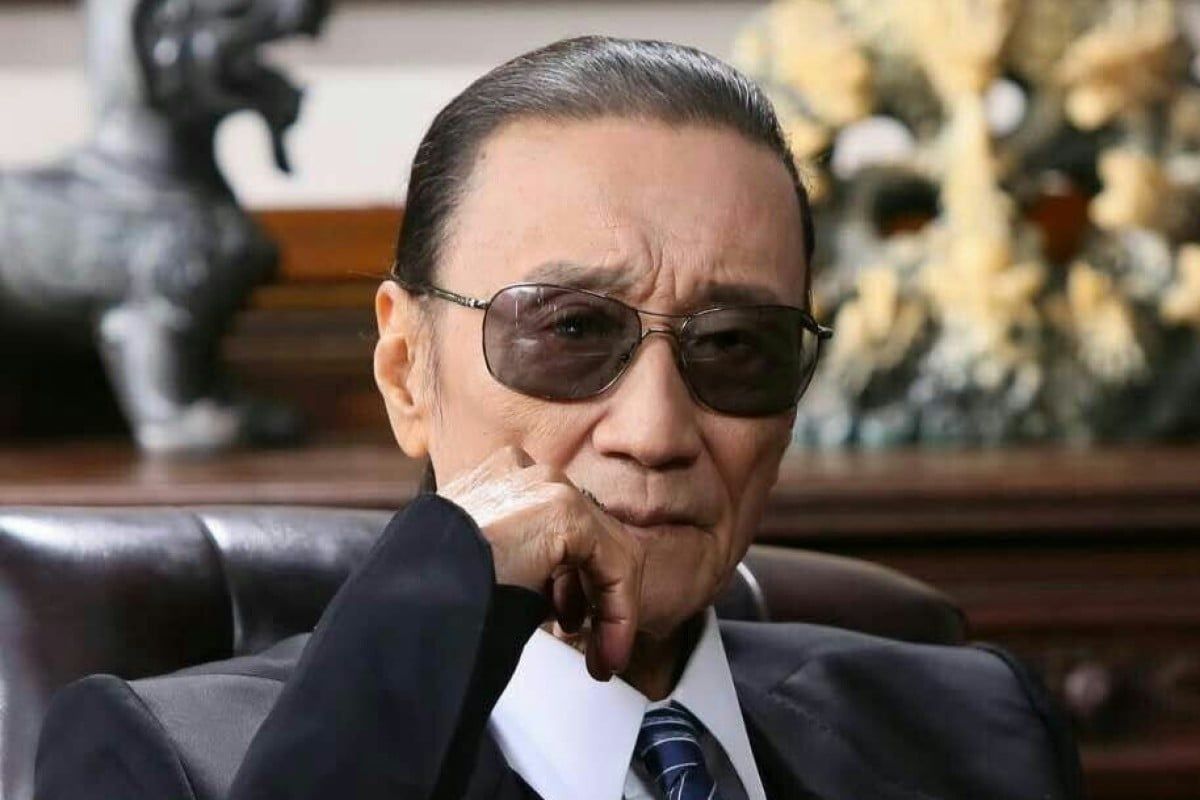
The death of Patrick Tse Yin at age 89 marks a symbolic endpoint in Hong Kong cinema's most transformative chapter. The veteran actor, who spent decades defining what Cantonese-language film could achieve, embodied a particular moment in Southeast Asian cultural history—when the territory's studios commanded attention across the region and shaped how audiences elsewhere understood modern Hong Kong life. His children, including pop star Nicholas Tse Ting-fung and model Jennifer Tse Ting-ting, announced his peaceful passing at a hospital on Monday after a period of declining health, drawing tributes from film communities worldwide who recognised in him a foundational figure from cinema's most vibrant era.
Tse belonged to the cohort of performers who arrived during Cantonese cinema's explosive expansion in the 1960s. Charles Cheung Chi-wai, an associate professor at Baptist University's department of humanities and creative writing, has noted how this constellation of stars helped embed Hong Kong's reputation as the "Hollywood of the East"—a designation that seemed plausible at the time, when the city's output reached audiences across Southeast Asia and beyond with remarkable regularity. Tse's screen presence during those years carried the weight of establishing conventions that the industry was simultaneously inventing. He was not merely a performer within an established system; he was part of the foundational generation that helped determine what Cantonese cinema would look like, how its stories would be told, and what emotional registers its heroes would occupy.
What complicates the standard narrative of Tse's career is his earlier work as a director during the 1970s. Films such as If Tomorrow Comes and Love in Hawaii represent a less-discussed chapter of his creative life, one that has largely receded from contemporary discussion. Yet understanding Tse requires grappling with the fact that his influence extended beyond performance into the shaping of cinematic language itself. The persona he cultivated onscreen—the impeccably groomed, charismatic figure known colloquially as "Sei Gor" or Fourth Brother—transcended any single role to become a self-authored myth that grew larger than the performances that spawned it. This mythmaking was itself a form of creative work, one that demonstrated how thoroughly Tse understood the mechanics of stardom and cultural memory.
A particularly revealing example of Tse's place in Hong Kong film history emerges when examining 1967's The Story of a Discharged Prisoner, directed by Patrick Lung Kong. This crime drama, bearing the Chinese title Ying Hung Boon Sik, narrated a morally ambiguous story of an ex-convict attempting unsuccessfully to abandon his criminal past. Two decades later, director John Woo would repurpose both the title and much of the film's ethical framework for A Better Tomorrow in 1986—a picture widely credited as establishing Hong Kong's golden age and the "heroic bloodshed" aesthetic that would become the territory's most recognizable export. The connection reveals that what historians treat as the birth of a new cinematic movement was actually a deliberate resurrection and reworking of existing narrative and moral templates. Tse's presence in that earlier film demonstrates how continuity, not rupture, truly characterised the evolution of Hong Kong cinema.
Tse's significance to the film industry ultimately transcended his individual filmography. He functioned as a fixed point of reference—a continuity marker that a rapidly mutating industry measured itself against across several decades. When younger directors sought to understand where contemporary Hong Kong cinema had come from, or what its essential characteristics might be, Tse's career and image provided a tangible connection to founding principles and original intentions. This role as industry touchstone perhaps explains why his contributions as a filmmaker have been somewhat obscured in favour of his legendary status as an actor and personality. The mythology surrounding him—the bankable image, the recognisable persona, the cultural weight his name carried—ultimately mattered more to the industry's self-understanding than any specific directorial achievement.
The later years of Tse's career offer an illuminating perspective on Hong Kong cinema's actual trajectory. At age eighty-five, he won the Best Actor award at the Hong Kong Film Awards for his role in Time, a film in which he played an aging contract killer drawn out of retirement. The industry framed this achievement as a comeback story, a celebration of continuing vitality and the possibility of artistic renewal. Yet the situation suggests something more complicated and poignant. The fact that a major film festival would honour a performer of such advanced age with its most prestigious acting award indicates not a cinema in vigorous health, but one reaching backward to its founding generation to reconnect with its own historical weight. The award functioned less as recognition of a triumphant return than as an elegy that the industry was simultaneously composing and performing for itself.
Understanding the true significance of Tse's death requires resisting the impulse to treat it as the moment when an era actually ended. The studios that transformed Tse into a star ceased operations decades ago; the volume and confidence of Hong Kong's film output diminished substantially over many years; the theatrical golden age had already become a memory upon which the market was increasingly dependent for cultural legitimacy. The closure of this era was not a sudden rupture but a gradual erosion—a slow fade rather than a blackout. Tse's passing does not close the chapter so much as it confirms, with final definitiveness, that the closing had already occurred long before his death, and that the industry had merely continued, out of affection and nostalgia, to maintain the illusion that vital creation was still occurring.
For Malaysian and Southeast Asian readers, Tse's career holds particular resonance because Hong Kong cinema's golden age was genuinely regional in character. The films that defined this period circulated throughout the territories that now comprise the ASEAN bloc, shaping entertainment expectations and cultural assumptions about modernity, style, and narrative possibility. Audiences across Malaysia, Singapore, and beyond encountered in Tse's onscreen persona a particular vision of what contemporary metropolitan Asian life could look like—urbane, stylish, morally complex. The dominance of Hong Kong's film industry in the region during this era represented a specific moment of cultural influence that would later shift toward different epicentres of production, but the imprint left by figures like Tse remained embedded in regional consciousness.
The question of succession—whether contemporary Hong Kong cinema can generate new icons with comparable cultural weight—remains largely unanswered. Tse's own son, Nicholas Tse Ting-fung, became a bigger entertainment figure in certain respects, achieving significant success as a pop star and actor. Yet Nicholas represents a different kind of celebrity in a fragmented media landscape. The universal recognisability that Patrick Tse enjoyed, the ability of his name and image to carry symbolic weight across cultural contexts, appears increasingly difficult to achieve in an era when entertainment consumption has become more dispersed and specialised. The son's announcement that "the show must go on" expressed the correct sentiment but perhaps misread the situation. The specific show that made Patrick Tse possible—the Cantonese cinema that dominated Southeast Asia's screens and imaginations—had already concluded its run. What continues is primarily the work of remembrance, the ongoing cultural labour of keeping alive the memory of an era when a regional film industry commanded genuine creative vitality and cross-border influence.

