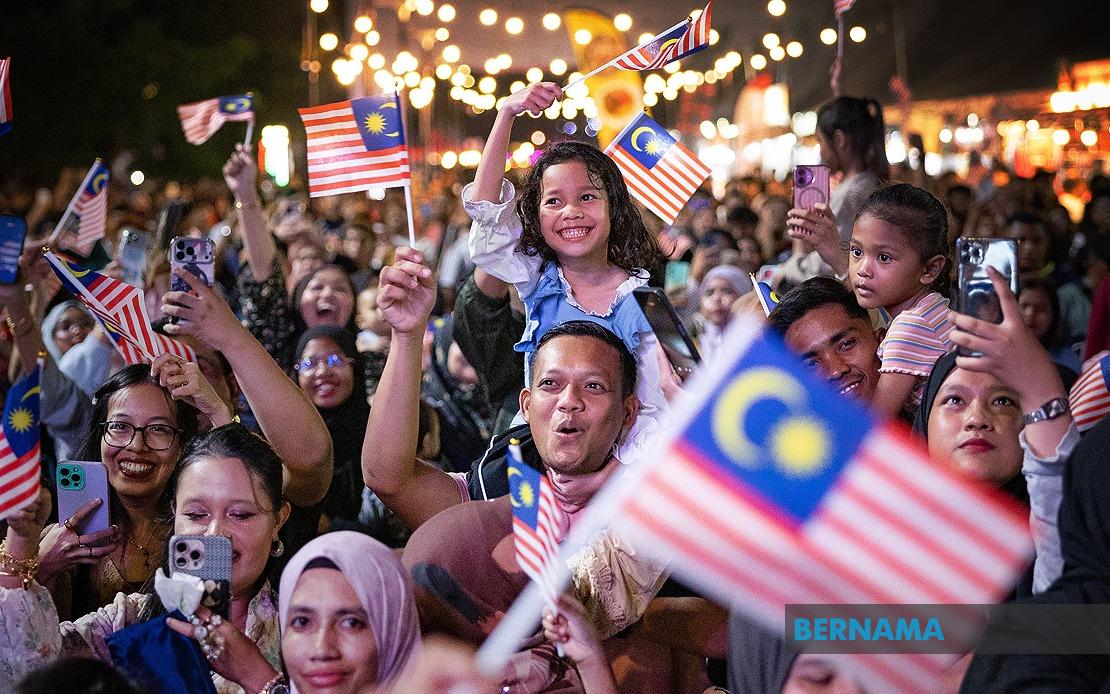
Malaysia marked its 69th National Day Eve with widespread public celebrations on Friday night, drawing tens of thousands of citizens to major venues across the country in demonstrations of national pride and unity. The festivities, held under the theme 'Kita Bagi Jadi @ Ambang Merdeka 2026', saw crowds assembling from early evening to participate in countdown events and cultural performances that emphasised Malaysia's multicultural heritage and historical journey to independence.
Kuala Lumpur's Dataran Merdeka emerged as the epicentre of celebrations, with over 100,000 visitors converging on the historic square to attend a 90-minute concert and mark the transition into National Day. Attendees of all ages filled the venue by 8 pm, waving the Jalur Gemilang against the illuminated backdrop of the iconic Sultan Abdul Samad Building, creating a visually striking display of collective patriotism. The gathering demonstrated the enduring emotional connection Malaysians maintain with the nation's founding symbol and the square's historical significance as the site where independence was proclaimed.
The centrepiece concert featured an impressive lineup of local artistes including Aina Abdul, Aman RA, Nadia Aqilah, Asmidar, Haziq Rosebi, Mimifly, Izen Kong and Pasya, supported by approximately 350 backing performers. The production blended music, dance and theatrical storytelling to narrate Malaysia's historical evolution and celebrate the nation's diverse cultural tapestry. This approach reflected a deliberate effort to connect younger audiences with national narratives while acknowledging the artistic contributions of performers who have shaped Malaysia's entertainment landscape. The concert showcased how contemporary cultural expression could frame patriotism in accessible, engaging formats rather than relying solely on formal state ceremonies.
Government representation at the main event underscored official backing for the celebrations. Hannah Yeoh, Minister in the Prime Minister's Department (Federal Territories), and Kuala Lumpur Mayor Datuk Seri Fadlun Mak Ujud attended the proceedings, signalling the administration's commitment to fostering public participation in National Day observances. Their presence elevated the event's profile and demonstrated how political leadership increasingly emphasises popular engagement in national celebrations as a means of reinforcing social cohesion.
The programme encompassed a theatrical military dimension that reflected Malaysia's security heritage. The arrival of Menteri Besar Datuk Seri Amirudin Shari at 9.20 pm preceded an elite VAT 69 Commando skydiving display, symbolising the armed forces' role in safeguarding the nation. This was followed by the national anthem, Negaraku, a parade of contingents and decorated vehicles, and coordinated performances by the Fire and Rescue Department, police and Malaysian Armed Forces. These elements transformed the celebration into a comprehensive civic pageant that acknowledged multiple institutions contributing to national stability and development.
The midnight moment proved the emotional apex of the evening, marked by Menteri Besar-led chants of 'Merdeka' accompanied by spectacular fireworks and light displays. A finale concert by Datuk Ramli Sarip, Datuk Awie, Gerhana Skacinta, Merrah and Wani Kyrie extended celebrations into the early morning hours. The inclusion of established Malaysian musicians and contemporary performers reflected efforts to create intergenerational appeal, with extended programming including film screenings of 'Mukhsin' and 'Sepet' from 2 am onwards, anchoring the celebration in Malaysian cinema.
Perlis emerged as another significant celebration venue, attracting over 46,000 visitors to state-level festivities. The gathering opened with the national anthem and martial arts displays, establishing cultural and security themes that mirrored the federal celebration. State leadership, represented by Chief Minister Datuk Seri Ab Rauf Yusoh, his wife Datin Seri Zuriyah Abd Aziz, and executive council members, presided over proceedings that reinforced how National Day observances function across Malaysia's federal structure. The substantial Perlis attendance demonstrated that patriotic mobilisation extends beyond the capital, with regional populations actively participating in national commemorations.
Royal commentary provided philosophical framing for the festivities. In his royal address, Tuanku Syed Sirajuddin reminded observers that contemporary independence represented the culmination of prolonged struggles, substantial sacrifices, and racial unity across Malaysia's diverse communities. The Yang di-Pertuan Agong emphasised that maintaining independence required sustained commitment to knowledge, integrity, racial harmony and national responsibility. This articulation connected historical sacrifice to present obligations, positioning National Day celebrations as moments for renewed reflection on what independence demands from contemporary Malaysians rather than mere ceremonial observance.
The celebrations incorporated extensive community-oriented programming beyond formal performances. Venues featured the Bulatan Sultan Azlan Shah Run, subsidised retail markets (Jualan Rahmah), thrift markets, food stalls, complimentary health screenings, karaoke competitions, haunted house attractions and live performances. This diversified programming reflected recognition that National Day appeal extends across demographic groups, economic strata and age cohorts. The integration of wellness services, entertainment and consumer activities within patriotic celebrations created multifunctional public spaces where civic engagement and leisure activities overlapped, potentially broadening the base of population participation in national commemoration.
State-level messaging emphasised stewardship of independence as a collective responsibility. Muhammad Sanusi, speaking at Perlis festivities, urged citizens to appreciate and actively safeguard national independence, framing patriotism as vigilant preservation rather than passive possession. This rhetorical approach positioned National Day audiences as custodians of the independence secured by previous generations, implying that contemporary Malaysians must consciously maintain the political and social systems undergirding national sovereignty.
The breadth of National Day Eve participation across multiple locations and demographic groups suggested sustained public investment in national commemorations as meaningful expressions of collective identity. The scale of gatherings, sophistication of programming and integration of traditional military and security elements with contemporary entertainment formats reflected how Malaysian authorities have evolved National Day celebrations to maintain contemporary relevance while preserving connection to historical independence narratives. For a multiethnic nation navigating ongoing questions of social cohesion and identity, these celebrations functioned as annual reaffirmations of shared national belonging and common historical origin, even as specific meanings attributed to independence and patriotism remained contested among different population segments.

