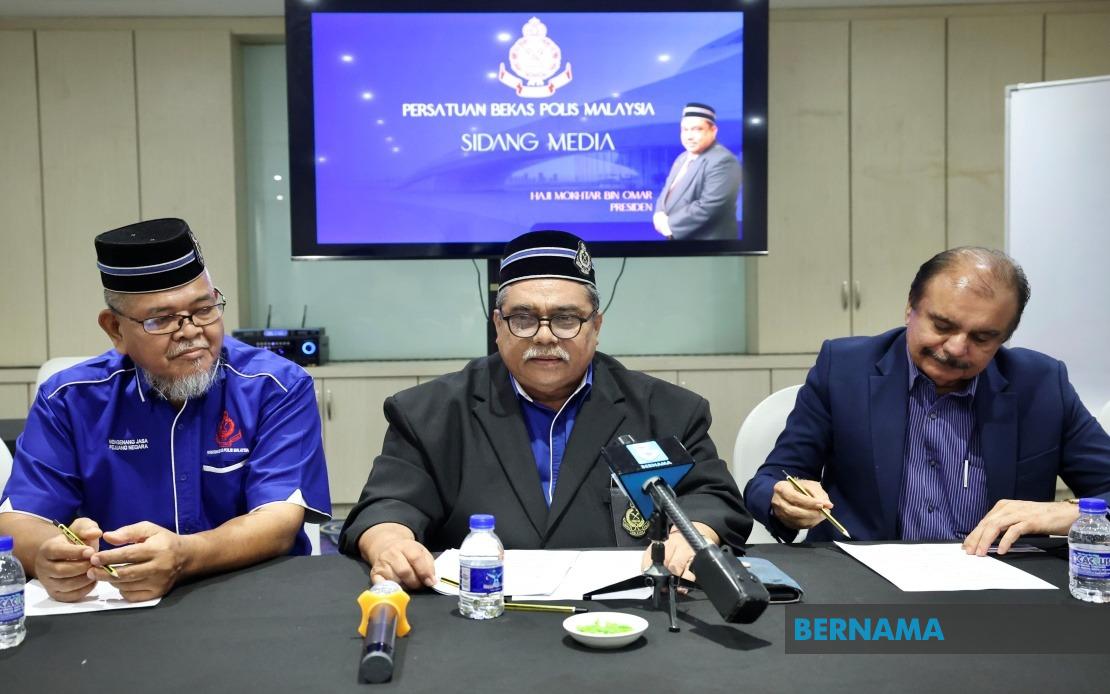
The Malaysian Ex-Police Association (PBPM) has formally appealed to the government to establish a monthly cost-of-living allowance programme targeting non-pensionable former police personnel, arguing that those who sacrificed their careers in service to the nation deserve financial recognition and support during their retirement years.
According to PBPM president Mokhtar Omar, the association's membership records spanning back to 1972 reveal a significant cohort facing acute hardship. Among the organisation's 86,000 registered members, approximately 40,000 are classified as non-pensionable former personnel, encompassing individuals who served in specialised units such as the Special Squad, the Home Guard, and those engaged as contract inspectors during the Emergency period. This represents nearly half of the association's entire membership, underscoring the scale of the welfare challenge.
The circumstances confronting these retirees have become increasingly dire as Malaysia grapples with sustained cost-of-living pressures. Mokhtar emphasised that many former officers have exhausted their primary income sources and now navigate daily expenses on severely constrained budgets. The loss of regular employment coupled with inflationary pressures on essential goods and services has created acute financial stress within this demographic. Despite their years of dedication to national security, these individuals receive no pension cushion to offset rising costs.
The rationale for government intervention rests partly on historical consideration. Those who served during the Emergency—a period spanning from 1948 to 1960 marked by significant security threats and operational demands—are increasingly rare. Mokhtar pointed out that the remaining cohort is dwindling, making the fiscal burden of assistance manageable from a government perspective. The appeal carries an implicit argument about generational equity and historical debt: the state benefited from their security contributions when the nation needed them most, and reciprocal obligation logically extends to their final years.
The PBPM has proposed specific monetary parameters for the assistance scheme. The suggested monthly allowance would fall within a range of RM300 to RM500 per recipient, representing a modest but meaningful contribution toward basic living expenses. This figure appears calibrated to provide tangible relief without creating unsustainable budget commitments. However, the incomplete nature of the original announcement leaves ambiguity regarding the precise amount and mechanism for distribution.
Beyond the monthly allowance proposal, the association has articulated a broader vision for institutional reform. The PBPM is advocating for a comprehensive review of the Police Heritage Trust Fund (TAWP), a mechanism currently providing welfare support to former personnel. Their push aims to achieve two interconnected objectives: increasing the quantum of assistance currently dispensed and expanding the categorical scope of eligible expenditures. The envisioned expanded framework would encompass education support for descendants, healthcare subsidies, and disaster relief provisions—recognising that welfare needs extend beyond simple subsistence to encompass familial security and emergency protection.
Complementing the formal policy advocacy, the association is pursuing supplementary fundraising initiatives. PBPM Information Chief Datuk Dr Basant Singh Sidhu announced plans for an October fundraising dinner designed to mobilise corporate and private sector contributions. The event targets RM1 million in total donations, reflecting ambitious expectations regarding corporate social responsibility engagement. This approach acknowledges that government assistance may arrive incrementally or prove insufficient, necessitating alternative revenue streams to address immediate hardship.
The projected fundraising proceeds would finance tangible support mechanisms reflecting the granular welfare needs of the membership. Equipment distribution—medical devices, mobility aids such as wheelchairs, hearing aids for audiologically impaired retirees—addresses dignity and functional independence. Nutritional support through milk provision indicates attention to basic health maintenance. This itemised approach demonstrates sophisticated understanding of vulnerable population needs beyond simple cash transfers.
The PBPM initiative touches on a broader governance question regarding Malaysia's obligation to former security personnel. Unlike pensionable officers who receive structured retirement income, contract workers and those in non-pensionable categories have historically been positioned outside the social security net. This structural inequality has accumulated across decades, leaving a cohort whose service was valued at the time but whose retirement security was never institutionally guaranteed. The association's appeals represent an attempt to remedy this historical oversight.
The timing of this advocacy is strategically significant. Malaysia's current fiscal environment, marked by ongoing pandemic recovery expenses and infrastructure investments, creates a context where additional welfare commitments face scrutiny. Yet the proposition remains relatively modest compared to other government expenditure categories. The reframing of non-pensionable personnel assistance as a recognition of historical contribution rather than a new entitlement may assist in political positioning.
For Malaysian policymakers and Southeast Asian governance observers, the PBPM case illuminates enduring tensions between fiscal constraint and historical obligation. The former police personnel issue also intersects with broader questions about how nations compensate security sector workers, whether through pensions, allowances, or alternative mechanisms. Regional neighbours including Singapore and Thailand have established structured veteran support systems, providing potential policy templates.
The association's dual-track strategy—simultaneous government advocacy and private sector fundraising—reflects pragmatic acknowledgment that bureaucratic processes move slowly. By launching the October dinner initiative now, PBPM creates interim relief capacity while maintaining pressure for permanent systemic solutions. Success in either domain would represent meaningful progress for a constituency whose contribution to national development has been substantial but whose retirement security remains precarious.

