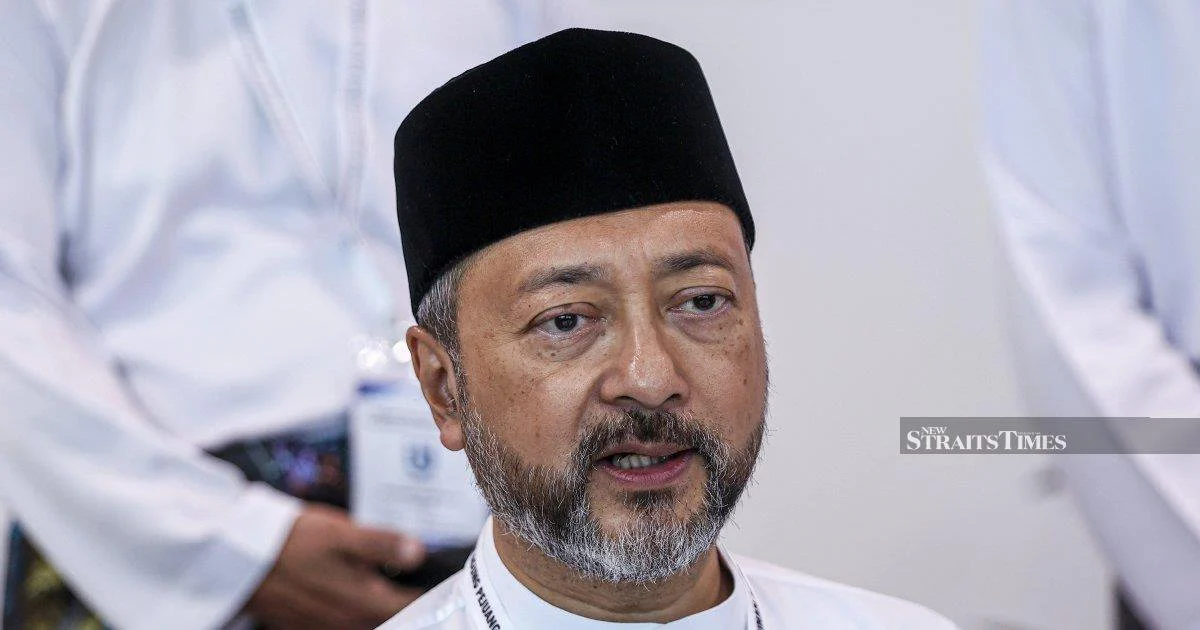
The political landscape shifted notably today as Parti Pejuang Tanah Air formally joined Perikatan Nasional, prompting party president Datuk Seri Mukhriz Mahathir to characterise the move as an important milestone in a larger campaign to consolidate Malaysia's fragmented opposition. The admission signals renewed momentum in opposition efforts to present a more cohesive alternative to the current political arrangement and positions Perikatan Nasional to command substantially greater parliamentary and organisational resources.
Mukhriz's announcement underscores a critical reality in contemporary Malaysian politics: the opposition remains structurally divided across competing coalitions and parties, each claiming legitimacy yet none commanding sufficient strength independently to pose a credible governing alternative. Perikatan Nasional, which has steadily expanded its footprint since its 2020 emergence as a parliamentary force, now incorporates Pejuang's organisational machinery and grassroots networks. This accretion of parties reflects a strategic calculation that consolidation, rather than fragmentation, offers the surest path to political relevance and potential electoral success in coming years.
The timing of Pejuang's entry warrants careful examination. Malaysia confronts mounting economic pressures, persistent public dissatisfaction with governance standards, and institutional anxieties that extend beyond traditional partisan grievances. Mukhriz's framing of the merger as addressing "growing national challenges" acknowledges that voters increasingly demand competence and unity from opposition ranks rather than mere rhetorical opposition to incumbents. By positioning Pejuang's entry within this broader narrative, the party leadership attempts to elevate the move beyond factional calculus into an assertion of national responsibility.
For Perikatan Nasional, the admission of Pejuang augments its claim to be a genuinely national coalition rather than a collection of regionally concentrated parties. Pejuang, founded by Mahathir following his departure from Bersatu, carries symbolic weight as an extension of the elder statesman's political legacy and maintains supporter bases in key demographic constituencies. The merger thus provides Perikatan Nasional enhanced credibility in negotiations with other potential coalition partners while strengthening its internal cohesion through shared ideological moorings.
Yet the consolidation also illuminates unresolved tensions within Malaysian opposition politics. Perikatan Nasional itself emerged from a realignment that fractured the original Pakatan Harapan coalition, which governed from 2018 to 2020 before collapsing under internal pressures. The subsequent years witnessed recurring cycles of party-switching, coalition reshuffling, and leadership disputes that have substantially eroded voter confidence in opposition competence. Mukhriz's emphasis on "unity" attempts to reframe these divisive historical episodes as learning experiences that now motivate genuine cooperation, but sceptical voters may perceive the pattern as an endless game of musical chairs.
From a regional perspective, Malaysia's opposition consolidation carries implications beyond domestic political theatre. Southeast Asian democracies increasingly face pressure from authoritarian drift, economic volatility, and transnational challenges requiring institutional stability and consistent governance. A politically fractious Malaysia struggles to maintain regional influence and capacity to address issues such as maritime security, trade negotiations, and technological competition. Opposition unity, by extension, becomes not merely a partisan matter but a prerequisite for national effectiveness in regional contexts.
Pejuang's integration also raises questions about party identity and programmatic distinction within Perikatan Nasional. The coalition encompasses parties with varying ideological positions, electoral bases, and policy preferences. Successful consolidation demands mechanisms to manage these differences while maintaining unified public messaging. How Perikatan Nasional navigates these internal dynamics will substantially determine whether Mukhriz's vision of constructive unity materialises or whether absorbed parties gradually lose distinctiveness and member engagement.
The practical consequences of Pejuang's admission will likely manifest in parliamentary behaviour, electoral coordination, and resource allocation across constituencies. Perikatan Nasional must demonstrate that incorporation of new members strengthens rather than dilutes party unity and that merged organisations can function effectively without creating competing power centres. Success requires not merely formal institutional consolidation but genuine cultivation of shared purpose among previously independent political entities with distinct histories.
Looking forward, observers should monitor whether Pejuang's admission catalyses additional opposition consolidation or whether it represents a ceiling to further unity efforts. Other opposition parties and fragments remain outside Perikatan Nasional, and their decisions regarding coalition participation will substantially shape the opposition's ultimate political strength. Mukhriz's invocation of "broader" unity efforts may signal that further mergers are anticipated, representing a multi-stage process rather than a single transformative event.
For Malaysian voters navigating complex political choices, Pejuang's entry into Perikatan Nasional presents both promise and caution. The consolidation potentially strengthens opposition capacity to articulate coherent alternatives and mobilise supporters effectively. Simultaneously, history suggests that rapid coalition expansion sometimes prioritises numerical addition over substantive alignment, resulting in unstable entities prone to future fragmentation. The ultimate test will be whether this latest iteration of opposition unity can sustain sufficient coherence to present genuine governance alternatives when electoral opportunities arise.

