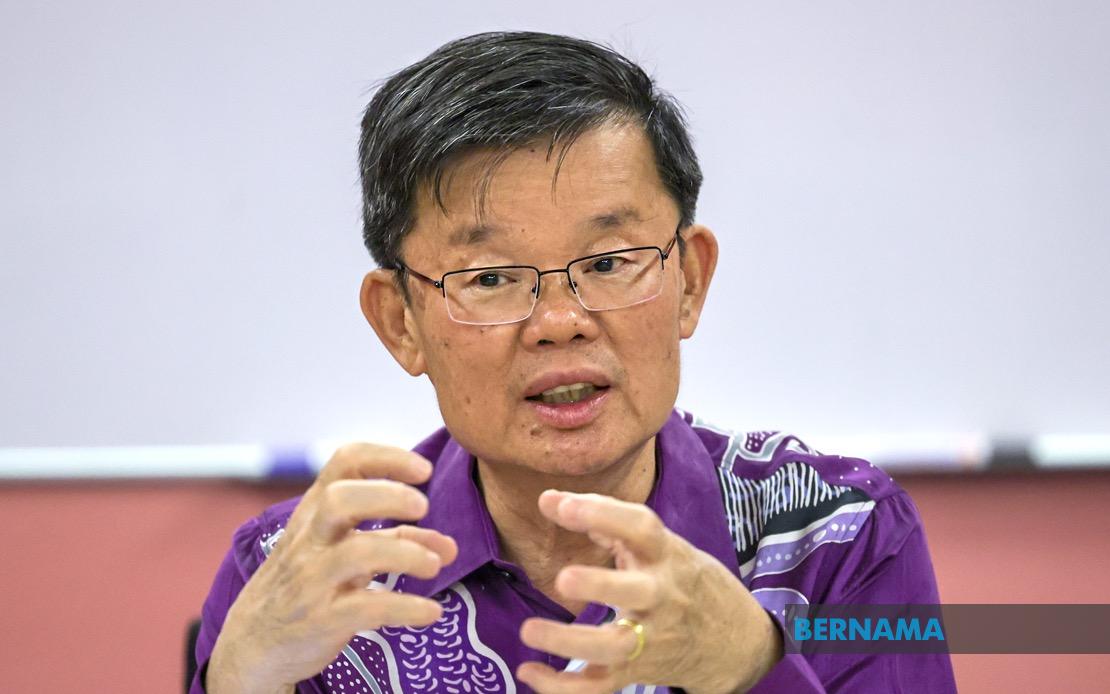
Penang Pakatan Harapan has committed to retaining the state's Barisan Nasional executive councillor throughout its current term of office, extending into the next general election period. The decision reflects a continuation of the electoral alliance struck between the two coalitions during the 2023 state polls, underscoring the practical political calculations that have reshaped Malaysian governance dynamics in recent years. Chief Minister Chow Kon Yeow, who chairs the PH state machinery, announced the resolution following a meeting of party leaders in George Town, signalling that the partnership remains functional despite the broader competitive dynamics between the two blocs at national level.
The retained BN representative is Datuk Rashidi Zinol, who chairs the State Rural Development, Agrotechnology and Food Security Committee. His continued presence in the executive council represents more than symbolic gesture—it reflects a deliberate administrative choice to maintain institutional stability through the transition towards the 16th general election. The decision came after careful assessment of the electoral mathematics that underpin Penang's current political arrangement, where neither coalition could command absolute control of the 40-seat state assembly without cooperation. This practical reality has forced both PH and BN to navigate coexistence that extends beyond purely electoral convenience.
Chow's statement reveals the strategic thinking driving Penang's governance model. Rather than viewing the BN position as a liability to be minimised, PH leadership frames the arrangement as opportunity to demonstrate coalition viability and strengthen inter-party cooperation mechanisms. This framing carries significance beyond Penang's borders, as it tests whether competing political blocs can maintain functional relationships across different electoral cycles. The approach contrasts with zero-sum competitive models observed in other states, offering a potential blueprint for post-election coalition management in Malaysia's increasingly fractured political landscape.
The Penang PH leadership has extracted lessons from recent electoral contests in neighbouring states, particularly the outcomes in Johor and Negeri Sembilan. These results prompted detailed analysis of how each state seat performs across different demographic segments and voting patterns, work that will inform strategy towards the 16th general election. The party acknowledges that state-level performance cannot be taken as guaranteed, requiring renewed engagement with constituencies and refined messaging that accounts for evolving voter priorities. This approach reflects understanding that electoral victory, even with strong previous results, demands continuous renewal rather than reliance on past achievements.
A critical focus area identified by PH strategists involves engaging Malaysia's expanding youth electorate through formal institutional arrangements. The Undi18 voter cohort—young citizens first able to participate in elections at age eighteen—represents a demographic force distinct from traditional party support bases. Rather than assuming inherited support or dismissive posturing, Penang PH has prioritised direct engagement mechanisms that speak to youth-specific concerns around employment, education, and social issues. This constituency-building work reflects recognition that demographic shifts produce electoral consequences that conventional campaign methods may not adequately address.
Digital platform engagement features prominently in Penang PH's revamped communication strategy. The party acknowledges that traditional media channels no longer monopolise political discourse, particularly among younger voters who navigate politics through social media, messaging applications, and digital content consumption. Rather than merely maintaining presence on established platforms, the emphasis involves more sophisticated content strategy that acknowledges voter concerns, responds to criticism candidly, and demonstrates institutional capacity to address grievances through policy implementation. This represents evolution beyond promotional messaging towards conversation-oriented engagement that reflects how political persuasion increasingly operates in digitally-mediated environments.
Chow emphasised that Penang PH's institutional stability and demonstrated integrity form the foundation of its electoral confidence heading into the next general election cycle. The state administration's track record on economic growth metrics, investment attraction, and job creation provides concrete performance indicators that differentiate PH's governance from opposition alternatives. These material outcomes translate into voter satisfaction when household incomes improve, employment opportunities expand, and service delivery demonstrably improves. The party's calculation assumes that voters will reward competent administration even as they engage critically with policy directions and political narratives.
Yet the Chief Minister acknowledged that public perception operates on different timescales than factual performance—an important recognition that administrative success does not automatically translate into electoral support. Voter sentiment responds to economic conditions, personal circumstances, and broader cultural-political moods that technical metrics do not fully capture. This awareness informs PH's decision to strengthen its political narrative rather than simply amplifying administrative achievements. The party recognises that governing effectively and communicating persuasively represent distinct requirements, each demanding sophisticated execution.
The 2023 electoral outcome that produced PH-BN cooperation saw the PH coalition secure 29 of 40 contested seats, with DAP's dominance—winning all 19 seats it contested—providing the largest single contingent. PKR's seven seats and Amanah's single seat completed PH's representation, while BN's two seats reflected its reduced position in Penang's contemporary political configuration. This distribution explains why BN's voice matters to PH—losing those two seats would leave PH numerically vulnerable to defections or absences, making cooperation rational rather than ideologically driven. The architecture requires stability and functional relationship management across both coalitions.
The decision to retain Rashidi Zinol's ministerial position through the next general election reflects confidence that this arrangement can endure sustained electoral competition. As the campaign period approaches and both coalitions emphasise their respective competitive messages, the continued presence of a BN figure in the state administration serves as practical reminder that electoral victory does not require absolute monopoly. This model potentially offers lessons for other states where no single coalition commands overwhelming majorities, suggesting that institutional sustainability sometimes requires pragmatic power-sharing that transcends immediate electoral concerns.
For Malaysian observers more broadly, Penang's approach demonstrates that Westminster-style winner-take-all governance increasingly yields to pragmatic arrangements reflecting genuine multiparty contestation. Whether this cooperation survives the intensity of general election campaigning remains an open question, but PH's explicit commitment signals that the party views this arrangement as strategically beneficial rather than temporary compromise. The arrangement's durability will indicate whether Malaysia's political system is evolving toward more sophisticated coalition management or whether such arrangements prove incompatible with the zero-sum competition that characterises Malaysian electoral politics at national level.

