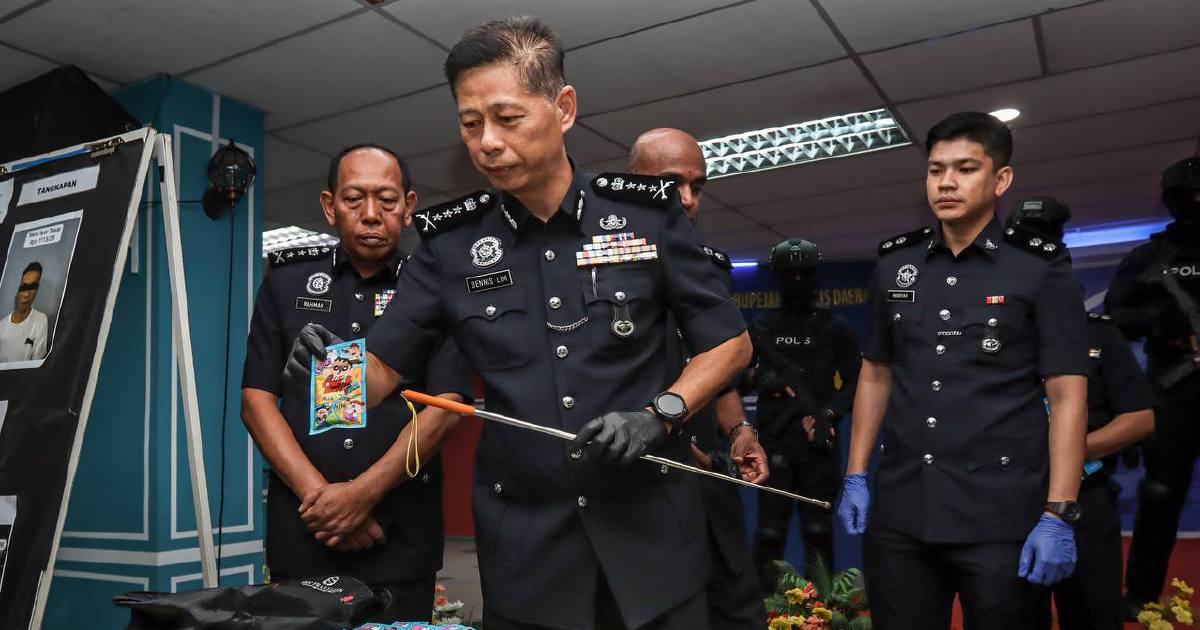
In a significant enforcement action against drug trafficking, Penang police have seized a substantial quantity of MDMA and arrested an individual following a raid conducted Sunday at Teluk Air Tawar. The seizure, totalling 3.1 kilograms of the controlled substance commonly known as ecstasy, carries an estimated street value of approximately RM470,000, underscoring the scale of illicit narcotics operations that continue to challenge law enforcement across Malaysia's peninsula.
The operation represents one of the more substantial drug busts in recent months for the state's police force, reflecting ongoing efforts to dismantle trafficking networks that feed demand among recreational drug users. The location of the bust in Teluk Air Tawar, a residential area within Penang's geographic boundaries, suggests that distribution operations may be occurring closer to population centres than authorities had previously assessed, raising questions about the sophistication and reach of local supply chains.
Ecstasy remains among the most commonly seized synthetic drugs in Malaysia, with enforcement agencies reporting consistent pressure from a steady consumer base, particularly among younger demographics and within entertainment districts. The scale of this latest seizure indicates that individual operators or small networks continue to maintain access to significant quantities of the substance, pointing to either persistent international smuggling pathways or local manufacturing capabilities that law enforcement has yet to fully disrupt.
The arrest of an individual in connection with the seizure forms part of broader investigative activity that typically extends beyond the initial detention. Police interviews and follow-up inquiries frequently reveal wider distribution networks, supply sources, and customer bases, potentially leading to additional arrests and further dismantling of trafficking infrastructure. The precise details surrounding the suspect's identity and background remain subject to ongoing investigation protocols.
For Malaysian law enforcement more broadly, such operations underscore the perpetual challenge posed by synthetic drug markets. Unlike heroin or methamphetamine production, which often involves observable chemical processes and precursor trafficking, MDMA distribution can occur through relatively compact networks utilising international postal systems or dedicated courier networks that evade conventional border controls. This operational model has proven resilient despite enforcement efforts across Southeast Asia.
Penang, positioned as a major transit hub with significant port infrastructure and proximity to Thailand, has historically represented a strategic location within regional drug trafficking routes. The state's economy, which relies substantially on tourism and trading activities, creates inherent vulnerabilities to narcotics infiltration, as high passenger volumes and commercial shipments provide cover for illicit cargo movement. Drug enforcement agencies acknowledge that interdiction along these pathways remains fundamentally constrained by the volume of legitimate traffic that must be processed.
The valuation assigned to the seized drugs—approximately RM151.61 per gram—reflects current street-level pricing for MDMA in Malaysia, where distribution markup substantially exceeds production costs. This economic reality ensures that despite periodic enforcement successes, profitability margins remain sufficiently attractive to sustain recruitment of new traffickers and users willing to absorb risks associated with criminal penalties. The deterrent effect of existing sentences has demonstrably failed to suppress market participation.
From a public health perspective, ecstasy-related harm continues to present complications for Malaysian medical facilities, particularly in urban emergency departments and substance abuse treatment centres. The drug's association with dehydration, hyperthermia, and cardiovascular complications creates a secondary burden within healthcare systems that remain under significant capacity constraints. Psychiatric sequelae, including mood disorders and cognitive impairment, emerge among regular users, yet rehabilitation services struggle to accommodate demand.
The Penang police operation, while representing a tactical victory, highlights the limitations of supply-side enforcement as a comprehensive drug control strategy. Malaysian authorities have increasingly acknowledged that sustained reductions in drug availability require parallel investment in demand reduction, treatment infrastructure, and community-based prevention programming. Without corresponding attention to these dimensions, seizures represent temporary disruptions within markets that readily reconstitute through alternative sourcing arrangements.
Regional intelligence sharing through mechanisms such as ASEAN police cooperation and bilateral agreements with Thai and Indonesian authorities theoretically enables coordinated responses to trafficking networks that operate across borders. However, coordination remains inconsistent, hampered by resource constraints, jurisdictional complications, and varying enforcement priorities among participating nations. The Penang seizure may yet yield intelligence leading to upstream investigations in neighbouring jurisdictions, though such international follow-up remains unpredictable.
The timing and location of Sunday's operation, whether resulting from intelligence-led investigation or routine patrol activities, reflects the resource allocation decisions that shape enforcement deployment patterns. Penang police, like departments throughout Malaysia, operate under budget constraints that necessitate prioritisation of enforcement activities. The apparent success in this instance may reflect either enhanced intelligence capacity or fortuitous discovery, with implications for understanding how effectively agencies are tracking evolving trafficking patterns in their respective jurisdictions.

