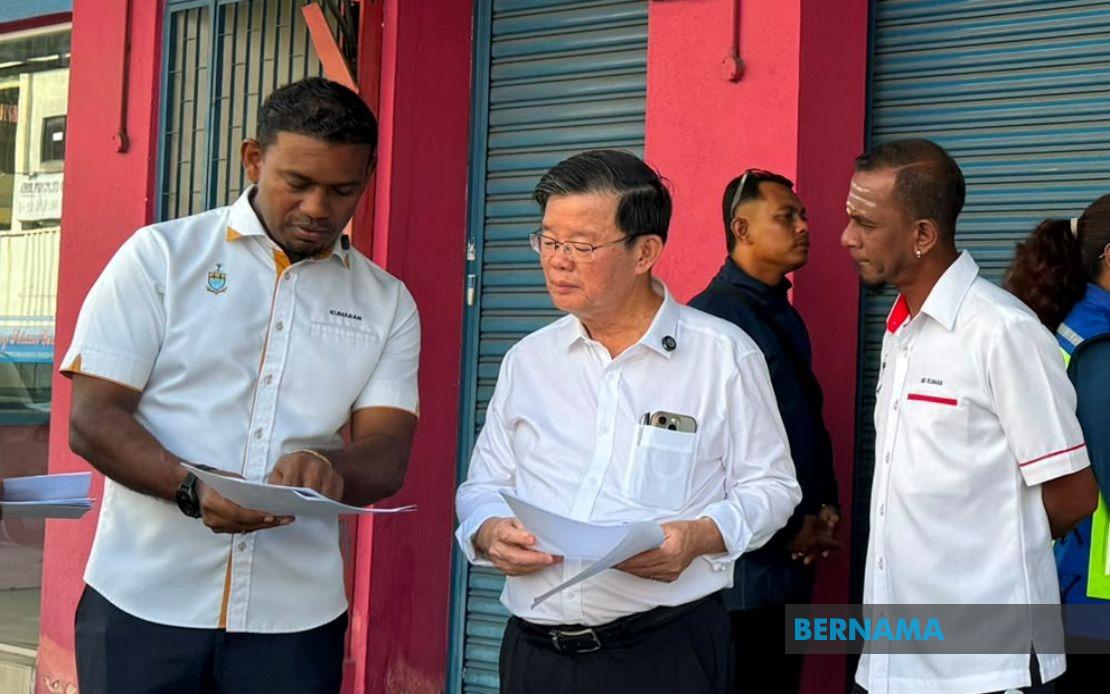
Penang will not reverse course on its new water tariff structure that commenced on July 1, Chief Minister Chow Kon Yeow announced, dismissing appeals from lawmakers and consumer advocates seeking a postponement of the fee increases. Speaking in Butterworth, Chow emphasised that the state government has already extended considerable flexibility by deferring implementation for nearly a year when the National Water Services Commission (SPAN) had originally mandated commencement in July 2025, demonstrating the administration's willingness to cushion the transition for households and businesses.
The tariff decision reflects a careful balancing act between political pressure and fiscal reality. SPAN, the federal body responsible for setting water service standards nationwide, had prescribed the new rate structure, and all Malaysian states operate under similar mechanisms whereby water operators can petition for tariff adjustments every three years to accommodate inflationary pressures and capital requirements. By advancing its implementation to July rather than waiting until late 2025, Penang bought consumers an extra year of reprieve while ensuring the timing aligned with the fiscal calendar.
The revenue implications are substantial. The state projects the tariff increase will generate approximately RM20 million in additional annual revenue, a relatively modest sum that nonetheless becomes crucial when set against Penang Water Supply Corporation's (PBAPP) vast capital requirements. The utility faces a RM2 billion investment horizon for water security projects, figures that dwarf the annual tariff revenue gain and underscore the mathematics driving the decision. Beyond these domestic initiatives, PBAPP must also contribute toward a major bulk water supply project originating from Perak, which itself demands investments measured in the billions—expenditures simply unattainable without expanded revenue streams.
Chow's remarks contained an implicit critique of cross-subsidy arrangements, a system that merits closer examination in the Malaysian context. Domestic consumers currently pay approximately 65 sen per cubic metre, whereas the actual cost of water production and delivery exceeds RM1 per cubic metre. This gap is deliberately bridged through higher charges levied on industrial and commercial users, who effectively subsidise household consumption. Such arrangements, while politically expedient in the short term, can create long-term distortions in resource allocation and discourage household water conservation by divorcing prices from true scarcity costs. The tariff restructuring partially corrects this misalignment, though domestic rates remain artificially suppressed relative to production costs.
The impact on ordinary households reveals why the government sought to frame the change as modest. Roughly 82 percent of Penang households consuming 35 cubic metres monthly or less—a threshold capturing most residential users—will incur additional daily charges of approximately 8 sen, translating to roughly RM2.55 extra per month. For the median household, this represents a manageable adjustment, albeit one that compounds alongside electricity tariffs and other cost-of-living pressures Malaysians have confronted over recent years. Commercial and industrial users face steeper absolute increases, paying an additional RM2.59 daily or RM77.70 monthly on 500-cubic-metre consumption patterns, though their larger operational scales typically absorb such increases more readily.
The political opposition to the tariff crystallised through Bagan Member of Parliament Lim Guan Eng, who publicly petitioned for a one-year deferral via social media. Lim's intervention illustrates the electoral sensitivity surrounding utility price increases, a perennial challenge for governments across Asia balancing fiscal sustainability against voter sentiment. His appeal carried particular weight given Bagan's urban demographics and purchasing-power concerns, yet Chow's firm response signals that the Penang administration has calculated the infrastructure risks of further delay as outweighing short-term political discomfort. This stance reflects a conviction that postponement would ultimately prove more costly by deferring essential projects.
PBAPP chief executive Datuk K. Pathmanathan articulated the operational imperative underlying the tariff increase. The corporation emphasises that additional revenue is indispensable for executing the Water Contingency Plan 2030 (WCP 2030), an ambitious programme designed to ensure Penang's water security amid population growth and climate variability. This strategy encompasses construction of new treatment facilities at Mengkuang Dam and Sungai Perai, infrastructure improvements at Sungai Dua, land acquisition for planned facilities at Sungai Muda, and pipeline augmentation along the Macallum-Bukit Dumbar corridor. Each component addresses tangible vulnerability points in the existing supply network, transforming the tariff increase from a mere revenue-raising exercise into a mechanism funding concrete resilience measures.
For Malaysian readers, particularly those in Penang, the tariff decision illuminates the tensions inherent in water governance across Southeast Asia. As the region confronts monsoon variability, urbanisation, and competing sectoral demands for freshwater, utilities increasingly face a trilemma: maintaining affordability, ensuring service quality, and achieving financial sustainability simultaneously. Penang's choice to prioritise infrastructure investment over short-term affordability preservation reflects a view that long-term supply adequacy ultimately serves consumers better than near-term price suppression followed by rationing or quality degradation. Whether this calculation proves correct will become evident as WCP 2030 progresses.
The broader regulatory context matters considerably. SPAN's standardised approach to tariff-setting across states creates consistency but also removes significant discretion from local governments, limiting their ability to respond to unique regional circumstances. This framework, while promoting transparency and preventing race-to-the-bottom competition among states, also means that Penang must navigate federal constraints when addressing local challenges. The deferral granted to Penang—moving the implementation forward to July 2024 rather than July 2025—represents one of the limited mechanisms through which states can adjust federal policy to suit their constituencies.
Looking forward, the tariff increase's success will partly depend on PBAPP's execution of WCP 2030 projects and their visible impact on supply reliability. If new treatment plants and pipelines demonstrably enhance water availability during dry seasons or enable expanded service to developing areas, public perception of the tariff increase may improve retroactively. Conversely, if implementation lags, cost overruns mount, or supply problems persist despite higher charges, political pressure for reversal could resurface. The government's credibility rests not merely on implementing the tariff but on delivering the infrastructure improvements it finances.

