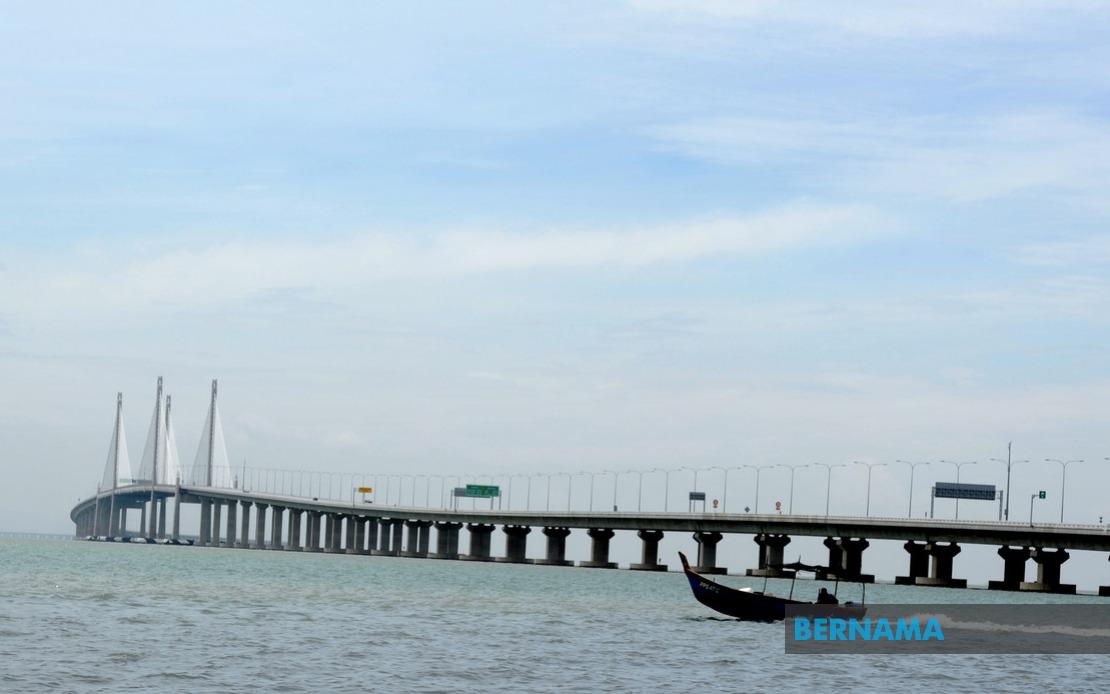
The eastbound carriageway of the Sultan Abdul Halim Mu'adzam Shah Bridge, Penang's second crossing to the mainland, will undergo a temporary seven-hour closure beginning at 8 pm on August 8 and concluding at 3 am on August 9. The restriction is being implemented by bridge operator Jambatan Kedua Sdn Bhd to facilitate the Cultural Night Run 2026, a significant sporting and cultural event scheduled for that evening.
This closure affects only traffic moving from Batu Maung on Penang island toward Batu Kawan on the mainland. Drivers heading in the opposite direction—from Batu Kawan back to Batu Maung—will experience no interruption to their journey, ensuring that essential connectivity between the two regions remains partially intact during the event window.
The bridge operator has confirmed that alternative routes will continue to function normally. The westbound pathway will accommodate traffic flowing from the mainland toward the island, while the dual connections from Bandar Cassia and the Batu Kawan Industrial Park through to the North-South Expressway will remain unaffected. This measured approach to closure management attempts to balance the need to host a major community event with the operational requirements of the region's transport network.
For commuters and commercial operators requiring passage between Penang island and the mainland during the closure window, the Penang Bridge—the state's original primary crossing completed in 1985—emerges as the essential alternative. This redirection of traffic toward the first bridge underscores the capacity constraints facing the state's cross-strait infrastructure and highlights the logistical complexity of managing major events across a geographically divided region. The Penang Bridge, which typically handles significant daily volumes, will likely experience elevated congestion during the seven-hour closure period.
The Cultural Night Run 2026 represents the type of large-scale community and cultural programming that has become increasingly prominent in Malaysian urban centers. Such events generate economic activity, promote civic engagement, and enhance destination appeal, yet they invariably create operational challenges for local authorities and infrastructure managers. The timing of this particular event—an evening run—necessitates the kind of temporary traffic management that affects commuters during typically busy hours.
Jambatan Kedua Sdn Bhd has emphasized the importance of motorist compliance with traffic control measures and signage throughout the closure period. The appeal reflects legitimate concerns about safety and operational fluidity when major diversions occur on high-capacity routes. Drivers unfamiliar with alternative routes may exercise caution or hesitate, potentially creating secondary congestion on the Penang Bridge and surrounding approaches during peak periods.
This closure highlights ongoing conversations in Penang about transport infrastructure adequacy. With the state's economy expanding and residential development accelerating on both the island and mainland, the question of whether current bridge capacity and routing options sufficiently serve the population becomes increasingly pertinent. A single event requiring a seven-hour closure of one direction on the second bridge illustrates how dependent the region remains on a limited number of crossing points.
From a broader Southeast Asian perspective, this situation reflects challenges faced by many rapidly developing regions where geographic constraints—islands, water bodies, mountains—create natural bottlenecks in transport networks. Indonesia, the Philippines, and parts of Thailand confront similar infrastructure pressures. Solutions ranging from enhanced public transport to additional bridge projects require sustained investment and political will.
For business and logistics operators, the advance notice of this closure provides opportunity for planning. Companies managing just-in-time supply chains or time-sensitive deliveries between island and mainland locations can coordinate scheduling around the event window. However, the seven-hour disruption remains a meaningful constraint, particularly for freight operations that typically optimize for continuous or frequent crossing throughout day and night cycles.
The Cultural Night Run 2026 itself reflects Penang's positioning as a events destination within Malaysia. George Town's UNESCO status and the state's cultural heritage have enabled it to host increasingly sophisticated programming. Yet the infrastructure implications of such events—traffic management, parking, security, accessibility—require sophisticated coordination among multiple agencies and operators, each with distinct mandates and constraints.
Looking forward, the sustainability of hosting major events in constrained geographic spaces like Penang requires either infrastructure expansion or more sophisticated demand management strategies. Some analysts suggest that better integration of public transport with event planning could reduce reliance on private vehicle usage. Others advocate for additional crossing infrastructure. The August 8-9 closure will provide real-world data about how travelers respond to temporary disruption and whether alternative routes genuinely accommodate displaced traffic.
Motorway and bridge operators across Malaysia will monitor how the Cultural Night Run 2026 logistics unfold, as the experience may inform future event planning in other constrained geographic corridors throughout the country. The balance between enabling vibrant civic life and maintaining transport functionality remains an ongoing challenge for regional planners and policymakers.

