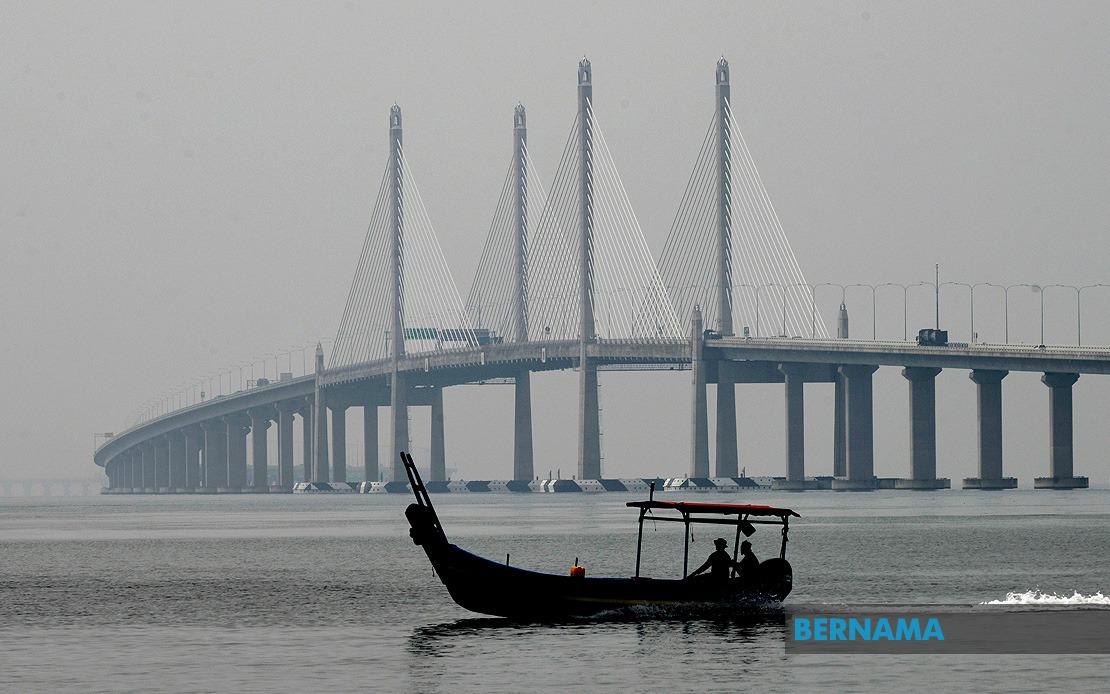
The Penang state government is preparing to engage relevant stakeholders in seeking a workable compromise on the contentious fishing prohibition that has been implemented beneath the Penang Bridge and the Sultan Abdul Halim Mu'adzam Shah Bridge. Datuk Rashidi Zinol, chairman of the Penang Rural Development, Agro-technology and Food Security and Entrepreneurship Committee, announced that formal discussions would commence the following week to examine the matter carefully, taking into account safety requirements, legal compliance, and the economic welfare of those dependent on fishing activities in these waters.
The fishing restriction has emerged as a point of tension between the state's regulatory authorities and the maritime community operating in the region. Both bridge locations were officially designated as restricted areas and prohibited places under the Protected Areas and Protected Places Act 1959, and subsequently classified as National Key Points, a designation that carries significant security implications and legal weight. This administrative status was established to protect critical infrastructure and ensure public safety, but the practical application of these rules has created friction with those whose livelihoods depend on access to fishing grounds beneath the two crossings.
The concerns were formally raised by fishing boat operators and owners of tourist vessels during recent consultations with the committee chairman. These operators pointed out that the enforcement of the ban had directly compromised their ability to conduct business in what were traditionally productive fishing zones. The restrictions have effectively eliminated an important revenue stream and reduced the demand for their services, creating a domino effect through the broader maritime economy. Tourist boat operations, which often provide ancillary fishing experiences or departures from these areas, have similarly experienced declining business as passengers find fewer reasons to venture onto the water.
Beyond the direct impact on boat operators, the fishing prohibition has rippled through an interconnected web of businesses that form the backbone of Penang's maritime supply chain. Equipment suppliers, ice manufacturers, food processing businesses, and various small enterprises that depend on a steady flow of catch from these waters have all felt the squeeze. This broader economic dimension underscores that the issue is not merely about a handful of fishing vessels, but rather about sustaining a complex ecosystem of employment and commercial activity that supports working-class communities throughout the state.
The challenge facing Penang's policymakers exemplifies the broader tension between security imperatives and economic necessity that exists across Southeast Asia. National Key Point designations reflect legitimate concerns about protecting critical infrastructure from potential threats, a consideration that became increasingly salient across the region following various security incidents in recent years. At the same time, states must grapple with the reality that economic restrictions imposed for security reasons inevitably create hardship for ordinary workers and small business operators who have few alternative income sources.
Datuk Rashidi's commitment to seeking a balanced approach suggests that the state government recognizes the legitimacy of both concerns. Rather than simply enforcing regulations without modification, the authorities are apparently willing to explore whether alternative arrangements might be possible. This could involve designated fishing zones at certain times, enhanced safety protocols that allow limited access, or compensation mechanisms for affected businesses. The specifics of what might emerge from negotiations remain unclear, but the stated intention to find middle ground indicates flexibility on the administrative side.
The fishing ban also touches on broader questions about maritime access and resource management in Malaysian waters. Penang's position as a major port and commercial hub means that decisions made about its bridges carry implications beyond the immediate region. If the state were to permit fishing activities in ways that compromise the integrity of critical infrastructure, this could set problematic precedents elsewhere. Conversely, maintaining absolute restrictions without exploring accommodation creates hardship that may undermine public confidence in the reasonableness of regulatory approaches.
The economic interdependencies revealed by this dispute highlight how supply chain vulnerabilities can emerge from policy decisions made with different primary objectives. Security classifications, while important, do not automatically account for the complex web of business relationships and employment that may depend on access to particular areas. A more holistic approach to policy-making in such cases might involve conducting impact assessments not just on the immediately affected sector, but on the full range of dependent businesses and workers.
For Malaysia more broadly, the Penang case illustrates the need for governance mechanisms that can accommodate competing legitimate interests. Fishing communities across the region face mounting pressures from environmental regulations, climate change, and various restrictions on traditional practices. When such pressures are coupled with security concerns, the squeeze can become unbearable for those without resources to easily transition to alternative livelihoods. The willingness of Penang authorities to convene discussions and explicitly commit to considering livelihood impacts sets a potentially constructive example for how such tensions might be approached elsewhere.

