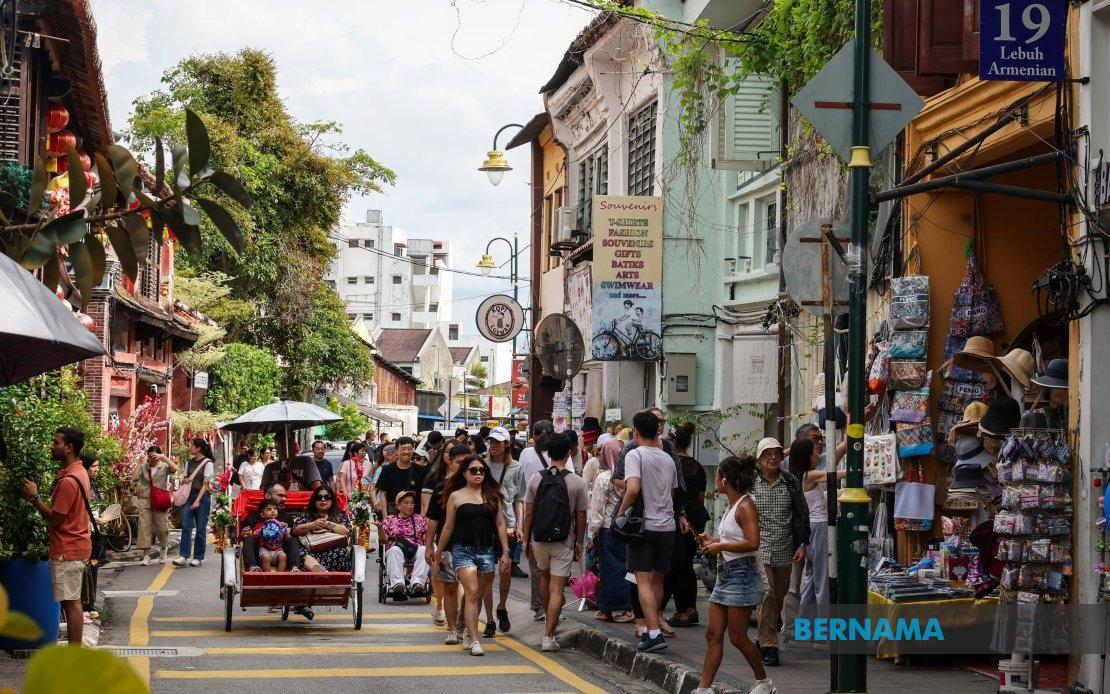
The Penang state government has moved swiftly to address heritage building safety concerns after yesterday's incident in George Town, where structural debris fell from a conservation shophouse along the historic Armenian Street, leaving two tourists injured. The collapse has prompted state authorities to initiate a comprehensive programme to evaluate the condition and structural integrity of heritage properties across the island, signalling a broader acknowledgement that preservation efforts must be balanced against public safety imperatives.
Jason H'ng Mooi Lye, who chairs the State Local Government and Town and Country Planning Committee, outlined plans for a systematic approach to managing heritage building risks. The state government will collaborate with the National Heritage Department to appoint an independent engineering firm capable of conducting detailed structural assessments. This study will identify buildings that pose safety hazards or face imminent deterioration, providing authorities with an evidence-based framework for intervention.
The incident itself involved two Sri Lankan nationals, Mohamad Ammtar and Fatimah, who were struck by falling wooden structural elements and concrete fragments. Initial site investigations determined that termite infestation represented the primary cause of the structural failure, a common problem affecting timber components in Malaysia's tropical climate where moisture and warm conditions accelerate wood degradation. Ammtar received emergency treatment at the scene and was subsequently admitted to Penang Hospital, though he was later discharged after medical evaluation. His companion underwent further diagnostic procedures including a computerised tomography scan to determine the full extent of her injuries.
H'ng's remarks reveal an important policy tension that Malaysian heritage authorities must navigate. Conservation principles traditionally demand that restoration efforts preserve original architectural features and materials, including traditional timber frameworks that characterise many historic properties in George Town. However, the Armenian Street incident illustrates the practical limitations of such purist approaches when original materials deteriorate beyond safe thresholds. The state's position acknowledges that modern, more durable alternatives may sometimes be necessary substitutes when preserving the original material would compromise occupant safety.
The Penang Island City Council is expected to issue formal notices to building owners once the engineering survey identifies properties requiring remedial work. These directives will mandate owners to undertake restoration projects meeting both conservation standards and contemporary safety codes. This enforcement mechanism addresses a longstanding challenge in heritage preservation: many privately-owned historic structures lack adequate maintenance investment, creating cascading deterioration that eventually threatens public safety.
Wong Hon Wai, heading the State Tourism and Creative Economy Committee, emphasised that George Town World Heritage Incorporated and MBPP have already begun distributing advisories to heritage property owners across the region. This proactive communication strategy aims to raise awareness among building owners about their responsibilities and the potential consequences of deferred maintenance. Wong characterised the incident as a stark reminder that heritage conservation exists within a broader framework of public protection obligations.
For Malaysia's tourism sector, particularly in heritage destinations like Penang, such incidents carry significant implications. George Town's World Heritage status attracts substantial visitor numbers who expectedly encounter well-maintained historic streetscapes. A series of safety failures could undermine confidence in the destination and generate international liability concerns for property owners and municipal authorities alike. The incident therefore represents not merely a localised structural problem but a challenge to the sustainability of heritage tourism as currently practised in the region.
The Armenian Street collapse also raises questions about regulatory oversight and enforcement capacity. Malaysia's heritage building stock—particularly in older commercial districts—often reflects incomplete historical records regarding structural modifications, previous damage, or undisclosed maintenance issues. Conducting reliable assessments requires specialist engineering expertise in heritage conservation, a skill set not universally available among local authority inspectors. The decision to engage independent engineers suggests official recognition that existing municipal capacity may be insufficient for this complex task.
Termite damage, the identified cause in this incident, warrants particular attention given Malaysia's climate. Unlike temperate regions where seasonal variations limit insect activity, the tropical environment maintains year-round conditions favouring termite proliferation. Many heritage buildings in George Town were constructed before modern pest management and building treatments became standard practice, making them vulnerable to infestations that progress undetected within concealed timber structures. Systematic inspection protocols must therefore incorporate specialised pest assessment alongside conventional structural engineering evaluation.
The policy framework emerging from this incident may eventually influence how Malaysia approaches heritage preservation more broadly. Rather than treating conservation and safety as competing imperatives, authorities appear increasingly inclined toward integrated management acknowledging that heritage sites must remain functionally safe environments. This conceptual shift may require revising heritage design guidelines to permit strategic use of non-original materials where deterioration threatens structural stability, a compromise between authenticity and public protection.
For building owners with heritage-listed properties, the emerging regulatory environment will demand greater investment in maintenance and periodic professional assessment. The threatened enforcement notices from MBPP will likely motivate property owners previously tolerating deterioration to undertake restoration. However, the financial burden of compliant restoration work—particularly for owners of multiple historic properties—remains a practical consideration that may require government incentive programmes or financing mechanisms to ensure widespread compliance.
International heritage practice increasingly emphasises that conservation work must be reversible and non-destructive whenever possible. The Penang government's stated openness to alternative materials represents a pragmatic accommodation of this principle: temporary or replaceable modern materials may protect historic fabric better than allowing structural failure through obstinate retention of compromised originals. This approach characterises contemporary best practice in heritage management across Southeast Asia and globally.

