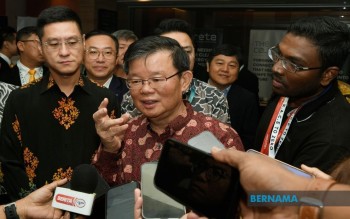
Penang's emerging green financing initiative has garnered significant industrial interest, with twenty-five companies indicating their intention to tap into the newly established Climate Mitigation Fund. Chief Minister Chow Kon Yeow revealed that five applicants have already progressed to the formal assessment stage, signalling rapid momentum for a programme designed to accelerate the state's transition towards sustainable manufacturing practices.
The fund represents a collaborative effort between the state government and Alliance Bank, operating under the broader Penang Green Industry Programme. Initial capital comprises RM5 million in state funding paired with RM15 million from the financial institution, though both parties have signalled readiness to extend total commitments to RM100 million should demand and project quality justify expansion. This tiered approach allows the initiative to prove its viability before mobilising significantly larger resources.
Eligible small and medium enterprises alongside mid-tier companies can access preferential financing packages reaching RM500,000 per borrower. Beyond credit facilities, the programme bundles comprehensive support including sustainability assessments, technical advisory services, and grant components. This holistic packaging addresses a fundamental challenge facing manufacturers seeking to green their operations: many lack the expertise and capital simultaneously to conduct environmental audits and implement resulting recommendations. By combining financial and knowledge-based support, the fund removes a substantial barrier to adoption.
For Penang, this initiative carries particular strategic weight given the state's disproportionate role in Malaysia's electronics and electrical engineering sector. Last year's RM436.9 billion in E&E exports represented approximately 68 per cent of the nation's total sector shipments, concentrating enormous economic value within the peninsula. As multinational corporations increasingly embed carbon reduction targets throughout their supply networks, manufacturers located in Penang face mounting pressure to demonstrate emissions controls and renewable energy sourcing. Failure to comply risks marginalisation from future orders, effectively converting environmental commitments into commercial imperatives.
Chow's framing of clean energy as a competitive issue rather than merely an environmental obligation reflects sophisticated understanding of modern industrial dynamics. Global corporations evaluating manufacturing locations now weigh renewable energy availability and carbon footprints alongside traditional factors like workforce skills, port facilities, and operational costs. This represents a fundamental shift in how jurisdictions must market themselves to multinational investors. Penang's explicit acknowledgement of this trend positions the state ahead of regional competitors still treating sustainability as peripheral policy.
The state has established concrete targets through the Penang Energy Framework, introduced in November 2024, which commits to reducing energy intensity by 25 per cent and elevating renewable energy's share within the state's total energy portfolio to at least 10 per cent by 2030. These numerical commitments provide measurable benchmarks against which progress can be tracked and programmes evaluated. However, achieving such targets within a land-constrained island environment demands creative solutions and pragmatic prioritisation.
Rooftop solar represents the most geographically viable renewable energy pathway for Penang's densely developed urban and industrial landscape. New building regulations now mandate that commercial and industrial structures utilise at least 75 per cent of available roof area for photovoltaic installations or satisfy equivalent renewable energy procurement targets based on their Tenaga Nasional Berhad tariff classifications. This regulatory integration transforms solar deployment from voluntary corporate responsibility into baseline development expectation, steadily expanding renewable generation capacity without requiring additional land consumption.
The state is simultaneously exploring supplementary renewable pathways better suited to specific geographic contexts. The Penang Water Supply Corporation is investigating floating solar installations atop its reservoir systems, a technology gaining traction across Southeast Asia as it maximises resource utilisation while reducing water evaporation losses. Silicon Island, Penang's ambitious new industrial development, is being designed as a renewable-integrated ecosystem, including dedicated green technology parks powered substantially by solar generation. These projects demonstrate how renewable energy can be embedded within broader development planning rather than treated as an afterthought.
Energy efficiency measures constitute an equally critical dimension of Penang's decarbonisation strategy. The state is implementing energy intensity standards that enable systematic measurement, benchmarking, and improvement across commercial operations. Government facilities and local authority properties are undergoing comprehensive assessments to identify renewable energy and efficiency opportunities. Existing public buildings face encouragement to achieve 5 per cent renewable energy sourcing, with new government structures targeted to meet or exceed this threshold. This institutional commitment demonstrates governmental willingness to bear transition costs rather than expecting private industry alone to shoulder the burden.
Penang's energy policies demonstrate explicit alignment with the federal government's National Energy Efficiency Action Plan 2.0, which targets an 11.6 per cent reduction in national energy demand by 2035. This vertical integration of policy frameworks ensures that state-level initiatives reinforce rather than contradict national sustainability objectives. Effective climate mitigation requires coordinated action across administrative boundaries, particularly within a federal system where state and national governments retain distinct regulatory authorities. Penang's proactive coordination signals recognition that energy transition requires institutional coherence.
The Climate Mitigation Fund initiative reveals how Southeast Asian jurisdictions are responding to globalised supply chain pressures and carbon accounting requirements. Rather than viewing sustainability as regulatory compliance burden, forward-thinking state governments increasingly recognise green transition as opportunity for competitive positioning. For Malaysian policymakers and business leaders monitoring regional developments, Penang's approach offers instructive lessons in combining financial mechanisms, regulatory frameworks, and technical support to achieve emissions reductions whilst maintaining industrial competitiveness and economic growth.

