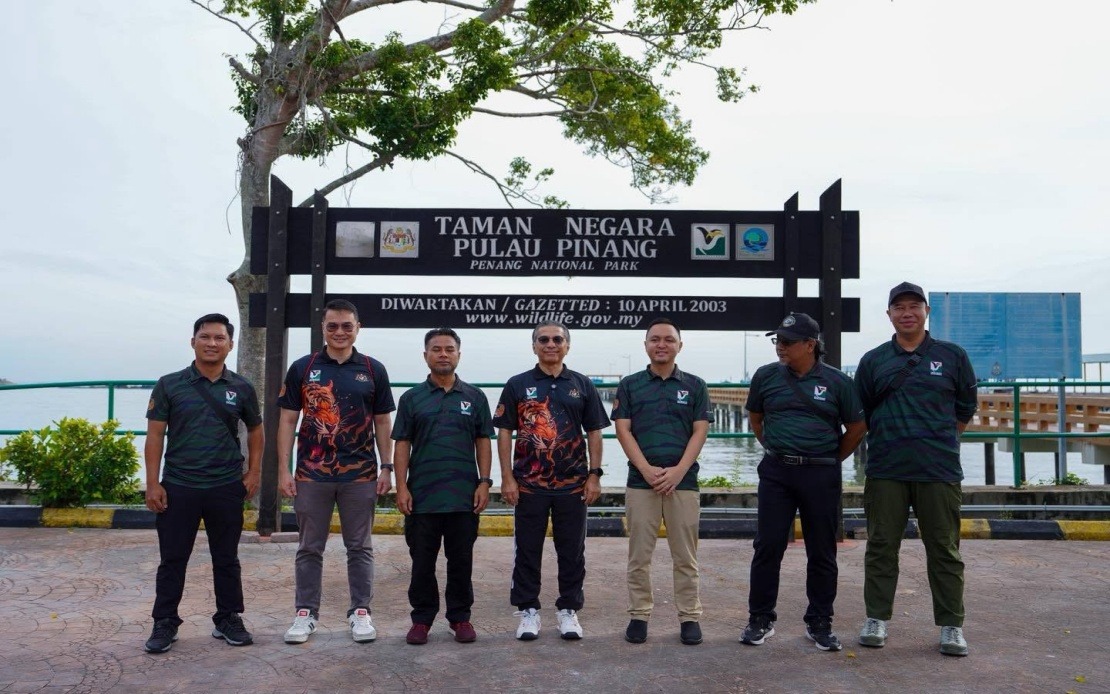
The intricate tapestry of Penang National Park—spanning lush forests, pristine coastlines, wildlife sanctuaries and the scientifically significant meromictic lake—exemplifies the biodiversity challenges facing Malaysia's conservation authorities. During an inspection visit to the Teluk Bahang reserve, Deputy Minister of Natural Resources and Environmental Sustainability Syed Ibrahim Syed Noh articulated a fundamental shift in how government agencies approach environmental stewardship: protection alone is insufficient without meaningful community participation.
Syed Ibrahim's emphasis on collective responsibility reflects a broader recognition within Malaysia's environmental sector that conservation cannot succeed if confined to protected zones managed exclusively by government departments. The meromictic lake, a rare ecological feature where freshwater and saltwater layers remain permanently separated, serves as a microcosm of the park's delicate interconnected systems. Such unique ecosystems demand sophisticated management approaches that go beyond traditional fence-and-patrol models, requiring instead informed public understanding and buy-in.
The deputy minister's itinerary revealed the multifaceted dimensions of contemporary conservation in Penang. At Kerachut Beach, the Turtle Conservation Centre—operated by the Department of Fisheries Malaysia—demonstrates targeted species protection for Green Turtles and Olive Ridley Turtles. These programs address immediate threats to endangered marine fauna while simultaneously creating touchpoints for public awareness. For Malaysian citizens accustomed to coastal tourism as primarily recreational, such facilities reframe beaches as ecological zones worthy of active stewardship rather than passive enjoyment.
Educational infrastructure plays a pivotal role in this reconceptualized conservation model. Entopia Penang represents the kind of interactive learning space that transforms abstract environmental concepts into tangible experiences. By enabling visitors—particularly younger Malaysians who will inherit these ecosystems—to engage directly with biodiversity, such venues cultivate the cultural foundation necessary for long-term conservation success. Syed Ibrahim explicitly recognised that fostering public appreciation through experience-based learning is essential to building generational commitment to environmental protection.
The integration of ecotourism into conservation strategy addresses a practical tension that Malaysian policymakers have grappled with for decades: how to generate economic value from natural assets without degrading them. When managed responsibly, tourism can function as a financial justification for park preservation while simultaneously educating visitors about ecological value. This approach is particularly relevant for Penang, a state with significant tourism revenue potential that must balance development pressures against irreplaceable natural heritage. The model positions conservation not as an obstacle to economic activity but as a prerequisite for sustainable tourism.
From a regional perspective, Penang's approach aligns with Southeast Asian efforts to reconcile conservation with development. Countries throughout the region face mounting pressure to monetise natural resources for economic growth, yet simultaneously confront the irreversible losses from unsustainable extraction and habitat destruction. Penang's emphasis on community-integrated conservation offers a template that other Malaysian states and Southeast Asian nations might adapt to their specific ecological and economic contexts.
The meromictic lake exemplifies why such holistic approaches matter. This geological anomaly functions not as an isolated curiosity but as a component of a broader ecosystem where forests, coastal zones and freshwater systems interact to maintain ecological balance. Damage to any single element reverberates through the entire network. Public understanding of such interconnectedness—which educational initiatives aim to cultivate—translates into more sophisticated political support for protective regulations and sustainable use policies.
Syed Ibrahim's articulation of conservation as intergenerational stewardship rather than mere resource protection signals an important ideological reorientation. This framing acknowledges that environmental degradation represents a form of inheritance theft, depriving future Malaysians of natural assets currently available. Such rhetoric, when coupled with substantive policy implementation, can reshape social expectations regarding environmental responsibility. For a nation where rapid industrialisation has sometimes overshadowed ecological concerns, this messaging carries particular significance.
The Department of Wildlife and National Parks briefing to the deputy minister underscores institutional investment in knowledge-sharing across government bodies. Effective conservation requires coordination between multiple agencies—fisheries, wildlife management, environmental monitoring and local administration—each bringing specialised expertise. The public visibility of such inter-agency collaboration, demonstrated through high-level official visits, legitimises conservation work within government hierarchy and signalling resource commitment.
Yet challenges remain. Community participation requires sustained investment in education, monitoring, and enforcement against illegal activities. Tourism development must genuinely incorporate conservation principles rather than merely deploying environmental language for marketing purposes. Local communities adjacent to protected areas must perceive tangible benefits from conservation—whether through employment, resource access, or infrastructure development—to sustain political support across economic cycles.
The Ministry of Natural Resources and Environmental Sustainability's emphasis on grounding conservation in field-level realities reflects hard-won lessons from previous initiatives that succeeded or failed based on community acceptance. Penang National Park's success ultimately depends on whether the broader Penang public—from fishers to resort operators to school children—internalise the message that biodiversity preservation constitutes enlightened self-interest rather than external constraint. Syed Ibrahim's visit and statements represent an attempt to embed this understanding within Malaysia's policy discourse, recognising that without community ownership, even world-class protected areas prove vulnerable to degradation.

