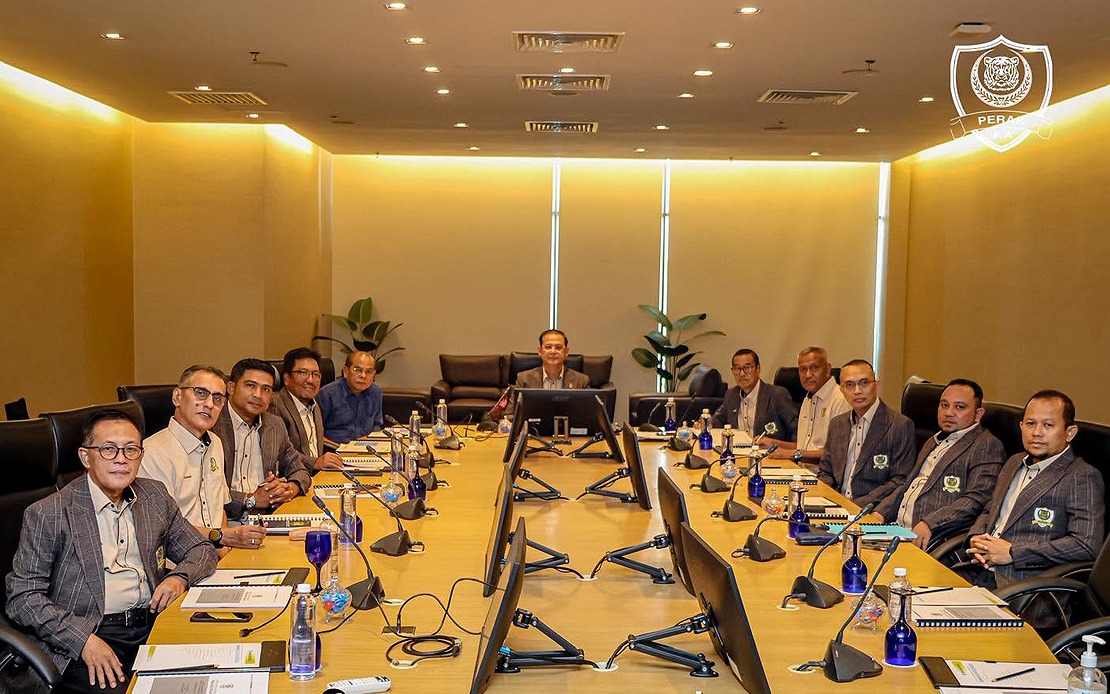
The Perak Football Association (PAFA) has announced plans to appoint a new head coach to oversee the state's campaign in the 2026-2027 Liga A1 Semi-Pro season, marking a significant shift in the association's technical setup. The recruitment drive responds to fresh regulations imposed by the Amateur Football League (AFL), which now requires every competing team to employ a head coach holding an AFC Pro Diploma Coaching License (Pro-A), a credential that signals elevated standards across Malaysia's semi-professional football landscape.
The decision reflects broader efforts within Malaysian football administration to professionalize coaching structures at every competitive level. Rather than viewing the mandate as merely a compliance exercise, PAFA has framed the appointment as an opportunity to strengthen the state team's technical foundation. The association pledges to identify a coach who not only meets the licensing threshold but also brings demonstrable expertise in youth development, contemporary coaching methodologies, and a portfolio spanning state, national, and international experience. This multi-dimensional approach suggests PAFA recognizes that regulatory compliance alone is insufficient; the chosen candidate must embody the technical and philosophical direction the association wishes to pursue.
The previous campaign saw Syamsul Saad, a former player turned coach, guide Perak to a respectable fifth-place finish in the league standings. Beyond the league position, the team advanced to the MFL Challenge Cup semifinals and reached the Malaysia Cup quarterfinals, demonstrating competitive capability across multiple formats. Syamsul's tenure established a baseline of competence, yet the new licensing requirements have prompted PAFA to seek a coach with formal international credentials, suggesting the association views this transition as an upgrade rather than a necessity born from underperformance.
Crucially, PAFA has committed to retaining the existing coaching support staff rather than embarking on a wholesale overhaul. The association intends to pair the incoming head coach with the established technical team, creating a structure where experience and new perspectives complement one another. This measured approach acknowledges the institutional knowledge embedded within the current setup while integrating fresh expertise from a Pro-A certified appointment. Such continuity can ease transitional phases and preserve relationships with players familiar with the existing system.
Player retention also features prominently in PAFA's medium-term planning. Those who successfully completed performance evaluations during the previous campaign will be offered fresh contracts, signaling confidence in the squad's core while maintaining competitiveness. This stability in personnel, combined with refined coaching leadership, aims to create conditions for sustained improvement without disruptive squad overhauls that can destabilize team cohesion.
The appointment strategy aligns with Perak's broader football development blueprint, specifically the Perak Sejahtera 2030 Plan, which encompasses long-term talent identification and cultivation. Rather than operating in isolation, the head coach role is positioned within a three-tiered development ecosystem comprising the Liga A2 Amateur, the President's Cup, and the Liga Perak Sejahtera 2030. This multi-league approach exposes emerging talent to competitive environments while creating pathways from grassroots programs into higher-level football. PAFA reports that this integrated model has already produced approximately 70 players aged eighteen to twenty-four, suggesting tangible returns on investment in development infrastructure.
The emphasis on grassroots integration distinguishes Perak's approach from purely performance-driven recruitment models. By positioning the head coach within a development continuum rather than viewing the role narrowly as a league-season appointment, PAFA frames football advancement as a systematic undertaking. Young players identified through SUKMA, Liga A1 Semi-Pro, and Liga Perak Sejahtera 2030 platforms gain progressive exposure, enabling coaches to identify and nurture talent through structured competitive experience. The new head coach's responsibilities will extend beyond match-day management to encompassing this broader developmental vision.
For Malaysian football observers, Perak's move reflects a nationwide maturation in coaching standards. The AFC Pro Diploma requirement, while administratively demanding, raises the technical floor across semi-professional football. Coaches holding this credential have satisfied rigorous international benchmarks covering tactical knowledge, player management, and modern methodologies. The requirement's implementation signals that Malaysia's football authorities recognize coaching quality as a lever for competitive improvement, particularly at semi-professional levels where talent development accelerates toward elite pathways.
The appointment also carries implications for coaching employment in Malaysia. As more state associations align with AFC standards, demand for credential-holding coaches will intensify. This trend may encourage domestically-based coaches to pursue Pro-A certification or create recruitment demand for foreign coaches meeting the requirement. Either pathway reshapes Malaysia's coaching market, potentially elevating standards but also raising operational costs that associations must absorb.
Menteri Besar Datuk Saarani Mohamad's continued political support, acknowledged in PAFA's statement, underscores football's positioning within state governance. Government backing for sports infrastructure and coaching investment reflects recognition of football's social and economic dimensions. Perak's football ambitions cannot be divorced from political support that facilitates budget allocation, venue access, and institutional cooperation necessary for program implementation.
The 2026-2027 campaign will serve as a test case for how integrated development frameworks and elevated coaching credentials translate into competitive outcomes. Should Perak improve upon the previous season's fifth-place finish while simultaneously cultivating youth talent, the model gains credibility as a replicable template. Conversely, if improved coaching credentials fail to yield on-field advancement, questions will surface regarding whether licensing requirements represent genuine capability improvement or mere bureaucratic gatekeeping. The coming season's results will likely influence how other state associations calibrate their own coaching recruitment strategies.

