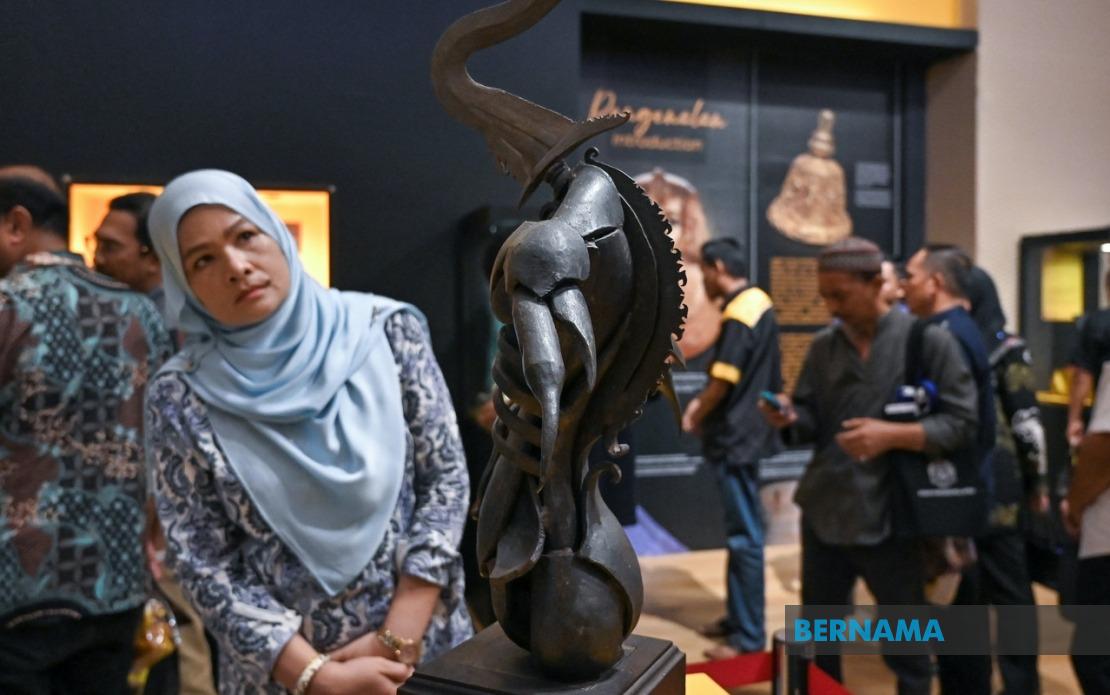
The Perak Museum in Taiping is hosting a major exhibition that brings together 140 significant metal artefacts spanning centuries of Malay heritage and craftsmanship. Titled 'Magic and Metal: Spirit, Power and Art', the exhibition opened on June 1 and will continue through the end of December, offering visitors an extensive look at the symbolic, spiritual and artistic dimensions of metalwork within the Malay cultural tradition. The scale and scope of the display represent an unprecedented gathering of early metal-based collections previously held separately by various custodians.
Mohd Nasrulamiazam Mohd Nasir, director of the Perak Museum, explained that the exhibition's curatorial framework revolves around three interlocking themes: spirit, power and art. This thematic approach allows the museum to present metalwork not merely as functional objects or decorative pieces, but as tangible expressions of deeper cultural beliefs and social hierarchies that shaped Malay society across different historical periods. By organizing the collections around these conceptual pillars, curators have sought to reveal how metal as a medium carried meanings far beyond its material properties, serving instead as a vessel for mystical understanding and cultural identity.
What distinguishes this exhibition from previous metal-focused displays in the region is its collaborative approach to acquisition and presentation. Beyond the Perak Museum's own substantial holdings, the exhibition draws upon carefully curated private and institutional collections. These partnerships include sculpture pieces from Raja Syahriman Raja Aziddin, silverware assembled by Yayasan Al-Amin, and an important collection of Malay weaponry belonging to Nor Azahar Ibrahim. This network of lenders demonstrates how heritage preservation in Malaysia increasingly depends on coordination between public institutions, private collectors and non-governmental organizations working toward common preservation goals.
Among the exhibition's most notable pieces are artefacts with direct royal provenance. A 19th-century Malay traditional weapon featuring an ornate snail-shell hilt once belonged to Sultan Abdullah Muhammad Shah II, the 26th Sultan of Perak, positioning this weapon within the framework of royal authority and ceremonial significance. An 18th-century suit of Bugis warrior armor provides insights into maritime warfare traditions and the influence of broader Southeast Asian military practices on the peninsula. Additionally, an ornamental spoon and fork set that belonged to Raja Laut Ibni Sultan Muhammad Shah, the second son of Selangor's third Sultan, exemplifies how precious metalwork extended into domestic and courtly contexts.
The Department of Museums Malaysia's director-general, Datuk Kamarul Baharin A. Kasim, officially opened the exhibition, underscoring its significance within the national museum network. This official endorsement reflects the exhibition's alignment with broader government objectives regarding cultural preservation and public education. Museums across Malaysia have increasingly positioned themselves as institutions capable of advancing national understanding of heritage, and this exhibition exemplifies that mission by making scholarly research accessible to general audiences.
Visitor engagement has already proven substantial, with the museum recording nearly 20,000 attendees since the June opening. Museum officials have set an ambitious target of 100,000 total visitors before the exhibition concludes at year's end, suggesting confidence in the exhibition's ability to attract both regional and international audiences. This projection, if realized, would position 'Magic and Metal' among the more successful heritage exhibitions mounted in Perak in recent years and would validate the investment in collaborative partnerships and thematic curation.
For Malaysian heritage enthusiasts and researchers, the exhibition offers rare opportunity to examine metalwork traditions in comprehensive fashion. The concentration of royal and warrior-related pieces underscores the historical association between metalwork and centers of power, while the domestic items suggest that metalcraft permeated multiple social strata. The inclusion of both peninsular Malay and Bugis traditions reflects the historically interconnected nature of maritime Southeast Asian cultures, complicating simplistic narratives about cultural boundaries and demonstrating the region's historical cosmopolitanism.
The exhibition's emphasis on metal as a medium carrying spiritual significance resonates with contemporary scholarly interest in material culture studies. Rather than treating artefacts as static historical records, the curatorial approach invites visitors to consider how craftspeople and owners understood these objects within frameworks of belief, status and aesthetic value. This interpretive stance represents evolution in Malaysian museum practice toward more nuanced, culturally-informed presentations of heritage.
Placement of the exhibition at Perak Museum holds particular relevance given the state's historical importance within the Malay sultanate system and its substantial mineral resources. Perak's historical wealth derived partly from tin mining and trade, making it an appropriate setting for an exhibition exploring the cultural dimensions of metalwork. The museum's location in Taiping, itself a town whose development reflected colonial-era mining prosperity, adds additional contextual layers to the exhibition's themes regarding the relationship between natural resources and cultural production.
Looking beyond the immediate exhibition period, the collaborative model employed for 'Magic and Metal' suggests possibilities for future joint projects among Malaysian museums, private collectors and heritage organizations. Building networks that facilitate the temporary movement and shared display of important artefacts could allow institutions with limited storage and display capacity to access significant collections while strengthening relationships across the heritage sector. This approach particularly benefits smaller regional museums that lack resources to develop major exhibitions independently.
The exhibition also serves educational functions extending beyond casual tourism. Students, researchers and cultural practitioners can access material that illustrates technical metalworking traditions, royal iconography and the evolution of artistic styles across centuries. Documentation and scholarly publication of these collections, which the museum likely undertakes during the exhibition period, will contribute to the broader academic record regarding Malay material culture and craftsmanship traditions that might otherwise remain fragmented across private and institutional archives.
For international visitors and Southeast Asian neighbors, 'Magic and Metal' provides a window into the sophisticated cultural production systems that developed within Malay sultanate structures. The exhibition implicitly argues that Malay heritage encompasses considerable artistic and technical sophistication, challenging any residual orientalist assumptions that non-European metalwork represents a less developed form of cultural expression. By centering Malay interpretive frameworks regarding the meaning and function of metal objects, the museum positions Malaysian perspectives as authoritative in their own heritage narratives.

