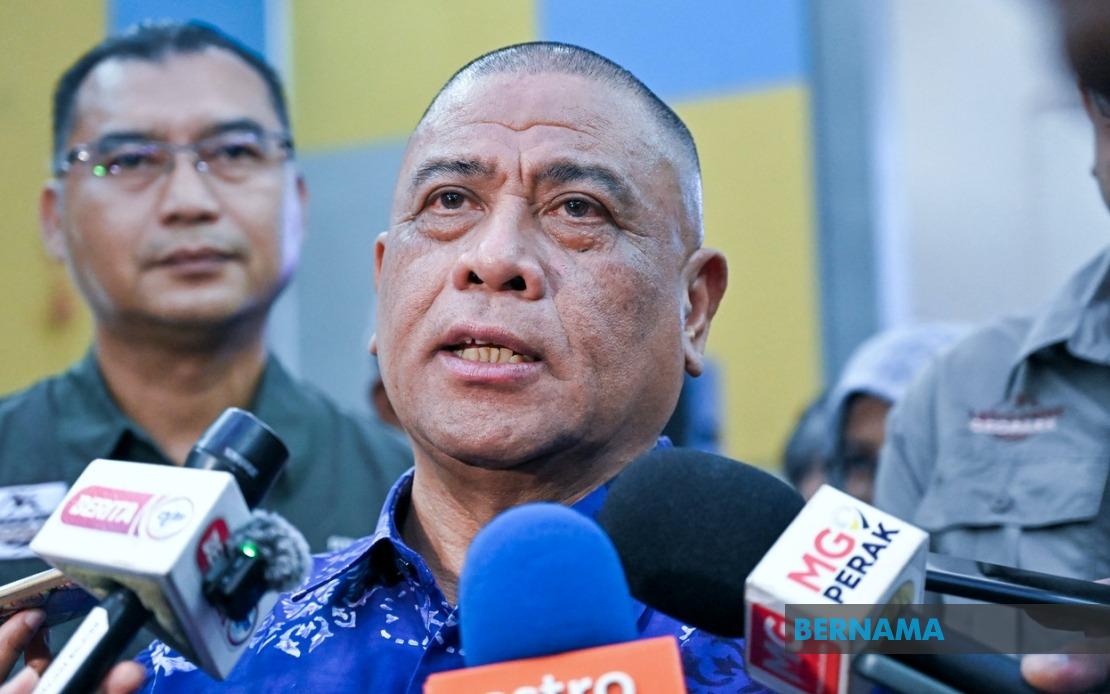
Perak's Menteri Besar Datuk Seri Saarani Mohamad has assured the public that efforts to contain the spread of deviant religious teachings in the state remain effective, even as propagandists exploit digital channels and international networks to advance their ideologies. Speaking in Ipoh on July 16, he emphasized that comprehensive monitoring systems have been established to track emerging threats to religious orthodoxy across the state.
The management of such challenges involves a multi-layered governance structure that keeps the highest levels of state leadership informed. Sultan Nazrin Shah, in his constitutional role as head of religion for Perak, receives regular briefings through the State Security Committee chaired by Saarani himself. Recent updates from Datuk Zamri Hashim, the Deputy Mufti, and Datuk Harith Fadzilah Abdul Halim, the Perak Islamic Religious Department director, have ensured the Sultan remains apprised of the situation and any developments that may require his attention or intervention.
The state government's approach relies heavily on investigative capacity within specialized religious agencies. The Perak Islamic Religious Department and the Perak Mufti Department serve as the primary investigative bodies, receiving public complaints and concerns about teachings or practices that may deviate from established Islamic principles. Both organizations operate according to standardized procedures before recommending enforcement action, ensuring that measures are proportionate and legally sound.
This localized effort in Perak forms part of a broader national strategy coordinated at the federal level. Minister in the Prime Minister's Department (Religious Affairs) Datuk Zulkifli Hasan outlined the government's comprehensive approach, which brings together multiple agencies under what he described as a whole-of-government framework. The Department of Islamic Development Malaysia, working alongside State Islamic Religious Departments across the country, maintains ongoing surveillance of activities believed to contradict mainstream Islamic doctrine.
The nature of the threat has fundamentally shifted over recent years, complicating enforcement efforts significantly. Where deviant teachings once relied on clandestine physical gatherings easily monitored by authorities, proponents now leverage encrypted messaging applications, social media platforms, and video-sharing services to reach audiences across Malaysia and internationally. The speed and reach of digital dissemination makes traditional law enforcement approaches less effective, requiring agencies to develop new monitoring and intervention strategies adapted to the online environment.
Particularly concerning is the deliberate obfuscation of intent by some groups. Rather than openly promoting religious teachings, certain organizations operate under seemingly innocuous banners such as personal development programmes, charitable enterprises, alternative healing practices, and informal study circles. This camouflage makes initial identification difficult and allows groups to build substantial followings before authorities recognize the actual nature of their teachings and activities.
The cross-border dimension adds another layer of complexity to enforcement. Teachings originating from international sources can be transmitted into Malaysia through digital channels without any physical border crossing, making it nearly impossible for traditional customs or immigration controls to intercept them. Coordinating with international partners to combat this challenge remains an ongoing priority for Malaysian religious authorities, though success has been limited given the decentralized nature of online platforms.
For Malaysian readers, the situation reflects broader tensions between religious orthodoxy and the pluralistic information environment created by digital technology. The government's acknowledgment that deviant teachings have shifted online implicitly recognizes that traditional gatekeeping over religious information has eroded. Citizens now access diverse interpretations of Islamic teaching through multiple channels, not all of which align with official positions endorsed by the state's Islamic authorities.
Peark's emphasis on established procedures for investigation and enforcement suggests an attempt to balance security concerns with respect for due process and individual rights. However, the breadth of activities now classified as potentially problematic—from alternative therapies to informal religious education—indicates an expansive interpretation of what constitutes a threat to religious stability. The implications for civil liberties and religious freedom deserve scrutiny, particularly as enforcement becomes more proactive and preventative rather than reactive to clear violations.
The involvement of Sultan Nazrin Shah in oversight also underscores the constitutional dimensions of religious governance in Malaysia. Sultans retain significant ceremonial and legal authority over Islamic affairs within their states, reflecting the constitutional settlement that reserves Islam matters to federal and state religious authorities rather than secular courts. This framework, dating back to the Federal Constitution, shapes how religious security challenges are approached across the country.
Looking ahead, the challenge for Malaysian authorities lies in developing enforcement mechanisms proportionate to genuine threats while protecting the legitimate space for diverse religious expression and interpretation. The shift of deviant teachings to digital platforms suggests that conventional regulatory approaches may prove insufficient, requiring investment in digital literacy programs alongside traditional enforcement. Building public understanding of why certain teachings are considered deviant, rather than relying solely on surveillance and legal action, may offer a longer-term solution to the challenge authorities in Perak and nationwide are addressing.

