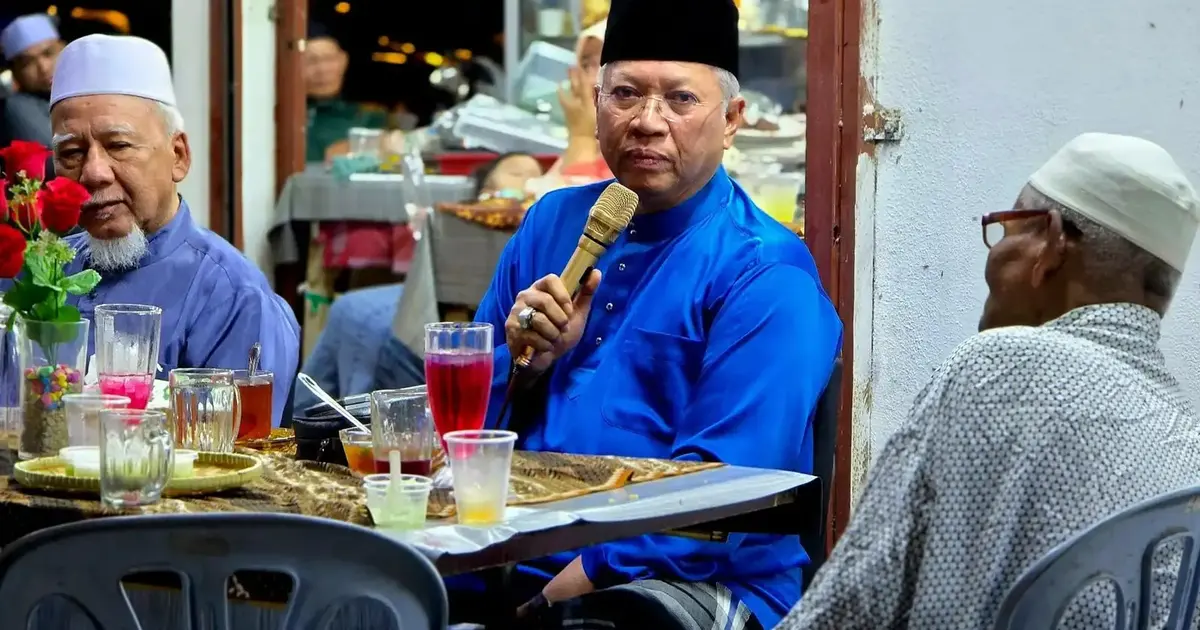
Tensions within Malaysia's Perikatan Nasional coalition have surfaced over seat allocation for the Negeri Sembilan state election, with PAS insisting that coalition partner Bersatu's demands are unrealistic and unachievable. The assertion by PAS information chief Annuar Musa underscores growing friction between the Islamic party and Bersatu as both navigate their shared commitment to PN while protecting their individual political interests in the state.
According to Musa, Bersatu has requested 15 seats in the upcoming Negeri Sembilan state election—a figure that PAS contends is untenable given the coalition's overall strength and electoral realities in the state. This demand reveals a significant disconnect between the two parties' assessments of their respective bargaining power within PN and their prospects in the Negeri Sembilan contest. The seat request appears designed to give Bersatu substantial representation, but PAS argues the mathematics simply do not support such an allocation.
The disagreement carries implications beyond simple arithmetic. Negeri Sembilan has emerged as a testing ground for PN's internal cohesion, particularly as the coalition prepares for what could be a pivotal state-level contest. The state, traditionally a stronghold for other political forces, represents territory where PN must demonstrate unity and strategic clarity. Coalition partners pursuing incompatible seat ambitions risk presenting voters with confusion about party hierarchy and shared vision, potentially undermining their collective electoral appeal.
Bersatu's aggressive seat demand may reflect the party's determination to carve out meaningful influence within PN beyond its role in federal politics. As the smaller party in many electoral calculations, Bersatu has incentive to secure strong state-level footholds where it can establish independent power bases. Negeri Sembilan's electoral context may present particular opportunities that Bersatu leadership believes justify elevated aspirations. However, such unilateral positioning creates friction when other coalition partners hold different estimates of feasibility.
PAS, as the coalition's largest component by membership and electoral performance, naturally views seat distribution differently. The party's insistence that Bersatu's demands are impossible reflects both electoral realism and institutional power dynamics within PN. PAS must balance maintaining coalition partnership with protecting its own electoral prospects and organisational interests. The public assertion that Bersatu's demands cannot be met suggests PAS believes a firm stance now is preferable to later disputes or unsustainable compromises.
The conflict also highlights broader challenges facing PN as a coalition structure. Unlike more established alliances, PN still consolidates its internal decision-making processes and power-sharing formulas. Seat allocation disputes, particularly when aired publicly rather than resolved confidentially, expose the coalition's ongoing struggle to develop clear, accepted criteria for distributing electoral opportunities. This vulnerability becomes especially acute when state elections approach and parties prioritise winning in their target constituencies.
For Malaysian voters and observers, these coalition tensions carry electoral significance. Bersatu and PAS present themselves as unified alternatives to established ruling coalitions, yet their internal disagreements suggest ongoing organisational challenges. The Negeri Sembilan situation illustrates that PN, despite its federal role, has not yet developed mature mechanisms for resolving inevitable conflicts between coalition partners. Voters considering PN candidates may question whether the coalition's top leadership can manage such fundamental questions about seat allocation and party cooperation.
The timing of these disputes, preceding state elections, also matters strategically. Public disagreements allow other political competitors to exploit apparent disunity and suggest the coalition cannot be trusted with state governance. Opponents will inevitably highlight these seat allocation frictions as evidence that PN prioritises internal politics over state development and constituent welfare. This narrative becomes particularly damaging if disputes remain unresolved or escalate to more senior levels of the coalition structure.
Negeri Sembilan specifically represents territory where electoral mathematics are particularly contested. The state's demographic and geographic composition creates multiple interpretations of how many seats different parties can realistically win. Bersatu's fifteen-seat demand may reflect genuine confidence about electoral performance in specific constituencies, or it may represent negotiating positioning designed to secure a more modest but still substantial allocation. Understanding which interpretation applies requires examining Bersatu's recent performance in Negeri Sembilan and its current grassroots organisation in the state.
Moving forward, PN leadership faces pressure to establish clear principles for seat allocation that both respect coalition partnership and accommodate legitimate aspirations from component parties. The Negeri Sembilan situation demands resolution before nomination day, forcing senior party leaders to make difficult choices about how to balance unity with fairness. These decisions will influence not only the state election outcome but also PN's cohesion heading into future electoral contests.
The broader implication for Malaysian politics is that coalition-building remains complex even when parties share ideological alignment or opposition to particular governments. PN's experience managing internal tensions mirrors challenges faced by other multi-party alliances. Successful coalitions require not merely agreement on common enemies but also sustainable frameworks for allocating scarce resources, particularly electoral opportunities. How PN resolves the Negeri Sembilan dispute will significantly influence confidence in the coalition's capacity to function effectively in state government.

