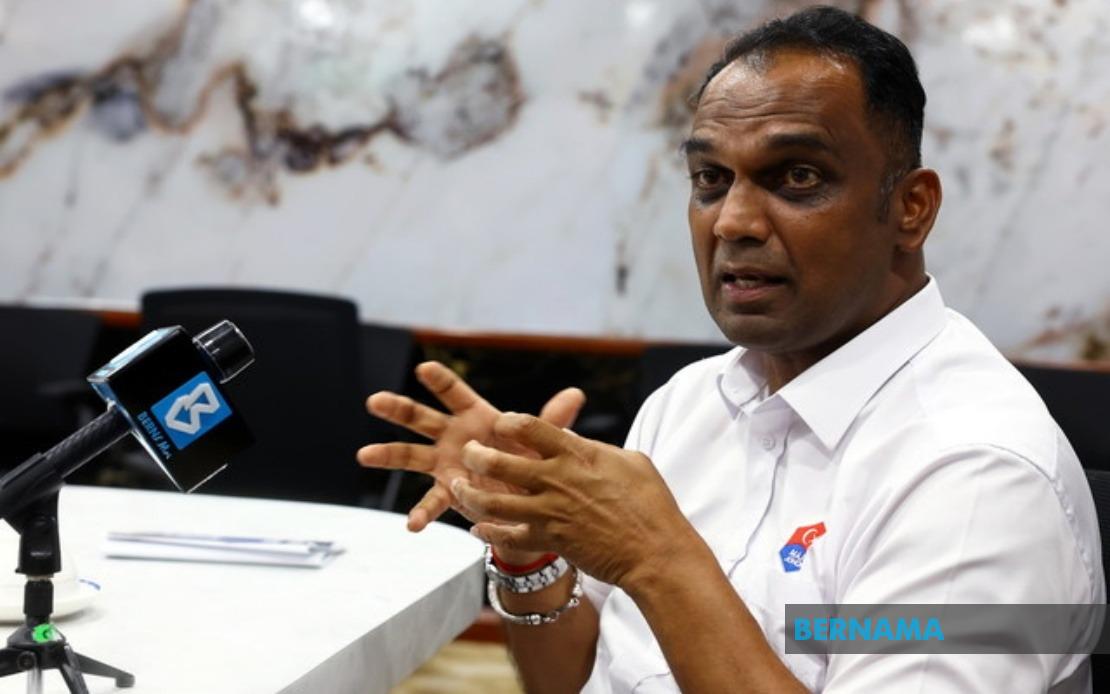
In his bid to secure the Perling constituency for Barisan Nasional in the 16th Johor State Election, first-time state-level candidate P. Pannir Selvam has adopted an unconventional campaign playbook that privileges old-school political engagement over the digital rush that increasingly dominates Malaysian electoral contests. Rather than chasing viral moments and algorithmic reach, Pannir Selvam is banking on what he terms "pocket talks"—intimate, small-group conversations held directly with constituents—as his primary weapon to persuade voters in a constituency expected to be hotly contested.
The strategy reflects a deliberate calculation about what actually moves voters in a diverse, urban-fringing district. While acknowledging that social media has become woven into modern campaigning, Pannir Selvam contends that the traditional method of sitting down with voters in their own spaces and having substantive conversations generates a stickier, more meaningful impression than algorithmic content. This approach carries particular resonance in Perling, where residents grapple with hyperlocal issues—traffic snarls, parking shortages, and market management—that no amount of Facebook advertising can adequately address. By meeting voters face-to-face, the candidate argues, he creates genuine channels for understanding grievances and building trust, narrowing the psychological distance between elected representatives and constituents that has become a persistent complaint across Malaysian politics.
Pannir Selvam's campaign methodology also speaks to a broader recognition that voter cynicism is high, especially among those who have experienced empty campaign promises. The pocket talks format allows him to present himself not as a distant political figure but as an accessible, approachable neighbour genuinely interested in listening. In these sessions, he has attempted to articulate his vision while simultaneously establishing credentials as someone capable of delivering concrete results for the constituency. Early responses from these gatherings across the Perling parliamentary district have reportedly been encouraging, providing the candidate with momentum as the campaign accelerates toward polling day on July 11.
The generational dimension of Pannir Selvam's campaign adds considerable narrative weight to his candidacy. His father, Datuk KS Balakrishnan, is a political heavyweight in Johor—a man who held the Permas Assembly seat across five consecutive terms and served as a state executive council member. At 84 years old, the elder Balakrishnan has been visibly present on the campaign trail, driving himself to events regardless of weather conditions and lending his considerable experience to his son's political debut. This isn't merely sentimental filial affection; it represents a tangible transfer of institutional knowledge and political credibility to a new generation. Pannir Selvam has been candid about the education he has received from his father on matters ranging from sensitive community relations to accepting criticism and serving constituents across communal and racial boundaries without favour or discrimination.
The mentorship aspect underscores what sets Pannir Selvam apart from some younger candidates who enter politics without deep roots in public service. His background in local government administration, specifically as a former member of the Johor Bahru City Council (MBJB), has equipped him with practical exposure to the mechanics of addressing resident complaints and implementing municipal improvements. This experience becomes a selling point when he promises to tackle Perling's most pressing everyday problems. The Taman Perling Public Market area, in particular, requires attention—traffic congestion around this commercial hub and inadequate parking have become sources of considerable frustration for both traders and shoppers, issues that demand not merely political rhetoric but operational solutions rooted in real administrative competence.
The electoral battlefield in Perling itself is notably crowded. With 109,992 registered voters, the constituency is hosting a three-cornered contest that extends beyond the traditional two-party BN versus Pakatan Harapan (PH) binary that has characterised recent Malaysian politics. Pannir Selvam faces competition from PH's Alan Tee Boon Tsong and from Boo Wei Han, representing the relatively newer Parti Bersama Malaysia (Bersama). This three-way split could prove consequential in a constituency where margins are expected to be narrow. Each candidate will be fighting not just for dominant coalition backing but for oxygen in a crowded media and grassroots space. In such an environment, Pannir Selvam's pocket talk methodology may offer a competitive advantage—it allows him to distinguish himself through personalized engagement when all candidates have access to similar mainstream media and digital platforms.
The Johor state election itself has assumed elevated strategic importance within Malaysia's broader political calculus. The state is a historical BN stronghold, yet recent electoral cycles have shown volatility, with opposition gains in specific constituencies signalling dissatisfaction with incumbent performance. The contest encompasses 172 candidates competing for 56 seats, a substantial slate that encompasses the full range of Malaysia's political persuasions. Early voting occurred on July 7, with the main polling date set for July 11. Johor's outcome will carry implications beyond its borders—a strong BN showing would stabilise the ruling coalition's national position, while opposition gains would energize PH's claims to be a credible alternative government. Within this larger picture, constituencies like Perling matter not as isolated local contests but as building blocks in a state-level and ultimately national political narrative.
Pannir Selvam's emphasis on resolving day-to-day livelihood issues resonates with an emerging voter sentiment in Malaysian constituencies that privilege concrete service delivery over ideological positioning. Voters increasingly demand that candidates articulate specific, achievable solutions to the problems they encounter daily—getting to work through congested roads, finding parking, accessing public facilities efficiently. These concerns cut across party lines and transcend the traditional urban-rural divide. By centring his campaign on traffic management, parking provision, and market administration, Pannir Selvam is pitching himself as a problem-solver rather than a partisan warrior. His local government background becomes crucial here; he can point to actual experience addressing these types of issues, even if at a municipal rather than state level.
The emotional and strategic deployment of his father's presence also signals something deeper about Pannir Selvam's understanding of Johor politics and Malaysian political culture more broadly. The reverence for experience, the visible intergenerational transmission of values, and the patriarchal framework remain potent in Johor's political geography. By visibly anchoring his candidacy to his father's legacy—five terms representing Permas, service as an exco member, and a track record of inclusive, non-discriminatory public service—Pannir Selvam is effectively borrowing credibility while simultaneously positioning himself as the custodian of a particular tradition of BN politics rooted in constituent service and interethnic accommodation. This becomes particularly important in a constituency like Perling, which likely encompasses diverse residential and commercial communities requiring skillful navigation of communal sensitivities.
As the campaign moves toward its conclusion, Pannir Selvam's grassroots strategy will be tested against both traditional opposition campaigning and the fragmentation introduced by Bersama's entry into the contest. The pocket talks approach has yielded encouraging responses, but translating goodwill into actual votes requires consistent execution and sustained voter activation right through polling day. His main vulnerabilities may include name recognition—as a state-level debutant, he lacks the profile of more established candidates—and the challenge of being perceived as a novice compared to opposition contenders who may have longer records of public visibility. However, his combination of administrative experience, family political pedigree, and commitment to addressing granular local issues provides a credible platform upon which to build a winning coalition in a competitive three-way race.

