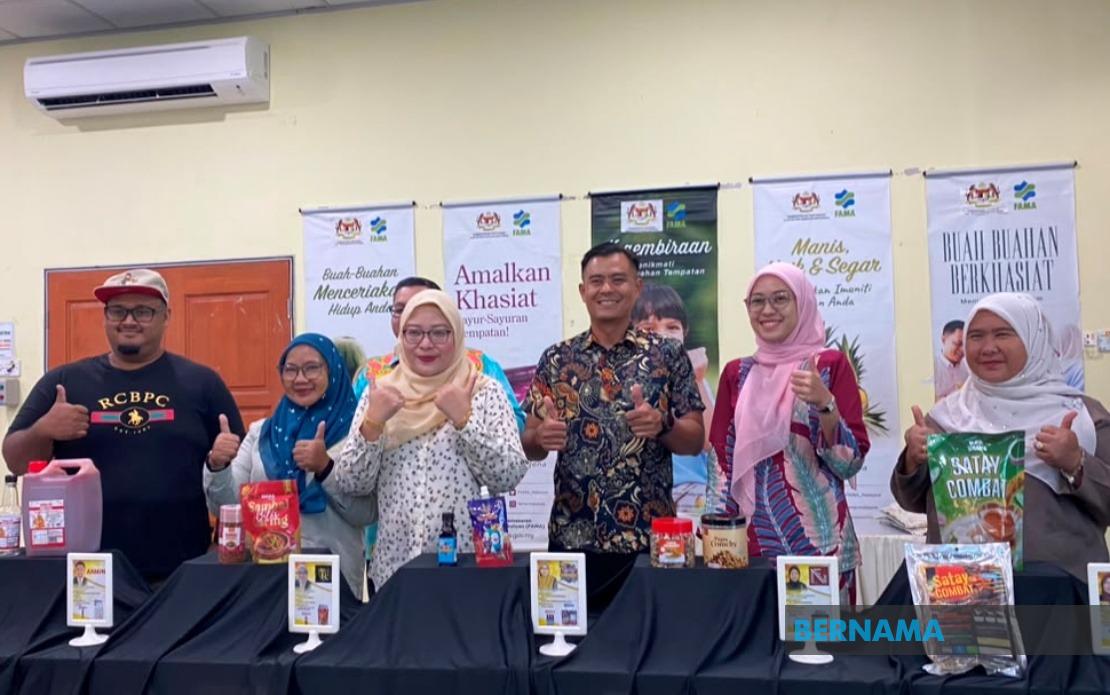
The Perlis branch of the Federal Agricultural Marketing Authority (FAMA) has channelled RM510,500 in financial support to nine entrepreneurs operating in the agro-food and agro-based industries, marking a significant push to strengthen the competitiveness of small and medium enterprises in the northern state. This distribution, announced by FAMA Perlis director Mohd Anzara Azizan, represents a multifaceted approach to nurturing emerging agricultural businesses by addressing key operational and marketing challenges that entrepreneurs typically face when seeking to scale their operations.
The grant allocation demonstrates a strategic sectoral investment, with funds distributed across four distinct support categories tailored to different aspects of business development. The largest portion, amounting to RM392,000, was reserved for the Agro-Tourism Grant, reflecting FAMA's recognition of agro-tourism's potential as a value-added revenue stream for agricultural enterprises in Malaysia. A further RM83,500 was committed to Product Image and Packaging Improvement, while RM25,000 targeted outlet enhancement through the KSHOPPE scheme and RM10,000 supported marketing equipment acquisition. This tiered allocation approach underscores an understanding that modern agro-food businesses require investment across multiple dimensions—from physical infrastructure to brand presentation—to remain competitive in increasingly discerning consumer markets.
The Product Image and Packaging Improvement Grant deserves particular attention as it represents FAMA's engagement with Stage One through Stage Three SMEs participating in the IMAT Market Development and Product Matching Project. By focusing on product presentation and packaging, FAMA acknowledges a critical reality facing Malaysian agro-entrepreneurs: that in contemporary retail environments, visual appeal and professional packaging significantly influence purchasing decisions. For businesses attempting to transition from local to regional or even international markets, this support becomes essential for meeting modern merchandising standards and consumer expectations.
The performance metrics reported by Mohd Anzara indicate that these interventions are yielding tangible results. Across Perlis, 319 IMAT entrepreneurs have collectively achieved sales of RM4.8 million to date, representing a 30 per cent year-on-year increase. This growth rate significantly outpaces general economic expansion, suggesting that FAMA's targeted support and guidance mechanisms are effectively translating into commercial success. The scale of this achievement—encompassing nearly 320 individual entrepreneurs—underscores how systematised grant distribution and technical support can generate broad-based economic activity within a state's agricultural sector.
Beyond direct financial support, FAMA's role extends to market stewardship and competitive oversight. The authority actively monitors product pricing and marketing strategies employed by supported entrepreneurs, ensuring that local agro-products remain competitively positioned while maintaining reasonable price points. This regulatory function prevents market distortion and protects consumer interests while enabling entrepreneurs to operate within a framework that emphasises sustainable, ethical business practices. For Southeast Asian readers, this approach offers a template for how national agricultural authorities can balance entrepreneur support with consumer protection objectives.
The breadth of FAMA's support ecosystem is notable. The authority offers nearly nine distinct grant categories and support services, providing entrepreneurs with access to comprehensive assistance covering infrastructure, marketing, packaging, equipment, and institutional development. This diversity of funding mechanisms means that entrepreneurs at different business maturity stages and facing different operational challenges can identify relevant support pathways. Mohd Anzara's articulation that FAMA hopes more business owners will access these facilities suggests that uptake remains below potential capacity, pointing to either awareness gaps or application barriers that warrant policy attention.
For Malaysian stakeholders, particularly those in agricultural heartland states like Perlis, this initiative carries implications for rural economic development and agricultural sector modernisation. The focus on agro-tourism and product enhancement reflects broader governmental recognition that traditional agriculture alone cannot sustain rural prosperity; value addition, diversification, and experiential offerings are necessary. By systematically supporting entrepreneurs in these directions, FAMA facilitates the transition toward higher-margin agricultural and agro-tourism businesses that can anchor rural livelihoods and stem migration to urban centres.
The timing and scale of this grant distribution also merit consideration within Malaysia's broader economic context. As the nation navigates post-pandemic economic recovery and grapples with inflationary pressures, supporting SMEs in primary sectors represents a targeted intervention aimed at bolstering household incomes and ensuring inclusive growth. Agricultural and agro-based enterprises, often owned by individuals and families in less urbanised areas, constitute significant employment sources; their success translates into livelihood security for communities that might otherwise face limited economic opportunities.
The emphasis on marketing effectiveness and product competitiveness reflects FAMA's understanding that modern entrepreneurship extends far beyond production capability. Contemporary agro-food businesses must master brand presentation, digital marketing, supply chain logistics, and consumer trend analysis. By coupling financial grants with technical guidance and market intelligence, FAMA positions itself not merely as a funding provider but as a business development partner. This holistic approach to entrepreneur support aligns with international best practices in agricultural development and SME promotion.
Looking forward, the strong sales performance and expansion of the IMAT entrepreneur base suggest that FAMA's model is functioning effectively within Perlis. However, scaling these results across Malaysia's remaining states and expanding grant availability to reach more entrepreneurs will require sustained budgetary allocation and administrative capacity. The success metric—a 30 per cent sales increase among supported entrepreneurs—provides a compelling rationale for increased investment in similar programmes across other agricultural regions. For Malaysian policymakers and regional observers, this Perlis initiative demonstrates that strategic, well-designed government support can meaningfully enhance agricultural enterprise competitiveness and rural economic dynamism.

